Mamata Slams Hawker Evictions on World Hawkers Day
Synopsis
On International Hawkers Day, West Bengal CM Mamata Banerjee condemned alleged BJP-led evictions and demolitions of street vendors' stalls in the state, pledging solidarity with hawkers and warning that 'oppressors will face consequences.' The post invokes the Street Vendors Act, 2014 and Supreme Court precedents protecting vendors' livelihoods.
Key Takeaways
West Bengal Chief Minister Mamata Banerjee posted on 26 May 2026 — International Hawkers Day — condemning alleged evictions of street vendors in the state.
She alleged the BJP government in West Bengal is demolishing hawkers' stalls and forcibly displacing vendors, calling it 'oppression of the working poor.' Banerjee pledged continued solidarity: 'I was with you, I am with you, I will remain with you.' The Street Vendors (Protection of Livelihood and Regulation of Street Vending) Act, 2014 mandates surveys, vending zones, and Town Vending Committees before any eviction can be carried out.
The Supreme Court of India has, since 1985 , consistently recognised street vending as linked to fundamental rights under Articles 19(1)(g) and 21 of the Constitution.
The allegations, if substantiated, could trigger legal challenges citing the 2014 Act and apex court precedents against arbitrary eviction.
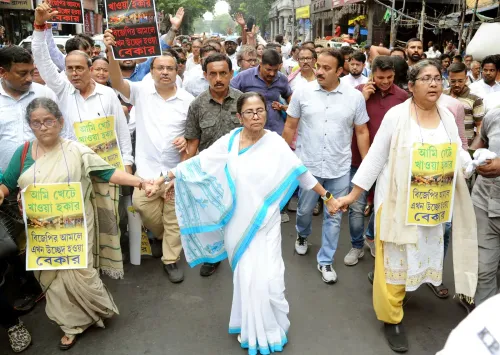
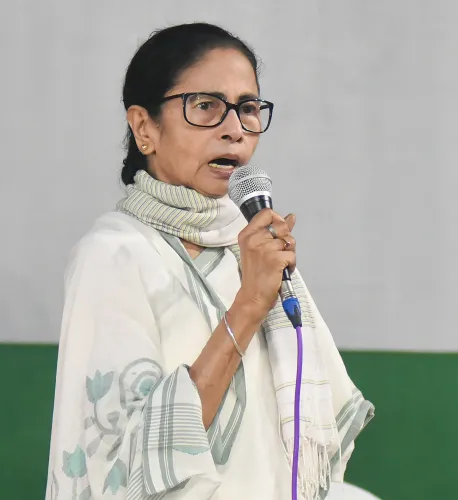
West Bengal Chief Minister Mamata Banerjee on Tuesday, 26 May 2026, used International Hawkers Day to both congratulate street vendors across the world and launch a sharp political attack, alleging that the BJP government in West Bengal is perpetrating crackdowns, evictions, and demolitions of hawkers' stalls, leaving vendors destitute. Posting in Bengali on X, she declared herself 'shocked, angry, and deeply pained' by what she described as oppression of the working poor.
In her post, Banerjee wrote — translated from Bengali — 'আপনাদের পাশে ছিলাম, আছি, থাকবো' ('I was with you, I am with you, I will remain with you'), pledging solidarity with hawkers. She also warned that 'অত্যাচারীরা এর জবাব নিশ্চয়ই পাবে' — 'the oppressors will certainly face consequences.'
Context
International Hawkers Day, observed on 26 May every year, recognises the contribution of street vendors, hawkers, and informal-sector small traders as the backbone of local economies. Banerjee's post went beyond customary greetings, framing the occasion as a moment to highlight what she characterised as systematic targeting of hawkers by a rival political administration.
The Chief Minister described street vendors as those who 'link large-scale production systems with the daily needs of ordinary people' and deliver essential goods at affordable prices to doorsteps — while acknowledging the perennial tension between hawker livelihoods and urban planning needs.
Policy Backdrop
India's legal framework for street vendors rests on a foundation built by the Supreme Court of India across several decades. In Bombay Hawkers Union vs Bombay Municipal Corporation (1985), the court first recognised hawkers' right to livelihood while permitting reasonable restrictions in the public interest. In Sodan Singh vs New Delhi Municipal Committee (1989), the apex court explicitly linked pavement vending to the fundamental right to practise any profession or trade under Article 19(1)(g) of the Constitution.
The landmark Genda Ram vs Municipal Corporation of Delhi (2010) ruling proved to be the direct catalyst for central legislation: the court expressed deep concern at hawkers' vulnerability to arbitrary evictions and extortion in the absence of a statutory framework. The result was the Street Vendors (Protection of Livelihood and Regulation of Street Vending) Act, 2014, which mandates participatory Town Vending Committees (TVCs), designated vending zones, and a survey-before-eviction requirement. The Maharashtra Ekta Hawkers Union vs Municipal Corporation of Greater Mumbai (2013) ruling reinforced interim protections in the run-up to the 2014 statute.
The settled legal doctrine holds that summary evictions without survey or alternative rehabilitation violate Article 21 — the right to life and livelihood — and that hawker regulation must flow through democratic TVCs rather than unilateral municipal action.
Stakeholders and Impact
Street vendors constitute a critical layer of India's urban informal economy, providing self-employment to lakhs of low-income households that have no access to corporate or government jobs. Any large-scale eviction drive disrupts not only the vendors' incomes but also the affordable supply chain for daily necessities relied upon by low- and middle-income urban consumers.
The 2014 Street Vendors Act gives vendors a statutory right to a certificate of vending and requires every urban local body to constitute a TVC with vendor representation. Allegations of evictions without following this process, if substantiated, would raise direct questions of statutory compliance and constitutional protection under Articles 19(1)(g) and 21.
What's Next
Banerjee's post is likely to intensify political scrutiny of urban local body actions in West Bengal and could prompt vendor unions or legal advocates to approach courts citing the 2014 Act and Supreme Court precedents. The functioning — or non-functioning — of Town Vending Committees across West Bengal's municipal bodies will be a key indicator of whether the statutory framework is being honoured. With street-vendor welfare emerging as an electoral flashpoint, the coming weeks may see both political mobilisation and potential judicial interventions on the ground.
Point of View
Targeting one of urban West Bengal's most numerically significant informal-sector constituencies. By invoking Supreme Court precedents and the Street Vendors Act, 2014, she frames the alleged evictions not merely as administrative overreach but as constitutional violations — raising the legal and moral stakes for any ruling dispensation. The post fits a broader Trinamool Congress pattern of positioning the party as the defender of the urban poor against centralising or market-driven governance. Whether the allegations prompt judicial scrutiny or remain in the political register will determine how much traction this narrative gains ahead of future electoral cycles.
NationPress
22 Oct 2026
Frequently Asked Questions
What is International Hawkers Day and when is it observed?
International Hawkers Day is observed on 26 May every year to recognise the contribution of street vendors, hawkers, and informal-sector small traders to local economies worldwide.
What did Mamata Banerjee say about hawkers on 26 May 2026?
Mamata Banerjee congratulated hawkers on International Hawkers Day while alleging that the BJP government in West Bengal is evicting vendors, demolishing their stalls, and leaving them destitute — calling it 'oppression' and warning that 'oppressors will face consequences.'
What does the Street Vendors Act 2014 say about evictions?
The Street Vendors (Protection of Livelihood and Regulation of Street Vending) Act, 2014 prohibits arbitrary evictions and requires urban local bodies to conduct surveys, designate vending zones, and constitute Town Vending Committees (TVCs) with vendor representation before any relocation.
What Supreme Court judgments protect street vendors in India?
Key rulings include Bombay Hawkers Union vs Bombay Municipal Corporation (1985) , Sodan Singh vs New Delhi Municipal Committee (1989) , and Genda Ram vs Municipal Corporation of Delhi (2010) , which collectively established that street vending is linked to fundamental rights under Articles 19(1)(g) and 21 and that summary evictions are unconstitutional.
What are Town Vending Committees and why do they matter?
Town Vending Committees (TVCs) are statutory bodies mandated under the Street Vendors Act, 2014 to include vendor representatives alongside municipal officials, ensuring hawkers have a democratic say in urban planning decisions that affect their livelihoods.