Manas National Park mahouts certified 'Master Mahouts', to train handlers abroad
Synopsis
Two frontline mahouts from one of India's most storied wildlife reserves have quietly broken new ground — earning international 'Master Mahout' certification and earning the right to train elephant handlers abroad. Their next assignment takes them to Thailand's Chiang Mai Elephant Conservation Centre, a signal that India's traditional elephant-handling knowledge is now globally exportable.
Key Takeaways
Ramanuj Barla and Md.
Alam Ali of Manas National Park and Tiger Reserve in Assam have been certified as 'Master Mahouts' , qualifying them to train elephant handlers internationally.
The certification followed a seven-day Comprehensive Training Programme at Bansbari , the first of its kind at Manas, involving 27 participants including three from Odisha .
Specialised training under the H-ELP Foundation in Australia covered captive elephant calf handling using animal cognition and positive reinforcement techniques.
Both mahouts are scheduled to attend a programme at the Chiang Mai Elephant Conservation Centre , Thailand , from 29 October to 2 November 2026 .
Manas Tiger Reserve is Northeast India's first tiger reserve (est.
1973 ) and a UNESCO World Heritage Site , home to over 550 bird species and multiple endangered mammals.
Two mahouts from Assam's Manas National Park and Tiger Reserve have earned international recognition, becoming certified 'Master Mahouts' — a distinction that qualifies them to train elephant handlers in countries around the world, senior forest officials confirmed on Thursday, 1 October 2026. The achievement marks a milestone for the Assam Forest Department and for the broader community of mahouts and khasis engaged in wildlife conservation.
A Historic Recognition for Manas
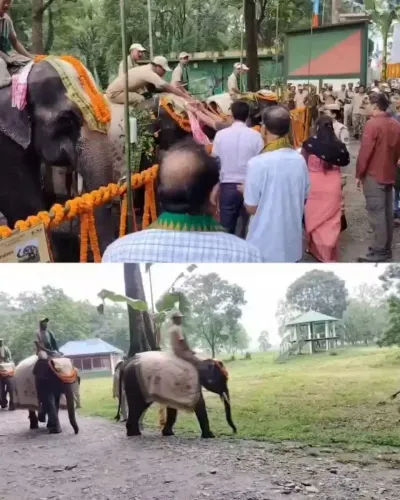
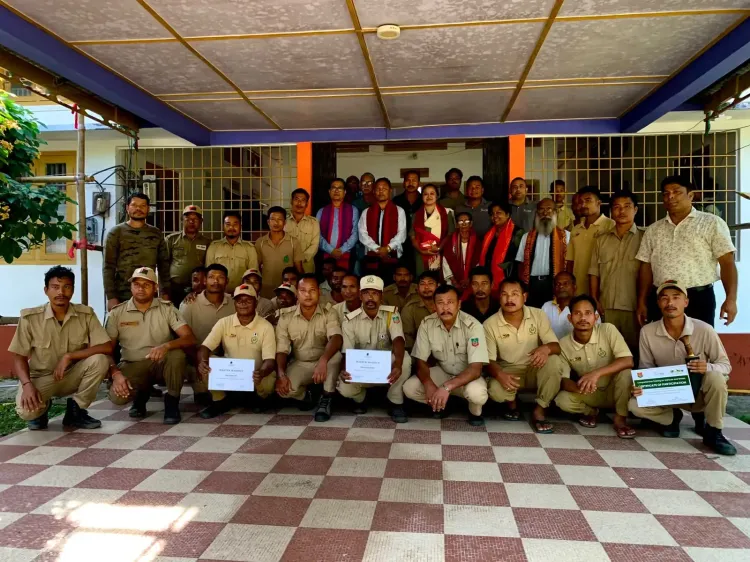
Additional Principal Chief Conservator of Forests (Additional PCCF) and Council Head of Department of the Bodoland Territorial Council (BTC), Sonali Ghosh, said the certification represented a landmark for the reserve and its frontline staff. 'Their expertise and experience from Manas will now contribute to international capacity-building in elephant care, management and welfare,' Ghosh said. The recognition was formally announced at the closing ceremony of a seven-day Comprehensive Training Programme for Mahouts and Khasis, held at Bansbari from 24 September to 1 October 2026.
The Training Programme and Certifications
The programme was organised by the Field Directorate of Manas Tiger Reserve in collaboration with the Wildlife Trust of India (WTI). It was conducted by Padma Shri awardee Parbati Barua, retired Divisional Conservator of Forests Bhupendra Nath Talukdar, and WTI Chief Veterinary Officer Bhaskar Choudhury. A total of 27 staff members from Manas Tiger Reserve — including three participants from Odisha — attended the sessions, which combined theoretical instruction and practical exercises covering elephant health, welfare, handling, and training techniques.
Certificates and badges were presented specifically to Ramanuj Barla and Md. Alam Ali, who completed specialised training in handling captive-born elephant calves using animal cognition and positive reinforcement methods under the Human Elephant Learning Programs, Advancing Elephant Welfare (H-ELP) Foundation in Australia. Ghosh, who also serves as Field Director of Manas Tiger Reserve, described it as the first comprehensive training of its kind ever conducted at Manas.
Next Stop: Thailand
Barla and Ali are set to travel to the Chiang Mai Elephant Conservation Centre in Thailand for a further specialised training programme scheduled from 29 October to 2 November 2026. Their international exposure is expected to deepen their skills in modern, science-based elephant management — knowledge they will eventually carry back to train handlers elsewhere.
Bodoland Territorial Council Executive Member for Forest and Wildlife, James Basumatary, said, 'It is a proud moment for all of us that two of our mahouts from Manas have brought glory to the Forest Department and the state at the international level.'
Why This Matters for Conservation
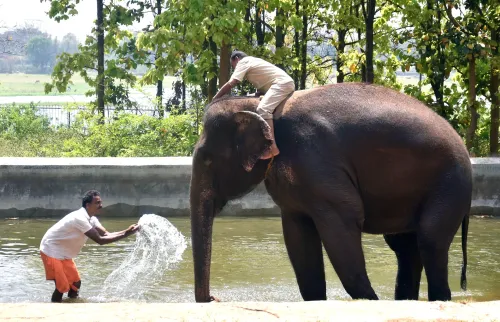
Ghosh underscored that hands-on expertise in elephant handling remains irreplaceable in wildlife conservation work, noting that it required specialised skills, meaningful interaction, and the sustained building of trust between humans and animals. The achievement, she said, highlighted the growing recognition of traditional knowledge combined with modern, science-based approaches to elephant management.
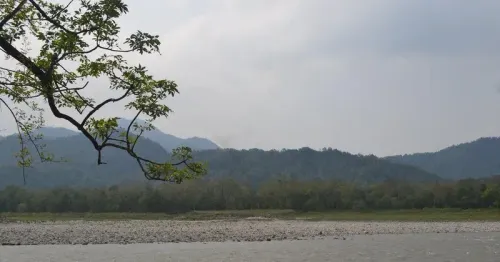
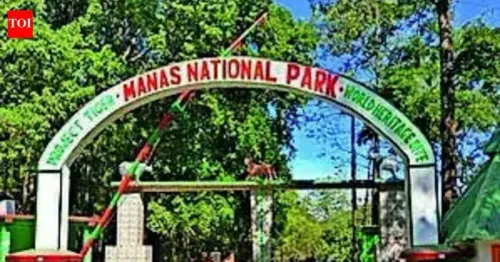
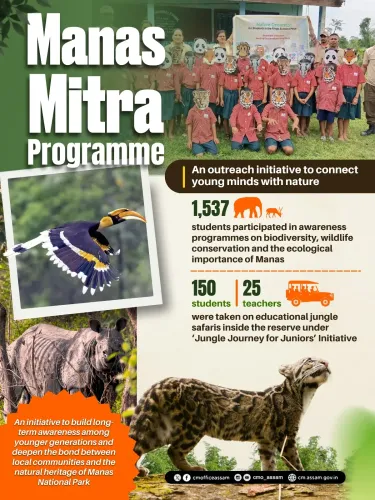
Manas National Park and Tiger Reserve, situated in the Eastern Himalayan foothills along the Bhutan border, carries an exceptional conservation profile — it is Northeast India's first tiger reserve (established 1973), a UNESCO World Heritage Site, a Biosphere Reserve, an Elephant Reserve, an Important Bird Area, and a Key Biodiversity Area. The reserve shelters tigers, elephants, rhinoceroses, wild buffaloes, golden langurs, pygmy hogs, hispid hares, and Bengal floricans, along with more than 550 bird species. The elevation of frontline mahouts to international trainer status sets a precedent that could reshape how India exports wildlife-management expertise going forward.
Point of View
Validated internationally, and made exportable. For too long, the expertise of frontline mahouts and khasis has remained invisible in formal conservation discourse despite being operationally indispensable. The H-ELP Foundation partnership and the Thailand posting suggest a new model — one that fuses generational tacit knowledge with science-based welfare standards and credentials it globally. The real question is whether this remains a one-off recognition or the beginning of a systematic framework that elevates mahout expertise across India's many elephant reserves.
NationPress
1 Oct 2026
Frequently Asked Questions
What does 'Master Mahout' certification mean?
A 'Master Mahout' certification recognises elephant handlers who have completed advanced, internationally validated training in captive elephant care, management, and welfare, qualifying them to train handlers in other countries. Ramanuj Barla and Md. Alam Ali from Manas Tiger Reserve became the first from the reserve to earn this distinction.
Where will the two certified mahouts go next?
Ramanuj Barla and Md. Alam Ali are scheduled to travel to the Chiang Mai Elephant Conservation Centre in Thailand for a specialised training programme running from 29 October to 2 November 2026. The trip is expected to further sharpen their skills in modern elephant management.
Who organised the training programme at Manas?
The seven-day Comprehensive Training Programme was organised by the Field Directorate of Manas Tiger Reserve in collaboration with the Wildlife Trust of India (WTI). It was conducted by Padma Shri awardee Parbati Barua, retired DCF Bhupendra Nath Talukdar, and WTI Chief Veterinary Officer Bhaskar Choudhury.
Why is Manas National Park significant?
Manas National Park and Tiger Reserve, located in Assam's Eastern Himalayan foothills along the Bhutan border, is Northeast India's first tiger reserve, established in 1973. It is also a UNESCO World Heritage Site, Biosphere Reserve, Elephant Reserve, and Key Biodiversity Area, sheltering over 550 bird species and several endangered mammals.
How many staff participated in the Manas mahout training programme?
A total of 27 staff members participated, drawn from Manas Tiger Reserve along with three participants from Odisha. The programme, described as the first comprehensive training of its kind at Manas, ran from 24 September to 1 October 2026 at Bansbari.