Mandaviya marks 12 years of Make in India, backs manufacturing push
Synopsis
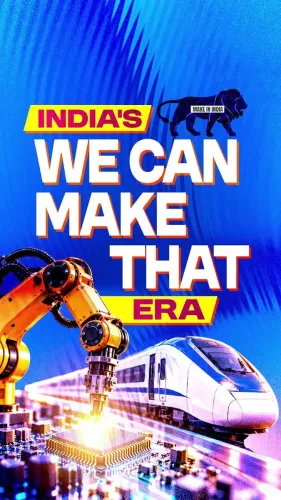
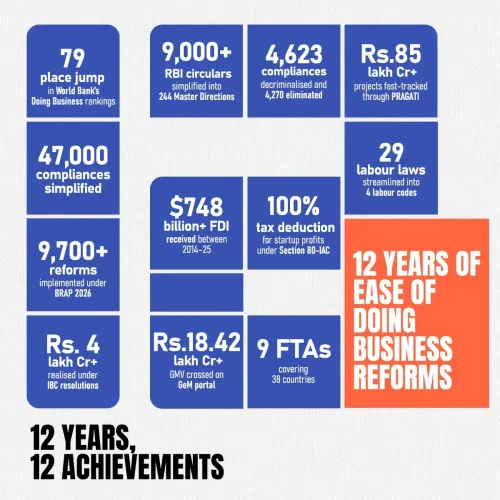
Union Minister Mansukh Mandaviya marked the twelfth anniversary of Make in India on 25 September 2026, challenging critics to witness the programme's impact on India's manufacturing growth, citing the initiative's role in attracting FDI and building global supply-chain presence.
Key Takeaways
Make in India turned 12 years old on 25 September 2026 , having been launched by PM Narendra Modi on the same date in 2014 .
Union Minister Mansukh Mandaviya used the anniversary to challenge sceptics, saying they should 'come to the ground and see the strength of the new India.' The programme was designed to raise manufacturing's share of GDP and attract foreign direct investment into India.
Production-Linked Incentive (PLI) schemes launched from 2020 onward extended the Make in India logic into sector-specific output subsidies.
Sectors covered by PLI include mobile phones, semiconductors, pharmaceuticals, and specialty steel, among others.
Upcoming Index of Industrial Production data and investment summit announcements will be key signals of fresh momentum.
Twelve years after Prime Minister Narendra Modi unveiled the Make in India programme on 25 September 2014, Union Labour and Sports Minister Mansukh Mandaviya marked the anniversary with a pointed challenge to sceptics — go see the new India for yourself.
Posting on X with the hashtag #12YearsOfMakeInIndia, Mandaviya wrote: 'Jinhe Make in India namumkin lagta hai, unhe zameen par utarkar naye Bharat ki taqat dekhni chahiye' — 'Those who think Make in India is impossible should come down to the ground and see the strength of the new India.' The message, sharp and direct, landed exactly on the initiative's twelfth birthday.
What Make in India set out to do — and where it stands
Make in India was Modi's flagship industrial-policy declaration, designed to raise the share of manufacturing in GDP, pull in foreign direct investment, and position India as a credible node in global value chains. When it launched, India's manufacturing sector was widely seen as punching below its weight relative to peers like China, Vietnam, and Bangladesh.
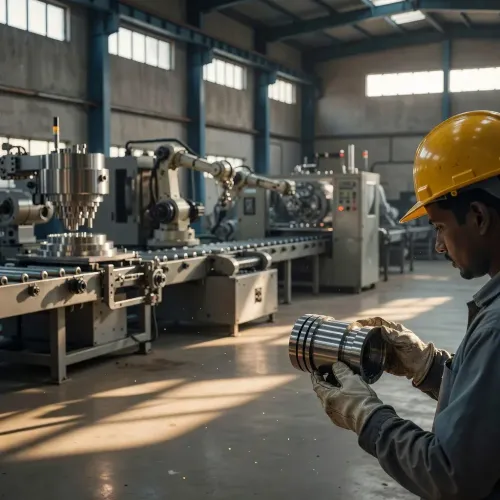
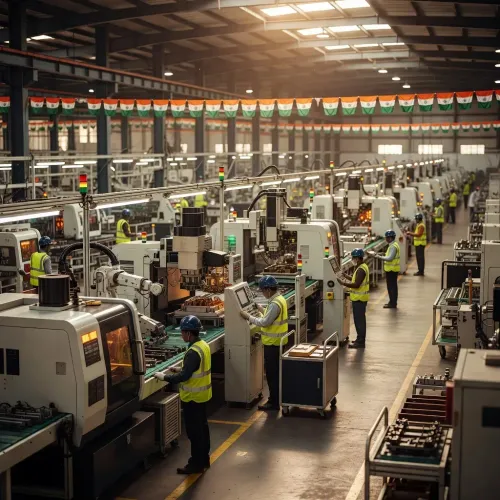
The programme became the scaffolding on which later industrial interventions were built. Beginning in 2020, the government layered Production-Linked Incentive (PLI) schemes across more than a dozen sectors — from semiconductors and mobile phones to pharmaceuticals and specialty steel — directly extending the Make in India logic into targeted output subsidies.
Why the anniversary carries political weight
The #12YearsOfMakeInIndia hashtag is not merely ceremonial. For the BJP, the programme is central to a broader economic narrative: that India's transformation from a services-led economy into a manufacturing power is not aspirational but already under way. Mandaviya's framing — an implicit rebuke to critics — signals that the government sees this anniversary as a moment to reset that argument.
The manufacturing sector and FDI investors are the direct stakeholders. Each anniversary typically coincides with government communication about new investment commitments or industrial output data, even as independent analysts continue to debate whether manufacturing's share of GDP has moved decisively.
What to watch next
The Index of Industrial Production figures and any fresh investment pledges at upcoming manufacturing or investment summits will be the next real test of whether the anniversary messaging is backed by fresh momentum. For now, Mandaviya has set the tone: the government is not on the defensive — it is daring the doubters to look.
Twelve years in, the debate is no longer about whether India can manufacture — it is about how fast, and for whom.
Point of View
Daring opponents to dispute it. By choosing an assertive, ground-level register rather than a statistical recitation, Mandaviya signals that the government is pivoting from defending the programme to prosecuting a case. This fits a broader arc where PLI schemes have been used to give Make in India tangible, sector-by-sector proof points. The real political test remains whether manufacturing's share of GDP shows a durable shift — a metric that will either validate or complicate the messaging in coming quarters.
NationPress
25 Sept 2026
Frequently Asked Questions
When was Make in India launched?
Make in India was launched by Prime Minister Narendra Modi on 25 September 2014 , with the goal of boosting domestic manufacturing, attracting foreign direct investment, and increasing manufacturing's share of India's GDP.
What did Mansukh Mandaviya say about Make in India?
On the programme's twelfth anniversary , Mandaviya posted on X saying those who believe Make in India is impossible should 'come to the ground and see the strength of the new India,' using the hashtag #12YearsOfMakeInIndia .
What are Production-Linked Incentive schemes and how do they relate to Make in India?
Production-Linked Incentive (PLI) schemes , introduced from 2020 onward across more than a dozen sectors, are an extension of the Make in India philosophy — offering output-linked subsidies to manufacturers in areas like mobile phones, semiconductors, and pharmaceuticals.
Has Make in India achieved its manufacturing GDP target?
The programme aimed to raise manufacturing's share of GDP significantly, and debate continues among analysts about how decisively that share has moved. Upcoming Index of Industrial Production data and investment summit announcements will provide fresh signals.
What sectors does Make in India focus on?
Make in India covers a broad range of sectors, with later PLI schemes targeting mobile phones, semiconductors, specialty steel, pharmaceuticals, textiles, and several others as priority manufacturing domains.