Mandaviya Marks Mann Ki Baat's 12-Year Journey
Synopsis
Union Minister Mansukh Mandaviya marked 12 years of PM Modi's Mann Ki Baat on 25 October 2026, quoting the Prime Minister's tribute to citizens as the programme's 'fellow travellers and guides' since its 2014 launch on All India Radio.
Key Takeaways
Mann Ki Baat completed 12 years on the air, having first broadcast on 3 October 2014 on All India Radio .
Union Minister Mansukh Mandaviya marked the milestone on 25 October 2026 by quoting PM Modi's words on X.
PM Modi's quoted line positions citizens as both 'fellow travellers' and 'guides' of the programme's journey.
The programme built a direct, unmediated communication channel between the Prime Minister and citizens across radio and digital platforms.
Senior Cabinet ministers amplifying Mann Ki Baat underlines its role as a whole-of-government messaging platform, not just a personal initiative.
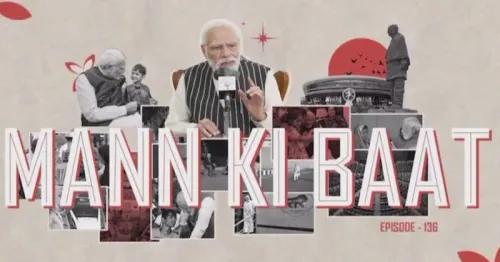
Twelve years, one unbroken monthly conversation between a Prime Minister and a nation — and on Sunday, 25 October 2026, Union Labour and Sports Minister Mansukh Mandaviya marked the milestone with a tribute that captured the programme's essential spirit: the listener, not the speaker, is the real protagonist.
Quoting Prime Minister Narendra Modi, Mandaviya posted: '12 saal ki is Mann ki Baat yatra ke sahyatri bhi aap hain aur margadarshak bhi aap hain' — 'In this 12-year Mann Ki Baat journey, you are fellow travellers and you are the guides.' The line reframes a head-of-government address as a two-way dialogue, placing citizens at the centre of governance communication.
From a 2014 Radio Debut to a 12-Year Institution
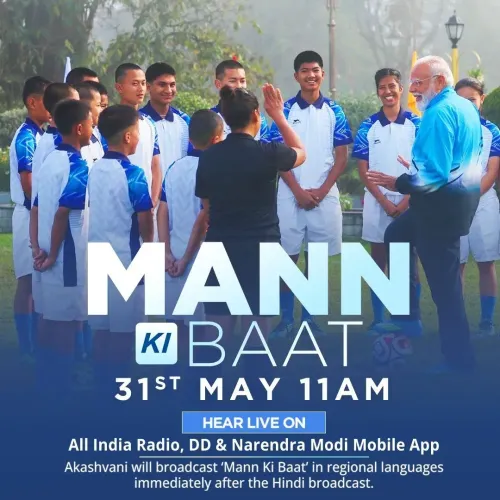
Mann Ki Baat first aired on 3 October 2014 on All India Radio, giving Prime Minister Modi a direct, unmediated channel to speak on governance, social initiatives and everyday Indian life. No press conference filter, no intermediary editorial layer — just a monthly voice reaching homes across the country on the radio dial and, increasingly over the years, on digital platforms.
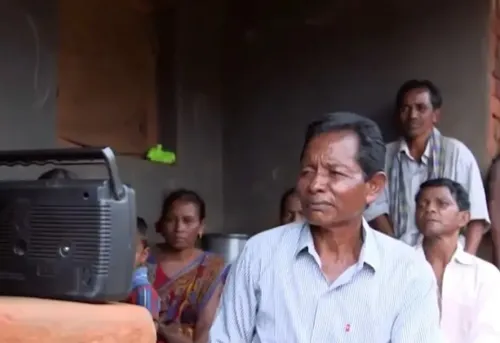
Over twelve years the programme became one of the longest-running continuous public-communication experiments by any sitting head of government. Its formula — anecdotes from ordinary citizens, shoutouts to grassroots achievers, calls to action on national campaigns — built an audience that spans urban smartphones and rural transistor radios alike.
Why Ministers Amplify the Moment
When a senior Cabinet minister like Mandaviya quotes the Prime Minister's own words back to the public, the signal is deliberate: the programme is a whole-of-government communication asset, not just a personal platform. The quote chosen — placing citizens as 'guides' — reinforces the BJP-led government's long-standing messaging that Mann Ki Baat derives its agenda from public inputs, listener letters and local stories rather than top-down diktat.
The October 2026 anniversary lands at a time when direct-to-citizen digital outreach has become standard political practice across the world. Mann Ki Baat's twelve-year run predates and in many ways prefigured that global shift.
For a programme that began on a single radio frequency in 2014, the real measure of its reach is that a Cabinet minister still finds it worth amplifying — twelve years on, the conversation shows no sign of going quiet.
Point of View
The BJP government built an audience that no single press cycle can replicate. Mandaviya's amplification is not incidental; it signals that the programme functions as shared party-government infrastructure. The framing of citizens as 'guides' is a calculated rhetorical move that softens the inherent top-down nature of a head-of-government broadcast. As direct-to-citizen digital outreach intensifies globally, Mann Ki Baat's longevity positions it as a template other administrations — and opposition parties — will study closely.
NationPress
25 Oct 2026
Frequently Asked Questions
When did Mann Ki Baat start?
Mann Ki Baat first aired on 3 October 2014 on All India Radio, launched by Prime Minister Narendra Modi as a monthly direct address to citizens.
How many episodes of Mann Ki Baat have been broadcast?
By October 2026, Mann Ki Baat has been running for 12 years with monthly episodes since its October 2014 debut, making it one of the longest continuous public-communication programmes by a sitting Indian Prime Minister.
What did Mansukh Mandaviya post about Mann Ki Baat?
On 25 October 2026, Union Minister Mansukh Mandaviya quoted PM Modi saying citizens are both 'fellow travellers and guides' of the 12-year Mann Ki Baat journey.
What is Mann Ki Baat about?
Mann Ki Baat is PM Modi's monthly radio address on All India Radio covering governance updates, social initiatives, grassroots citizen achievements and calls to action on national campaigns.
Why do BJP ministers amplify Mann Ki Baat on social media?
Senior ministers sharing and quoting Mann Ki Baat content reinforces its role as a whole-of-government communication platform, widening its reach beyond the radio broadcast to digital and social-media audiences.