Manipur CM: 95% of handloom producers are women, sector's true pioneers
Synopsis
At the 12th National Handloom Day in Imphal, Manipur CM Yumnam Khemchand Singh revealed a striking statistic: women account for 95% of the state's handloom producers. The figure reframes handloom not just as cultural heritage but as a female-led economic engine — one that, by the CM's own account, funds roughly half of household incomes across the state.
Key Takeaways
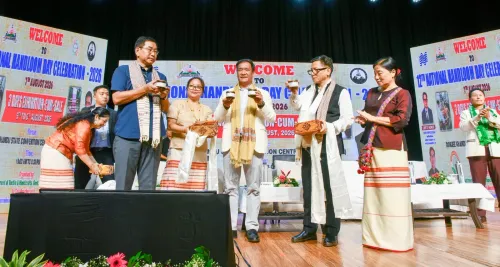
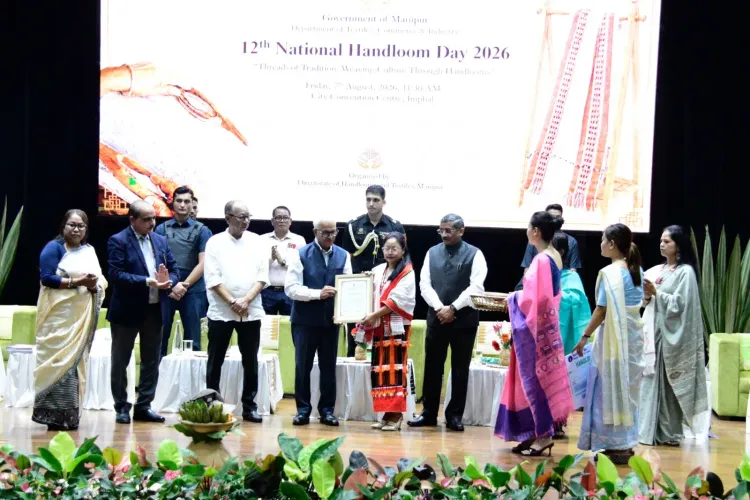
Manipur CM Yumnam Khemchand Singh addressed the 12th National Handloom Day at the City Convention Centre, Imphal on 7 August 2025 .
Approximately 95 per cent of Manipur's handloom producers are women, with men making up the remaining 5 per cent .
Women's handloom income contributes roughly half of total household expenses in many Manipuri families, according to the Chief Minister.
National Handloom Day was formally launched by PM Narendra Modi on 7 August 2015 in Chennai , marking the anniversary of the 1905 Swadeshi Movement.
A coffee table book on GI-tagged handwoven stoles of Manipur and a handloom data book were released at the event.
State Awards for Outstanding Handloom Weavers and Handicrafts Artisans 2025-26 were distributed at the function.
Manipur Chief Minister Yumnam Khemchand Singh on 7 August 2025 declared that women are the backbone of the state's handloom industry, noting that approximately 95 per cent of all handloom producers in Manipur are women, with men accounting for the remaining 5 per cent. He made the remarks at the 12th National Handloom Day celebration held at the City Convention Centre in Imphal, attended also by State Governor Ajay Kumar Bhalla.
Significance of National Handloom Day
Chief Minister Khemchand Singh underlined that National Handloom Day, observed every year on 7 August, commemorates the historic Swadeshi Movement that began in Calcutta in 1905 to protest the British-imposed partition of Bengal. The movement championed the use of indigenous goods, especially handwoven textiles. Prime Minister Narendra Modi formally launched the annual observance on 7 August 2015 in Chennai, Tamil Nadu, and the tradition has continued since, aimed at empowering weavers and artisan communities across India.
Women as Economic Pillars of Manipuri Households
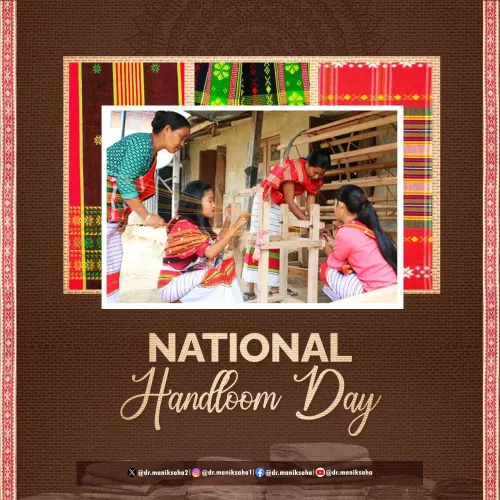
Drawing on personal experience, Khemchand Singh noted that handloom has historically been a household tradition in Manipur, with women contributing roughly half of total family income through weaving activities. He encouraged men to also adopt handloom products, pointing out that most handloom goods are currently consumed by women. The Chief Minister stressed that both men and women engaged in handloom and handicrafts are producing innovative products that are gaining recognition well beyond the state's borders.
Event Theme and Key Releases
The celebration, organised by the Department of Textiles, Commerce and Industry, Government of Manipur, was held under the theme 'Threads of Tradition: Weaving Culture Through Handlooms'. A short documentary titled 'Threads of Heritage' was screened during the event. Officials also released a data book on handloom and a coffee table book titled 'Threads of Heritage: Traditional and GI-Tagged Handwoven Stoles of Manipur', spotlighting the state's geographically indicated textile heritage.
Awards and Recognition
State Awards for Outstanding Handloom Weavers and Handicrafts Artisans for the year 2025-26 were distributed at the function. Winners of the Best Cluster Designer Award for Home Furnishing at the National Handloom Designers' Conclave 2026 were also felicitated, recognising excellence in design innovation within the sector.
The event underscores a broader national push to sustain India's handloom ecosystem — one that directly supports millions of rural livelihoods — as the sector looks to expand its market footprint both domestically and internationally.
Point of View
Yet policy frameworks rarely treat it as a women's economic empowerment issue in explicit terms. The CM's framing of weaving as contributing half of household income is the more consequential claim: if accurate, it positions handloom not as a cultural artefact to be preserved but as a primary income source deserving formal credit access, market linkage, and social protection. The GI-tagging of Manipuri stoles is a step forward, but the gap between artisanal recognition and sustainable income remains wide. National Handloom Day celebrations risk becoming annual rituals unless backed by procurement policy, e-commerce integration, and fair minimum support prices for weavers.
NationPress
7 Aug 2026
Frequently Asked Questions
What did Manipur CM Yumnam Khemchand Singh say on National Handloom Day?
Chief Minister Yumnam Khemchand Singh said that women are the pioneers of Manipur's handloom sector, constituting around 95 per cent of all handloom producers in the state. He made the remarks at the 12th National Handloom Day celebration in Imphal on 7 August 2025.
What is National Handloom Day and why is it observed on 7 August?
National Handloom Day is observed every year on 7 August to mark the anniversary of the Swadeshi Movement, which began in Calcutta in 1905 as a protest against the British partition of Bengal. Prime Minister Narendra Modi formally launched the annual observance on 7 August 2015 in Chennai.
What events took place at the 12th National Handloom Day in Imphal?
The event, organised by Manipur's Department of Textiles, Commerce and Industry under the theme 'Threads of Tradition: Weaving Culture Through Handlooms', included the screening of a documentary, the release of a handloom data book and a coffee table book on GI-tagged stoles, and the distribution of State Awards for Outstanding Handloom Weavers and Handicrafts Artisans for 2025-26.
What is the economic role of handloom in Manipuri households?
According to Chief Minister Khemchand Singh, women's income from handloom activities covers roughly half of total household expenses in Manipur, where weaving has traditionally been a part of every household. The sector is seen as a key livelihood source, particularly for rural women.
What are the GI-tagged handwoven stoles of Manipur?
These are traditional handwoven stoles from Manipur that have received Geographical Indication (GI) tags, certifying their origin and unique craft heritage. A coffee table book titled 'Threads of Heritage: Traditional and GI-Tagged Handwoven Stoles of Manipur' was released at the National Handloom Day event to document and promote them.