Manipur Governor reviews India-Myanmar border fencing progress, urges faster completion
Synopsis
Manipur Governor Ajay Kumar Bhalla called a high-level security meeting at Lok Bhavan on 22 October to push faster completion of India-Myanmar border fencing — with only 50 km done and 80 km in progress out of a 398-km unfenced stretch that doubles as one of South Asia's busiest narcotics corridors.
Key Takeaways
Manipur Governor Ajay Kumar Bhalla reviewed India-Myanmar border fencing progress at Lok Bhavan, Imphal on 22 October 2026 .
Five districts — Churachandpur, Tengnoupal, Chandel, Kamjong, and Ukhrul — share a 398-km unfenced international border with Myanmar.
The Ministry of Home Affairs has completed 50 km of fencing; work on another 80 km is underway.
25 BRTF Commanding Officer Colonel Dev made a detailed progress presentation to the high-level panel.
Manipur and Mizoram together share a 910-km border with Myanmar, much of it unfenced and vulnerable to narcotics and arms smuggling linked to the Golden Triangle .
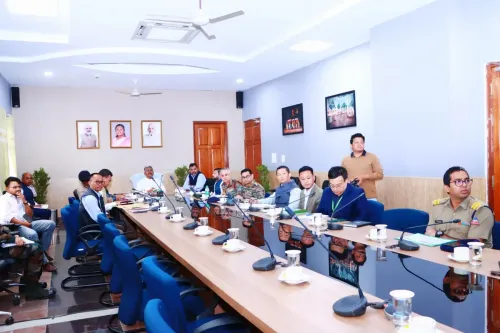
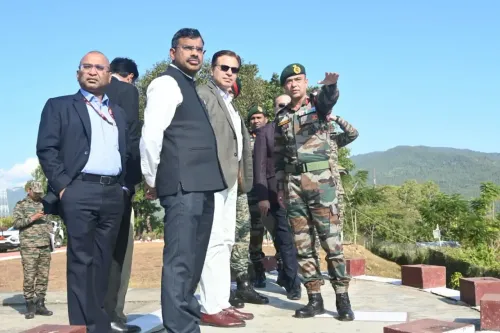
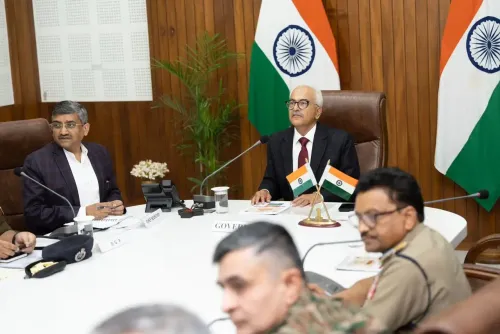
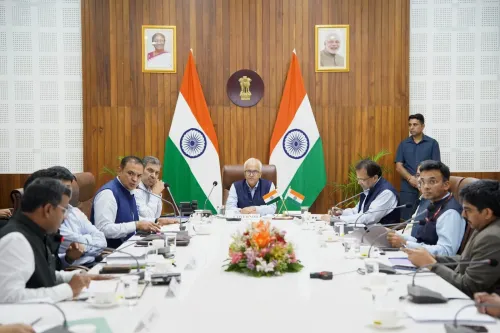
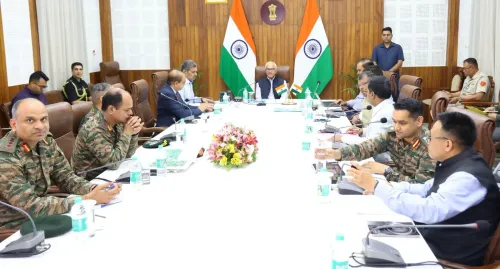
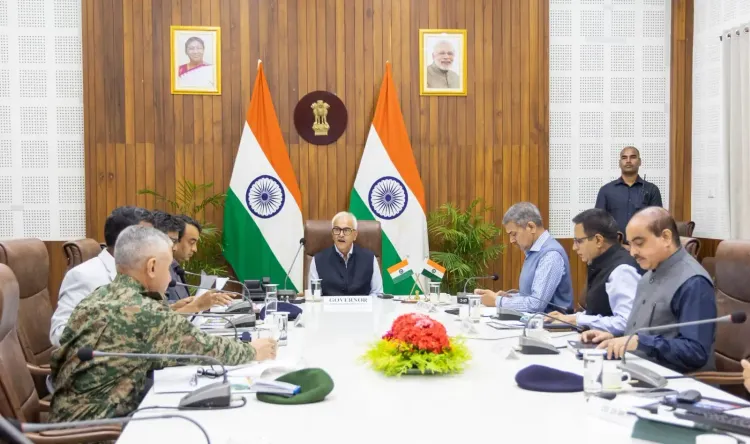
Manipur Governor Ajay Kumar Bhalla on Thursday, 22 October 2026, chaired a high-level meeting at Lok Bhavan, Imphal to assess the progress of ongoing India-Myanmar border fencing works, directing senior officials to accelerate the effort along the state's 398-km unfenced international border. The review underscores mounting pressure to seal one of India's most porous frontiers, which security agencies have long flagged as a conduit for arms, narcotics, and human trafficking.
Key Officials and Agencies Present
The meeting brought together a cross-section of Manipur's top security and administrative establishment. Chief Secretary Rajeev Singh Thakur, Security Advisor Kuldiep Singh, Director General of Police Mukesh Singh, State Home Commissioner N. Ashok Kumar, and the Additional Chief Secretary attended in person at Lok Bhavan.
Officers of the Border Roads Task Force (BRTF) and Assam Rifles, along with the Deputy Commissioner of Ukhrul, were also present. The Additional Deputy Commissioners of Churachandpur, Chandel, and Tengnoupal participated virtually. 25 BRTF Commanding Officer Colonel Dev delivered a detailed presentation on construction milestones achieved so far.
State of the Fencing Works
Five Manipur districts — Churachandpur, Tengnoupal, Chandel, Kamjong, and Ukhrul — share the 398-km unfenced stretch with Myanmar. According to recent disclosures at a NITI Aayog meeting in New Delhi, the Ministry of Home Affairs (MHA) has completed fencing along 50 kilometres of this boundary. Work on an additional 80 kilometres is currently underway. Chief Minister Yumnam Khemchand Singh, who raised the issue at that NITI Aayog session, stressed the need for stronger border management, better surveillance systems, and coordinated action against trafficking networks.
Why the Border Demands Urgent Attention
Manipur and Mizoram together share a 910-km international boundary with Myanmar, much of it still unfenced. The region lies in close proximity to the Golden Triangle — the Myanmar-Laos-Thailand corridor that remains one of the world's foremost illicit narcotics-producing zones. This geographic reality has made India's northeastern states a persistent transit zone for highly addictive methamphetamine tablets, heroin, foreign-made cigarettes, fertilisers, and other contraband.
Security forces and drug enforcement agencies have repeatedly cited the open border as their single biggest operational handicap. The fencing push is part of a broader Centre-driven initiative to bring the Northeast's international frontiers to the same standard as other sensitive borders.
What Comes Next
Governor Bhalla's directive to expedite work signals that the Centre is closely monitoring delivery timelines on the ground. With 130 km of fencing either completed or in progress out of a 398-km mandate in Manipur alone, significant stretches remain vulnerable. Observers note that terrain, funding disbursement cycles, and logistical constraints have historically slowed border infrastructure projects in the Northeast. The pace of the remaining work — and the parallel rollout of surveillance systems flagged by the Chief Minister — will determine whether the fencing translates into measurable security gains along this troubled frontier.
Point of View
But the numbers tell a sobering story: only 50 km of a 398-km mandate is complete, and even the 80 km currently in progress would leave nearly two-thirds of Manipur's Myanmar border open. Governor Bhalla's appointment itself signals that the Centre treats Manipur as a security-first administrative challenge, yet border infrastructure in the Northeast has a long history of delayed timelines and terrain-driven cost overruns. The real question is not whether officials have been told to hurry — they have — but whether the BRTF and MHA have the funding pipeline and logistics to sustain momentum through difficult hill terrain. Until surveillance technology supplements physical fencing across the full 398 km, the Golden Triangle's reach into India's Northeast will remain structurally difficult to contain.
NationPress
22 Oct 2026
Frequently Asked Questions
What is the India-Myanmar border fencing project in Manipur?
It is a Centre-backed infrastructure initiative to erect physical fencing along Manipur's 398-km unfenced international boundary with Myanmar, aimed at curbing narcotics smuggling, arms trafficking, and illegal crossings. The Ministry of Home Affairs has completed 50 km so far, with work ongoing on another 80 km.
Why is the India-Myanmar border in Manipur considered a security risk?
The border's porous, largely unfenced stretches make it a key transit corridor for methamphetamine tablets, heroin, and arms smuggled from the Golden Triangle — the Myanmar-Laos-Thailand narcotics hub. Manipur and Mizoram together share a 910-km boundary with Myanmar, much of it unguarded.
Which districts of Manipur share the border with Myanmar?
Five districts — Churachandpur, Tengnoupal, Chandel, Kamjong, and Ukhrul — share the 398-km unfenced international boundary with Myanmar and were the focus of Thursday's high-level review.
Who attended the border fencing review meeting on 22 October?
The meeting at Lok Bhavan was chaired by Governor Ajay Kumar Bhalla and attended by Chief Secretary Rajeev Singh Thakur, DGP Mukesh Singh, Security Advisor Kuldiep Singh, BRTF officers, Assam Rifles personnel, and the Deputy Commissioner of Ukhrul, among others. Senior officials from Churachandpur, Chandel, and Tengnoupal joined virtually.
What did Manipur Chief Minister Yumnam Khemchand Singh say about the border at the NITI Aayog meeting?
At a recent NITI Aayog meeting in New Delhi, Chief Minister Yumnam Khemchand Singh called for stronger border management, improved surveillance, and joint action against drug trafficking, arms smuggling, and human trafficking. He also confirmed that 50 km of fencing had been completed and work on 80 more km was underway.