Manipur CM launches 'Oorja' organic fertiliser at ₹250 a bag for Kharif 2026
Synopsis
Manipur has launched its own organic fertiliser brand 'Oorja' at just ₹250 a bag — nearly half the market rate — as Chief Minister Yumnam Khemchand Singh doubles down on a plan to bring 8,000 hectares under organic cultivation. With 2 lakh urea bags in stock and a revamped Aadhaar-linked distribution system, the state is betting on structural reform, not just subsidy.
Key Takeaways
Manipur CM Yumnam Khemchand Singh launched organic fertiliser brand 'Oorja' at Sanjenthong, Imphal on 15 June 2026 . 'Oorja' is available to farmers at a subsidised rate of ₹250 per bag , against a market price of ₹480 .
Around 4,000 hectares are already under organic cultivation; the government targets an additional 4,000 hectares in coming years.
Approximately 2 lakh bags of urea are currently in stock; the CM confirmed no shortage at present.
Fertiliser distribution has been restructured using Aadhaar cards and farmer cards to ensure transparent, need-based allocation.
Agriculture Department officials will monitor distribution across all districts to prevent irregularities.
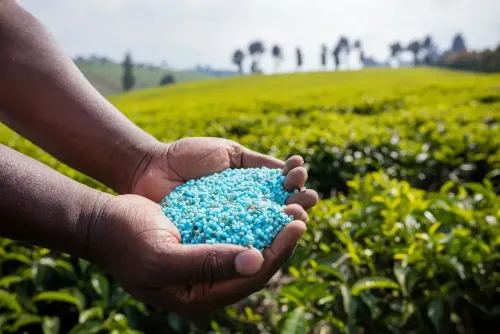
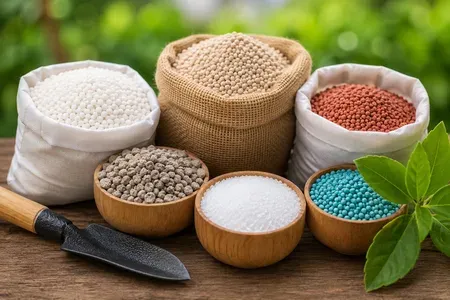
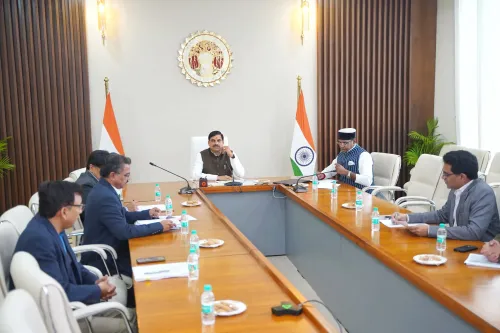
Manipur Chief Minister Yumnam Khemchand Singh on Monday, 15 June launched 'Oorja', the state's own organic fertiliser brand, at a subsidised rate of ₹250 per bag — against its market price of ₹480 — during the Fertiliser Distribution Camp for Kharif 2026 at Sanjenthong, Imphal. The event, organised by the Directorate of Agriculture, signals a deliberate state-level push to wean Manipur's farming sector off chemical inputs.
What 'Oorja' Represents
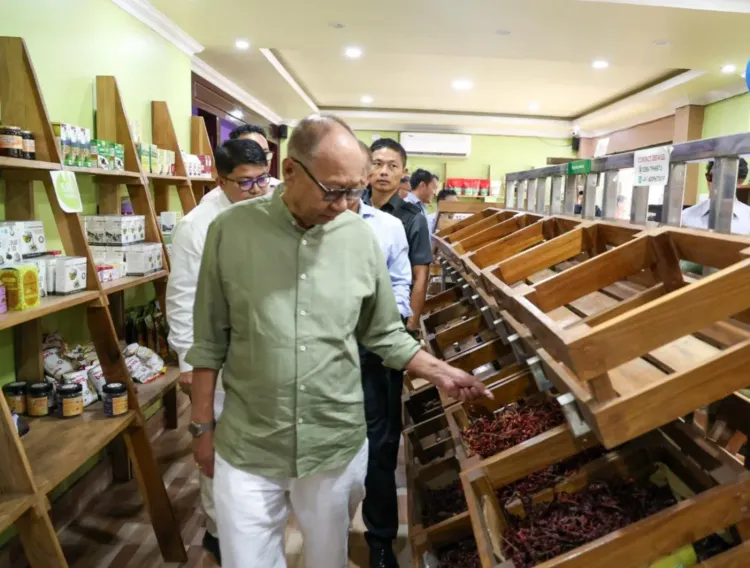
The Chief Minister flagged off fertiliser distribution trucks and personally inspected an Organic Outlet Shop set up near the venue. The launch of 'Oorja' is positioned as the centrepiece of Manipur's sustainable agriculture agenda, offering farmers an affordable organic alternative at nearly half the open-market price. Singh underscored that reducing dependence on chemical fertilisers is a long-term state priority, not a one-off campaign.
Organic Farming Targets
According to Singh, approximately 4,000 hectares of land in Manipur have already been brought under organic cultivation. The government is now working to bring an additional 4,000 hectares under organic farming in the coming years, which would double the state's organically cultivated area. This gradual expansion approach reflects the logistical and agronomic challenges of transitioning subsistence farmers away from conventional inputs.
Urea Stock and Distribution Reforms
Singh also addressed concerns over fertiliser shortages, noting that around 1.8 lakh bags of urea were distributed up to September last year, even as reports of localised shortages emerged from certain areas. To prevent a recurrence, the state has restructured its distribution mechanism: fertilisers are now allocated on the basis of Aadhaar cards, farmer cards, and location-specific demand assessments to ensure fair and transparent access.
The Chief Minister confirmed that approximately 2 lakh bags of urea are currently in stock and asserted there is no shortage at present. Distribution will proceed strictly on the basis of verified documentation, with Agriculture Department officials monitoring all districts to prevent irregularities.
Farmer Grievance Mechanism
Singh appealed to farmers to report any supply-related grievances directly to the Directorate of Agriculture, committing to prompt resolution. The programme was attended by Agriculture Commissioner Thaithuilung Panmei, department officials, public representatives, farmers, and other stakeholders.
Broader Context
Manipur's push mirrors a wider national trend: several northeastern states have been actively expanding organic farming footprints, partly driven by central schemes and partly by the premium pricing organic produce commands in urban and export markets. The 'Oorja' brand, if scaled effectively, could give Manipur farmers a state-backed organic input supply chain — a gap that has historically forced smallholders to depend on informal and often adulterated markets. The next milestone to watch is whether the additional 4,000-hectare organic expansion target comes with a funded timeline.
Point of View
But the real test lies in scale and continuity. A 4,000-hectare organic expansion target sounds ambitious for a state where smallholder fragmentation is acute and input supply chains remain thin. The Aadhaar-linked distribution reform is a genuine structural fix — past shortages were as much about leakage as supply — but its effectiveness depends on last-mile enforcement capacity that northeastern states have historically struggled to sustain. If 'Oorja' remains a subsidised brand without a credible procurement-and-marketing linkage for organic produce, farmers risk absorbing the transition cost without the premium price payoff.
NationPress
19 Sept 2026
Frequently Asked Questions
What is the 'Oorja' organic fertiliser launched in Manipur?
'Oorja' is an organic fertiliser brand launched by the Manipur government on 15 June 2026 during the Fertiliser Distribution Camp for Kharif 2026 in Imphal. It is available to farmers at a subsidised rate of ₹250 per bag, compared to its market price of ₹480, as part of the state's push to reduce chemical fertiliser dependence.
How much land in Manipur is currently under organic farming?
Around 4,000 hectares of land in Manipur have already been brought under organic cultivation, according to Chief Minister Yumnam Khemchand Singh. The state government is working to bring an additional 4,000 hectares under organic farming in the coming years, which would double the current organically cultivated area.
Is there a urea shortage in Manipur for Kharif 2026?
Chief Minister Singh stated that approximately 2 lakh bags of urea are currently in stock and confirmed there is no shortage at present. While localised shortages were reported last year when 1.8 lakh bags were distributed up to September, the state has since restructured its distribution system to prevent a recurrence.
How has Manipur changed its fertiliser distribution system?
Manipur now allocates fertilisers on the basis of Aadhaar cards, farmer cards, and location-specific demand to ensure fair and transparent access. Agriculture Department officials will monitor distribution across all districts, and farmers are encouraged to report grievances directly to the Directorate of Agriculture.
Who attended the Fertiliser Distribution Camp for Kharif 2026 in Imphal?
The event was attended by Agriculture Commissioner Thaithuilung Panmei, officials of the Agriculture Department, public representatives, farmers, and other stakeholders. Chief Minister Yumnam Khemchand Singh flagged off fertiliser distribution trucks and inspected an Organic Outlet Shop at the venue.