Sirsa accuses Rajiv Gandhi of 1984 riots role, rejects Sonia's memoir claims

Synopsis
Sonia Gandhi's memoir has reignited one of India's most contested historical wounds. Delhi Minister Manjinder Singh Sirsa has directly accused late Rajiv Gandhi of responsibility for the 1984 anti-Sikh massacre and alleged that Congress leaders named in the violence were rewarded — not punished — with cabinet posts and chief ministerships. The memoir's release has turned a four-decade-old grievance into a fresh political flashpoint.
Key Takeaways
Delhi Minister Manjinder Singh Sirsa on 10 November 2026 rejected Sonia Gandhi's memoir account of the 1984 anti-Sikh violence .
Sirsa accused late former PM Rajiv Gandhi of direct responsibility for the massacre, citing his 'When a big tree falls, the earth shakes' remark at the Boat Club .
He alleged that Congress leaders accused of involvement — including Kamal Nath , Sajjan Kumar , H.K.L.
Bhagat , and Dharam Dass Shastri — were rewarded with Cabinet and Chief Minister positions.
Sirsa also rejected claims of Indira Gandhi's grief over the June 1984 military operation at the Golden Temple in Amritsar , calling it a 'structured, planned attack.' The 1984 anti-Sikh violence , which killed thousands primarily in Delhi , remains a subject of active legal proceedings and political controversy over four decades on.
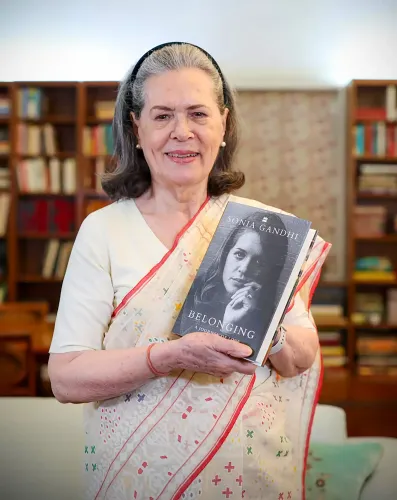
Delhi Minister Manjinder Singh Sirsa on Tuesday, 10 November 2026, launched a sharp attack on Congress Parliamentary Party Chairperson Sonia Gandhi, directly rejecting her account of the 1984 anti-Sikh violence as presented in her memoir 'Belonging: A Journey of Love'. Sirsa held the late former Prime Minister Rajiv Gandhi personally responsible for the massacre and alleged that Congress leaders accused of involvement in the violence were subsequently rewarded with political posts.
Sirsa's Rebuttal of Sonia Gandhi's Memoir
Reacting to the memoir's release, Sirsa directly challenged Sonia Gandhi's portrayal of Rajiv Gandhi as deeply saddened by the anti-Sikh violence. 'Sonia Gandhi's statement that Rajiv Gandhi was deeply saddened and distressed after the 1984 anti-Sikh massacre is false. She may be making these claims out of a sense of moral responsibility as his wife, but Rajiv Gandhi was responsible for what happened,' Sirsa said.
The Delhi Minister pointed to Rajiv Gandhi's widely cited remark at the Boat Club in New Delhi following the assassination of Indira Gandhi on 31 October 1984 — 'When a big tree falls, the earth shakes' — alleging it amounted to a justification of the subsequent violence.
Allegations of Political Rewards for Accused Leaders
Sirsa further alleged that rather than being held accountable, Congress figures accused of roles in the violence were elevated to positions of power. 'Sonia Gandhi is talking about shedding tears, but the truth is Rajiv Gandhi rewarded the people who massacred Sikhs. He awarded them seats in his Cabinet and positions of Chief Ministers in his government,' he said.
Sirsa named Kamal Nath, Sajjan Kumar, H.K.L. Bhagat, and Dharam Dass Shastri by name, alleging they gained political power despite accusations linked to the 1984 violence. These are allegations that have been the subject of ongoing legal proceedings and political disputes for decades.
Attack on Indira Gandhi and Operation at the Golden Temple
Sirsa also rejected accounts suggesting Indira Gandhi had expressed grief after the military operation at Sri Darbar Sahib — commonly known as the Golden Temple — in Amritsar in June 1984. 'She did not have any sorrow; rather, it was a structured, planned attack,' he alleged.
He further accused the Gandhi family of disrespecting Sikh religious institutions. 'Indira Gandhi disregarded the Sri Akal Takht, insulted it, and led a shootout at Sri Darbar Sahib. They also shot at the Guru Granth Sahib,' Sirsa said. He added: 'The Gandhi family committed the eternal sin of attacking the Guru Granth Sahib. Their false tears are not going to make up for the atrocities they committed on the Sikh community. They have the blood of thousands on their hands.'
Background: The 1984 Anti-Sikh Violence
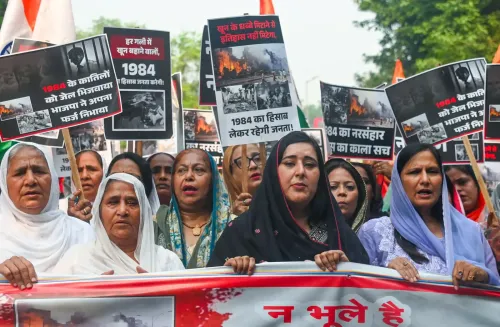
The 1984 anti-Sikh violence erupted across several parts of India — most severely in Delhi — following the assassination of Prime Minister Indira Gandhi by her Sikh bodyguards on 31 October 1984. Thousands of Sikhs were killed in the attacks. The alleged role of political leaders and officials has remained a subject of legal proceedings and political controversy for over four decades.
Sirsa dismissed the memoir as a 'false sense of responsibility which the Congress is fulfilling,' questioning the purpose of revisiting these events through a book. The Congress party has not issued an immediate response to Sirsa's remarks. The debate over accountability for the 1984 violence is expected to intensify as Sonia Gandhi's memoir draws further public attention.
Point of View
And any attempt to humanise Rajiv Gandhi's reaction will be read by Sikh political leaders as historical revisionism. What Sirsa's remarks underscore is the enduring electoral salience of 1984 for the BJP and its Sikh allies, particularly in Punjab. The Congress has never fully resolved the contradiction between its stated grief over the killings and the political careers of those accused of orchestrating them — a gap that critics have exploited for forty years, and that a memoir cannot close.
NationPress
10 Nov 2026
Frequently Asked Questions
What did Manjinder Singh Sirsa say about Rajiv Gandhi and the 1984 anti-Sikh riots?
Sirsa directly accused late former Prime Minister Rajiv Gandhi of being responsible for the 1984 anti-Sikh violence, rejecting Sonia Gandhi's memoir claim that Rajiv was 'deeply saddened and distressed.' He also alleged that Rajiv Gandhi rewarded Congress leaders accused of involvement in the violence with cabinet posts and chief ministerships.
What is Sonia Gandhi's memoir 'Belonging: A Journey of Love' about?
Sonia Gandhi's memoir 'Belonging: A Journey of Love' includes her personal account of the events surrounding the 1984 anti-Sikh violence, in which she describes Rajiv Gandhi as deeply saddened by the massacre. The book's release has triggered sharp political reactions, particularly from Sikh leaders who dispute that characterisation.
Which Congress leaders did Sirsa name in connection with the 1984 violence?
Sirsa named Kamal Nath, Sajjan Kumar, H.K.L. Bhagat, and Dharam Dass Shastri, alleging they gained political power despite accusations linking them to the 1984 anti-Sikh violence. These allegations have been part of legal proceedings and political debates for decades.
What is the background of the 1984 anti-Sikh violence?
The 1984 anti-Sikh violence erupted across India — most severely in Delhi — after Prime Minister Indira Gandhi was assassinated by her Sikh bodyguards on 31 October 1984. Thousands of Sikhs were killed. The alleged involvement of political figures has remained a subject of legal proceedings and controversy for over forty years.
Why did Sirsa also criticise the 1984 military operation at the Golden Temple?
Sirsa alleged that the June 1984 military operation at Sri Darbar Sahib (the Golden Temple) in Amritsar was a 'structured, planned attack,' rejecting accounts that Indira Gandhi expressed grief over it. He further alleged that the operation involved firing at the Guru Granth Sahib, which he described as an unforgivable act against Sikh religious sanctity.