CM Mann Overhauls Punjab's Kisan Credit Card System

Synopsis
Chief Minister Bhagwant Mann has overhauled Punjab's Kisan Credit Card system, transforming a 26-year-old framework to benefit over 13 lakh farmers across the state. The move marks one of the most significant structural changes to the state-level KCC mechanism since the scheme's national launch in 1998.
Key Takeaways
CM Bhagwant Mann has announced a comprehensive reform of the Kisan Credit Card (KCC) system in Punjab.
The overhaul changes a 26-year-old structural framework that has been in place since the scheme's launch in 1998 .
More than 13 lakh farmers across Punjab are expected to benefit from the reforms.
The KCC scheme was originally introduced by NABARD and the Government of India to provide institutional crop credit and reduce farmer dependence on informal lenders.
Detailed government orders specifying revised credit limits, eligibility, or digital processes have not yet been publicly released.
The announcement aligns with the Aam Aadmi Party government's focus on agricultural welfare since taking office in March 2022 .
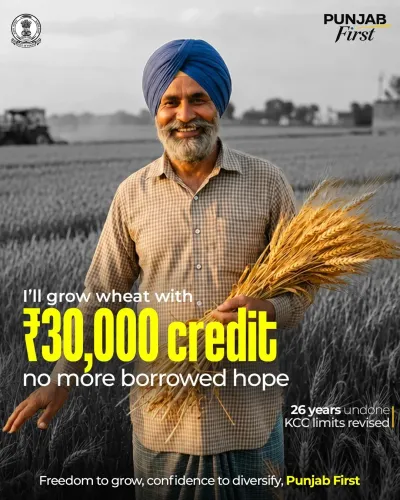
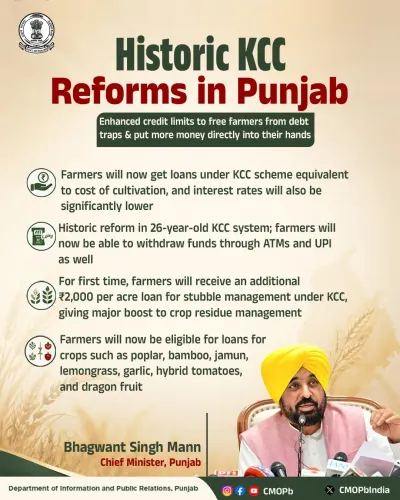
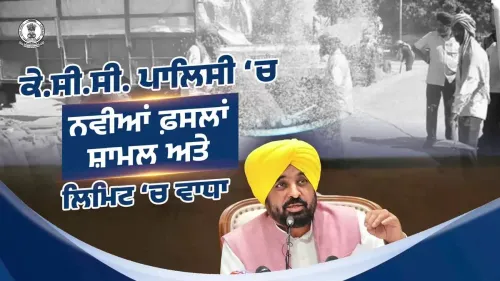
The Chief Minister's Office of Punjab announced on Friday, June 5, 2026 that Chief Minister Bhagwant Mann has carried out a comprehensive overhaul of the Kisan Credit Card (KCC) system in the state, bringing the first major structural change to a framework that has remained largely unchanged for 26 years. The reforms are expected to benefit more than 13 lakh farmers across Punjab.
Context
The official post, written in Punjabi, states: 'ਪੰਜਾਬ ਦੇ ਮੁੱਖ ਮੰਤਰੀ ਵੱਲੋਂ ਕਿਸਾਨ ਕ੍ਰੈਡਿਟ ਕਾਰਡ ਪ੍ਰਣਾਲੀ ਵਿੱਚ ਇੱਕ ਵਿਆਪਕ ਸੁਧਾਰ ਕੀਤਾ ਗਿਆ ਹੈ' — meaning 'a comprehensive reform of the Kisan Credit Card system has been carried out by the Chief Minister of Punjab.' The announcement specifically highlights that the 26-year-old structure of the scheme is being transformed. The state government has not yet released a detailed government order specifying the revised credit limits, eligibility criteria, or digital processes involved.
Policy Backdrop
The Kisan Credit Card scheme was originally launched in 1998 by NABARD and the Government of India to provide timely, flexible institutional credit to farmers for crop cultivation, post-harvest expenses, and allied activities, replacing a fragmented system of separate loans. The scheme was designed to reduce farmers' dependence on informal moneylenders who typically charged far higher interest rates. Over the years, the central framework has been periodically updated — notably expanded in 2004 to cover term credit and consumption requirements — but state-level structural reforms to adapt the scheme to local conditions have been infrequent.
Punjab's agrarian economy has long faced challenges including high farmer indebtedness, a dominant wheat-paddy cultivation cycle, and significant groundwater depletion. These structural pressures have made access to affordable, timely institutional credit a persistent concern for the farming community.
Stakeholders and Impact
The stated beneficiary base of more than 13 lakh farmers across Punjab represents a substantial share of the state's agricultural population. If implemented effectively, the reforms could reduce the credit gap that pushes many small and marginal farmers toward informal lenders. CM Bhagwant Mann, who took office in March 2022 as the first Aam Aadmi Party Chief Minister of Punjab, has positioned agricultural welfare and debt relief as central planks of his administration's agenda. The KCC overhaul aligns with that broader thrust, though the specific mechanisms — whether involving higher credit ceilings, simplified documentation, or digitised disbursal processes — are yet to be publicly detailed.
What's Next
Observers will watch for the release of formal government orders laying out the revised KCC norms applicable in Punjab, including any changes to loan limits, interest subvention, or eligibility criteria. Subsequent monitoring by NABARD and the Reserve Bank of India on actual disbursement trends will be critical to assessing whether the announced reforms translate into measurable credit access improvements on the ground. The state's ability to coordinate with nationalised and cooperative banks — the primary KCC-issuing institutions — will determine the pace of rollout.
Point of View
Which has staked much of its credibility on delivering tangible relief to Punjab's heavily indebted farming community. By framing the reform as a transformation of a '26-year-old structure,' the administration is drawing a clear contrast with successive previous governments that left the framework largely untouched. However, the announcement's impact will hinge entirely on the specifics — revised credit ceilings, streamlined documentation, or digital access — none of which have been disclosed yet. Until formal orders and disbursement data emerge, the reform remains a policy signal rather than a verified structural change.
NationPress
21 Oct 2026
Frequently Asked Questions
What is the Kisan Credit Card (KCC) scheme?
The Kisan Credit Card scheme is a credit delivery mechanism launched in 1998 by NABARD and the Government of India to provide farmers with timely, flexible institutional loans for crop cultivation and allied activities, reducing their dependence on informal moneylenders.
How many farmers in Punjab will benefit from the KCC reform?
According to the Chief Minister's Office of Punjab, more than 13 lakh farmers across the state are expected to benefit from the reforms announced by CM Bhagwant Mann.
What exactly has changed in Punjab's Kisan Credit Card system?
The state government has announced a comprehensive overhaul of the KCC structure, describing it as a transformation of a 26-year-old framework. The specific changes — such as revised loan limits, eligibility criteria, or digital processes — have not yet been detailed in a public government order.
Who introduced the Kisan Credit Card scheme in India?
The Kisan Credit Card scheme was introduced in 1998 by NABARD in collaboration with the Government of India to simplify and expand institutional credit access for farmers nationwide.
Why is Punjab's farm credit system important?
Punjab's agrarian economy faces persistent challenges including high farmer indebtedness linked to the wheat-paddy cultivation cycle and groundwater depletion, making affordable institutional credit critical to reducing reliance on informal lenders who charge higher interest rates.