UP Dy CM Maurya hits back at Akhilesh over 'Radhe-Radhe' slogan row ahead of 2027 polls
Synopsis
BJP's new 'Radhey Radhey, Kamal Khila De' slogan has triggered a full-blown war of words in Uttar Pradesh. UP Deputy CM Keshav Prasad Maurya's sharp X post — accusing SP of fearing both 'Jai Shri Ram' and 'Radhe-Radhe' — reveals how the BJP is using Braj devotional culture as its next electoral weapon ahead of 2027, even as Akhilesh Yadav tries to turn the slogan into a farewell joke.
Key Takeaways
UP Deputy CM Keshav Prasad Maurya attacked SP on 22 November 2026 over its criticism of BJP's new slogan 'Radhey Radhey, Kamal Khila De' .
Maurya alleged on X that SP was once scared of 'Jai Shri Ram' and is now uneasy hearing 'Radhe-Radhe' , accusing the party of appeasement politics.
SP chief Akhilesh Yadav had sarcastically suggested the slogan signalled the BJP's impending farewell from power in Uttar Pradesh .
The slogan emerged from the BJP's two-day Chintan Shivir as its core campaign narrative for the 2027 UP Assembly elections , drawing on the devotional culture of the Braj-Mathura region.
Maurya has also called for a Krishna temple in Mathura on the lines of the Ram temple in Ayodhya , and invited Akhilesh Yadav to join the proposed 'kar seva'.
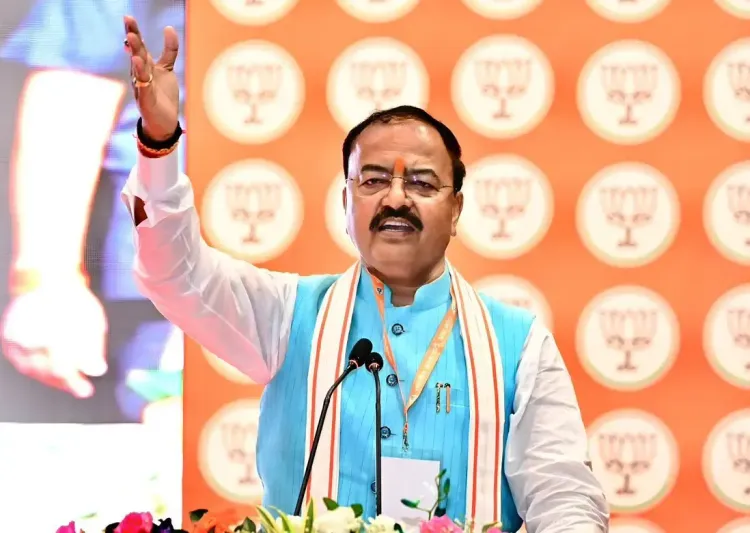
Uttar Pradesh Deputy Chief Minister Keshav Prasad Maurya on Sunday, 22 November 2026, launched a sharp counter-attack on the Samajwadi Party (SP) over its criticism of the Bharatiya Janata Party's (BJP) new electoral slogan, 'Radhey Radhey, Kamal Khila De', introduced ahead of the 2027 Uttar Pradesh Assembly elections. Maurya's remarks came in direct response to SP chief Akhilesh Yadav's sarcastic dismissal of the slogan, setting off a fresh round of political sparring between the two parties over religion, culture, and electoral strategy in the state.
Maurya's Counter-Attack on X
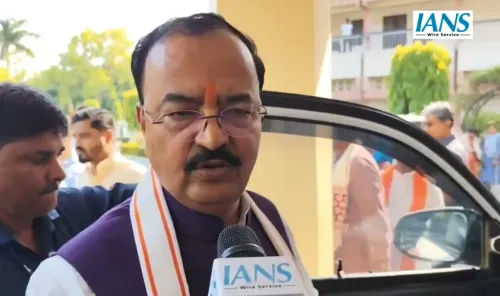
Taking to social media platform X, Keshav Prasad Maurya alleged that the Samajwadi Party, which had earlier expressed discomfort over the slogan 'Jai Shri Ram', was now equally unsettled by the phrase 'Radhe-Radhe'. 'The SP once used to get scared of 'Jai Shri Ram'; now even hearing 'Radhe-Radhe' makes them uneasy!' he posted.
Drawing on the regional and devotional significance of both greetings, Maurya elaborated: 'When 'Jai Shri Ram' rings out in Ayodhya, people in Braj ask about one another's well-being by saying 'Radhe-Radhe'. The SP should make it clear: does the state's public now have to ask them before saying the name of their beloved deity?' The remark was a pointed jab at what the Deputy Chief Minister characterised as the SP's discomfort with Hindu cultural expression.
Appeasement Charge and 2027 Warning
Escalating his attack, Maurya accused the Samajwadi Party of practising appeasement politics. 'The SP, steeped in appeasement, should listen up: both 'Jai Shri Ram' and 'Radhe-Radhe' will ring out. The SP's 'dream' of returning to power in 2027 will be shattered once again, and the 'lotus' will bloom once more in Uttar Pradesh!' he declared, directly invoking the BJP's election symbol in his rebuttal.
This is not the first time Maurya has used religious imagery as a political flashpoint. Earlier this month, he made remarks regarding the construction of a grand temple at the birthplace of Lord Krishna in Mathura, drawing a parallel with the Ram temple in Ayodhya. He also extended a public invitation to Akhilesh Yadav to participate in the proposed 'kar seva' for the Mathura temple — an invitation that added another layer of political tension between the two parties.
What Triggered the Row: Akhilesh's Jibe
Akhilesh Yadav had earlier dismissed the BJP's new campaign refrain with characteristic sarcasm. 'Even at the time of farewell, they say 'Radhe-Radhe'. This time, the public will give the BJP a grand farewell,' the SP chief remarked, suggesting the slogan inadvertently signalled the ruling party's departure from power. His comment played on the dual meaning of 'Radhe-Radhe' — both a devotional greeting and, colloquially, a way of saying goodbye.
The slogan 'Radhey Radhey, Kamal Khila De' — which translates roughly to 'In the name of Radhe, make the lotus bloom' — emerged as the centrepiece of the BJP's recently concluded two-day Chintan Shivir, signalling the party's intent to build a campaign narrative rooted in the devotional culture of the Braj region, particularly Mathura, while keeping its election symbol, the lotus, firmly embedded in the message.
The Bigger Electoral Picture
The exchange reflects a deliberate pivot in BJP's campaign strategy for Uttar Pradesh 2027. Having relied for years on the political resonance of 'Jai Shri Ram' — a slogan linked strongly to the Ayodhya Ram temple movement — the party appears to be broadening its religious outreach to the Braj-Mathura belt, which carries significant electoral weight across western Uttar Pradesh. Notably, the Mathura-Vrindavan corridor is both a cultural heartland and a politically competitive zone the BJP is keen to consolidate.
As both parties intensify their war of words, the slogan battle is likely to serve as a preview of the ideological and cultural contest that will define the 2027 Uttar Pradesh Assembly elections.
Point of View
A slogan anchored in Ayodhya, to a Braj-rooted Mathura greeting, the party is signalling a geographic and demographic expansion of its Hindu cultural outreach into western Uttar Pradesh. Maurya's swift, pointed X post shows the BJP has no intention of allowing the SP to define the slogan on its own terms. What mainstream coverage misses is that Akhilesh's farewell quip, however clever, risks alienating voters in the Mathura-Vrindavan belt for whom 'Radhe-Radhe' is an everyday sacred greeting — turning a political jibe into a potential electoral liability for the SP.
NationPress
22 Nov 2026
Frequently Asked Questions
What is the BJP's new slogan 'Radhey Radhey, Kamal Khila De'?
'Radhey Radhey, Kamal Khila De' is the BJP's new electoral campaign refrain for the 2027 Uttar Pradesh Assembly elections, unveiled at its two-day Chintan Shivir. It combines 'Radhey Radhey', a devotional greeting from the Braj-Mathura region, with 'Kamal Khila De' — meaning 'make the lotus bloom' — a direct reference to the BJP's election symbol.
Why did UP Deputy CM Keshav Prasad Maurya attack the Samajwadi Party?
Maurya hit back after SP chief Akhilesh Yadav sarcastically suggested that BJP's new slogan was a sign of the party preparing to bid farewell to power in Uttar Pradesh. Maurya alleged that SP has historically been uncomfortable with Hindu cultural greetings — first 'Jai Shri Ram' and now 'Radhe-Radhe' — and accused the party of appeasement politics.
What did Akhilesh Yadav say about the BJP's slogan?
SP chief Akhilesh Yadav dismissed the slogan with a sarcastic remark, saying 'Even at the time of farewell, they say Radhe-Radhe. This time, the public will give the BJP a grand farewell.' He implied the slogan inadvertently signalled the ruling party's exit from power in 2027.
What is the significance of 'Radhe-Radhe' in Uttar Pradesh?
'Radhe-Radhe' is a devotional greeting deeply rooted in the Braj region of Uttar Pradesh, particularly in and around Mathura and Vrindavan, associated with reverence for Radha-Krishna. By incorporating it into an election slogan, the BJP is tapping into the cultural and religious identity of the Braj-Mathura belt ahead of the 2027 elections.
What is the BJP's broader political strategy in Uttar Pradesh ahead of 2027?
The BJP appears to be widening its cultural outreach beyond the Ayodhya-centric 'Jai Shri Ram' narrative to include the Mathura-Vrindavan belt. Deputy CM Maurya has also spoken about building a Krishna temple in Mathura on the lines of the Ram temple in Ayodhya, signalling an intent to consolidate western Uttar Pradesh as part of the party's 2027 campaign blueprint.