Mayawati bets on Brahmin support to repeat BSP's 2007 UP majority
Synopsis
Mayawati is betting on a 2007 rerun. With BSP actively fielding Brahmin and upper-caste candidates for the UP Assembly polls and claiming growing community trust, she is attempting to rebuild the Dalit-Brahmin coalition that once handed her a full majority — a direct challenge to BJP's grip on upper-caste voters in the state.
Key Takeaways
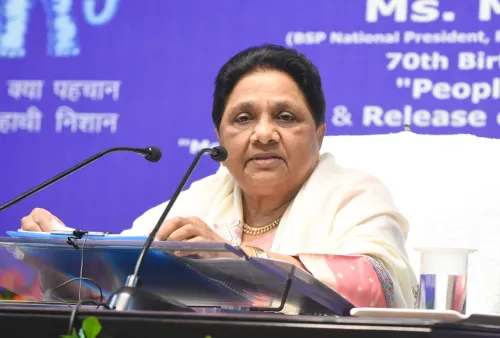
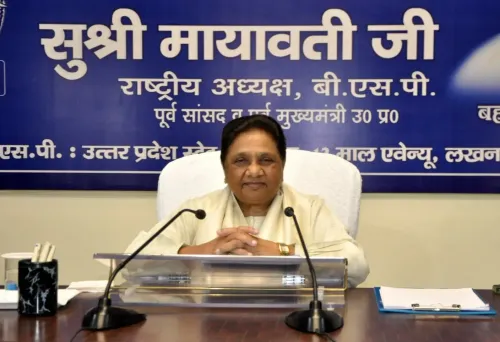
BSP chief Mayawati on 22 June claimed the Brahmin community and other upper-caste groups are increasingly backing the party ahead of Uttar Pradesh Assembly elections .
She drew parallels with the 2007 UP election , when BSP won a full majority on the strength of a Brahmin-Dalit coalition.
BSP has begun selecting candidates from the Brahmin , Kshatriya , and Vaishya communities under a 'proportionate participation' framework.
Mayawati alleged that under rival governments, Brahmins have felt neglected, insecure, and deceived for a considerable period.
The outreach is grounded in the party's 'Sarvajan Hitay, Sarvajan Sukhay' principle, which BSP claims sets it apart from narrower caste politics.
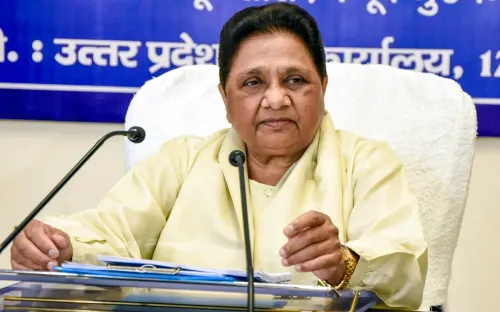
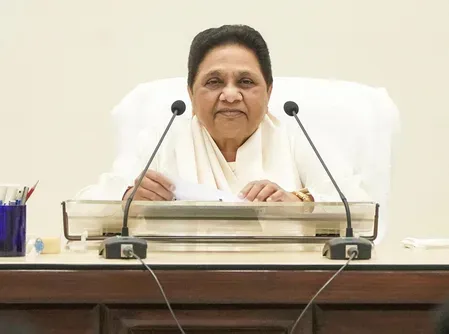
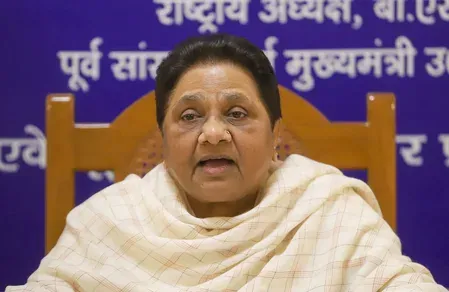
Bahujan Samaj Party (BSP) chief Mayawati on Monday, 22 June claimed that the Brahmin community, along with other upper-caste groups, is increasingly gravitating toward the BSP in Uttar Pradesh ahead of the state Assembly elections. She said the trend has already triggered visible unease among rival parties.
The 2007 Parallel
Mayawati drew a direct comparison with the 2007 Uttar Pradesh Assembly election, in which the BSP secured a full majority government on the back of a Brahmin-Dalit coalition. She argued that conditions are once again aligning for a similar outcome, asserting that upper-caste communities hold the highest degree of trust in the BSP's policies and leadership.
'Since this move, there has been growing restlessness among all opposition parties, particularly the Samajwadi Party,' she said, describing the rival parties' anxiety as a natural reaction to the prospect of a 2007 repeat.
Ticket Allocation and the 'Sarvajan' Principle
In a post on X, Mayawati said the BSP has already begun the process of selecting candidates from the upper-caste community — especially Brahmins — for the upcoming Assembly polls. She added that Kshatriyas and Vaishyas, along with other communities, will also receive tickets in proportion to their 'preparedness', under what she described as the principle of 'proportionate participation based on preparedness'.
Mayawati grounded the outreach in the party's foundational 'Sarvajan Hitay, Sarvajan Sukhay' (welfare and happiness for all) doctrine, claiming the BSP has implemented this at the organisational level in a way rival parties have not.
Allegations Against Rival Governments
Mayawati alleged that under governments led by other parties, members of the Brahmin community have, for a considerable period, felt neglected, insecure, and deceived. She contrasted this with the BSP's approach, arguing the party does not offer what she called 'lollipops' to a select few but treats welfare of the entire society as a constitutional duty.
She added that the BSP's policies are focused on public interest and are effective in maintaining law and order and controlling crime — a pointed reference to concerns that have historically shaped upper-caste voting behaviour in Uttar Pradesh.
Political Significance
The BSP's renewed Brahmin outreach is a significant strategic signal ahead of the Uttar Pradesh Assembly elections. The party has struggled to replicate its 2007 performance in subsequent polls, losing ground to both the Bharatiya Janata Party (BJP) and the Samajwadi Party. Critics have questioned whether the social coalition that delivered a majority nearly two decades ago can be reassembled in a sharply altered political landscape.
Notably, the BSP's upper-caste outreach comes at a time when the BJP has consolidated much of the Brahmin vote in Uttar Pradesh. Whether Mayawati's candidate-selection push translates into electoral traction will be closely watched by all major parties in the state.
Point of View
But the political terrain has shifted dramatically since 2007. The BJP has spent a decade consolidating upper-caste votes in Uttar Pradesh, and the BSP has failed to replicate its majority coalition in every election since. The real question is not whether Brahmins trust the BSP in principle — some historically have — but whether that sentiment can overcome the incumbency logic of voting for a party that is actually in contention to form the government. Mayawati's candidate-selection announcement is a pressure tactic as much as a genuine coalition-building exercise: it signals viability and forces rivals to respond, which itself becomes the story. Watch whether the SP's 'restlessness' she describes translates into any counter-outreach to upper castes.
NationPress
22 Jun 2026
Frequently Asked Questions
What is Mayawati claiming about Brahmin support for BSP in UP?
Mayawati has claimed that the Brahmin community, along with Kshatriyas and Vaishyas, is increasingly leaning toward the BSP ahead of the Uttar Pradesh Assembly elections. She says this shift has caused visible unease among rival parties, particularly the Samajwadi Party.
How does this connect to the 2007 UP election?
In 2007, the BSP won a full majority in Uttar Pradesh on the back of a Brahmin-Dalit coalition. Mayawati argues that similar conditions are forming now and that the party could repeat that outcome if the upper-caste shift consolidates.
What is BSP doing to attract Brahmin and upper-caste voters?
The BSP has begun selecting candidates from the Brahmin, Kshatriya, and Vaishya communities for the upcoming Assembly polls. Mayawati said tickets will be distributed based on a principle of 'proportionate participation based on preparedness.'
What is the 'Sarvajan Hitay, Sarvajan Sukhay' principle Mayawati referenced?
It is the BSP's foundational doctrine meaning 'welfare and happiness for all.' Mayawati invoked it to argue that the BSP, unlike other parties, works for the entire society rather than offering selective benefits to narrow constituencies.
Why does this matter for the Uttar Pradesh Assembly elections?
Uttar Pradesh is India's most populous state and a key battleground. A credible upper-caste shift toward the BSP would complicate vote calculations for both the BJP and the Samajwadi Party, making the BSP a more consequential player than it has been in recent election cycles.