Has Meghalaya's Education Budget Really Increased to Rs 3500 Crore?
Synopsis
Meghalaya's education sector is undergoing a transformative phase with a remarkable budget increase to Rs 3500 crore, as proclaimed by Chief Minister Conrad Sangma. Find out how this financial boost is shaping the region's educational landscape and fostering character development among students.
Key Takeaways
Education budget increased to Rs 3500 crore.
Emphasis on character development in education.
Meghalaya has a higher number of schools than neighboring states.
Challenges in rationalizing school staffing.
Plans for structured salary system for teachers.
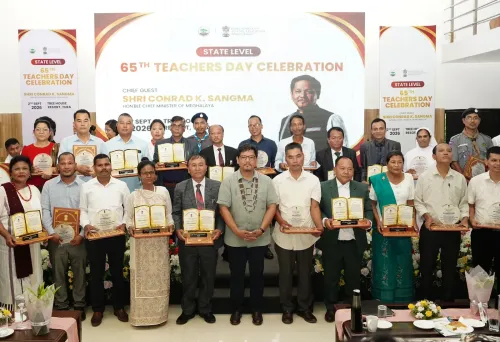
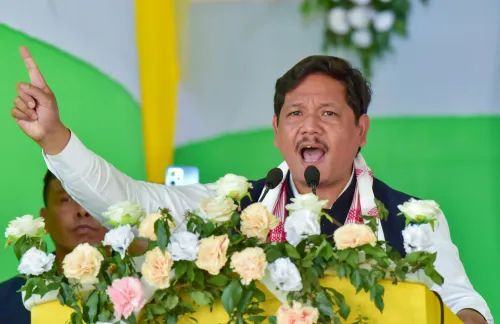
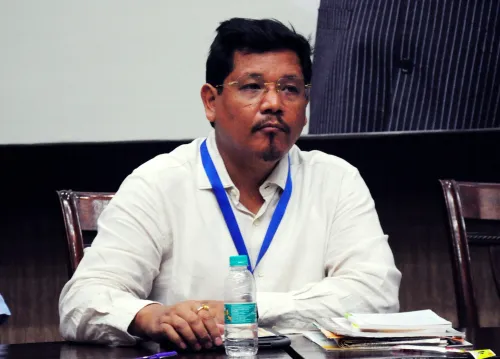
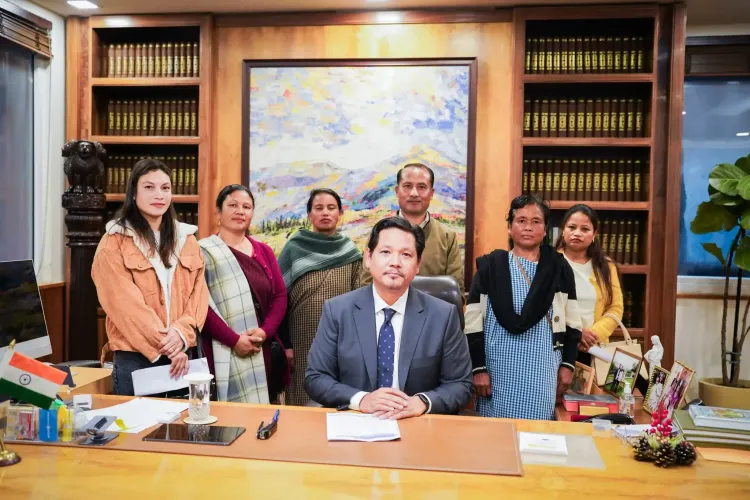
Shillong, Dec 9 (NationPress) Meghalaya's Chief Minister Conrad Sangma stated on Tuesday that the government has placed a strong emphasis on education, resulting in a significant increase in the education budget.
Reflecting on the government's educational programs since 2018, Sangma noted that the annual education budget has surged from Rs 2,000 crore to Rs 3,500 crore, marking it as the highest in the state. He expressed that this financial commitment is beginning to yield the transformative results the government aims to achieve.
In discussing comprehensive education, the Chief Minister underlined, "Education transcends mere textbooks or qualifications; it is about character development. It fosters discipline, loyalty, respect for elders, diligence, dedication, and a sense of purpose. Genuine education cultivates children into individuals of remarkable character."
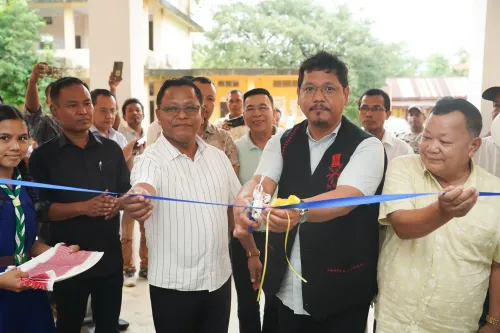
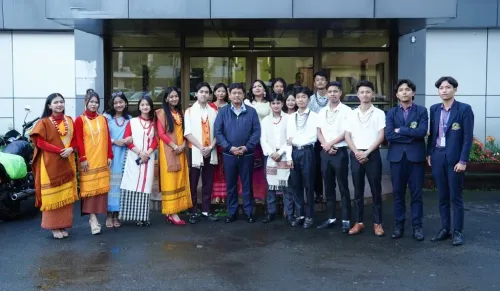
During the closing event of the Golden Jubilee Celebration (1975–2025) of Nartiang Presbyterian Higher Secondary School, Sangma recognized the school's half-century contribution to society and expressed gratitude to those involved in its journey.
Sangma provided insights into Meghalaya's educational landscape, stating, "Tripura, with a population exceeding 45 lakh, has approximately 4,000 schools. Manipur, having a similar population to Meghalaya, boasts around 5,000 schools. Nagaland has roughly 4,000 schools, while Meghalaya stands out with 14,000 schools—10,000 more than Tripura. We have 55,000 teachers, compared to Manipur's 36,000 and Tripura's 40,000, despite their larger populations."
While acknowledging the complexities of school rationalization, the Chief Minister highlighted that there are 206 schools fully staffed but without students, and about 2,000 schools have 5–7 teachers for only one to five students.
Sangma noted that rationalization poses challenges as many livelihoods are tied to these teaching positions.
Regarding educational reforms, the Chief Minister mentioned that the government is close to finalizing a structured salary system for ad hoc and SSA teachers. This system aims to provide job security, periodic salary increments, and post-retirement benefits, with a decision expected before Christmas.
On the subject of student opportunities, he announced that the government is evaluating the demand for science streams not only at NPHSS but across all higher secondary schools, committing to enable students to pursue their desired subjects without restrictions.
Point of View
Meghalaya's commitment to enhancing its education budget reflects a growing recognition of the importance of investing in human capital. This move not only aims to improve educational outcomes but also to foster a generation equipped with strong character and purpose. As such initiatives unfold, they should be closely monitored for their impact on both local communities and the broader educational framework in India.
NationPress
26 Sept 2026
Frequently Asked Questions
What is the current education budget of Meghalaya?
The education budget of Meghalaya has increased to Rs 3500 crore annually.
Who is the Chief Minister of Meghalaya?
The Chief Minister of Meghalaya is Conrad Sangma.
How many schools are there in Meghalaya?
Meghalaya has approximately 14,000 schools, significantly more than other neighboring states.
What are the government’s plans for teacher salaries?
The government is finalizing a structured salary system for ad hoc and SSA teachers to provide job security and benefits.
What is the focus of Meghalaya's education initiatives?
The focus is on holistic education that emphasizes character development alongside academic achievement.