Meghalaya's MBMA Wins FSC Certification for Bamboo

Synopsis
The Meghalaya Basin Management Agency has secured FSC certification for Group Forest Management and Chain of Custody covering Natural Bamboo — a milestone CM Conrad Sangma says validates the state's push for sustainable forestry and community-led livelihoods, with links to India's National Bamboo Mission.
Key Takeaways
Meghalaya Basin Management Agency (MBMA) has received FSC certification for Group Forest Management and Chain of Custody, covering Natural Bamboo .
The Forest Stewardship Council is an internationally recognised body that validates responsible forest management and traceable supply chains.
CM Conrad Sangma highlighted the milestone as a step forward for sustainable forest management, responsible resource utilisation, and community-led livelihoods.
The certification aligns with India's National Bamboo Mission , restructured in 2018 , which promotes bamboo cultivation and value addition across states including Meghalaya.
The Union Ministry of Environment, Forest and Climate Change ( MoEFCC ) was tagged in the announcement, indicating active Centre-state coordination.
The recognition positions Meghalaya's bamboo sector for access to premium international markets that require verified sustainability credentials.
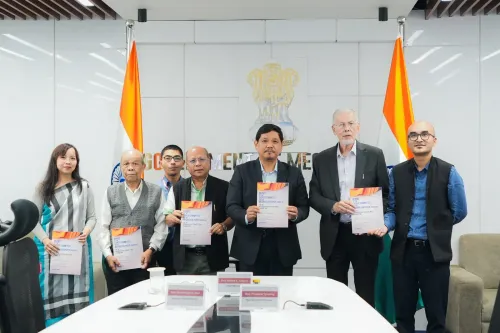
Meghalaya just earned a stamp of global credibility for its forests. Meghalaya Chief Minister Conrad Sangma on Wednesday, November 18, 2026, congratulated the Meghalaya Basin Management Agency (MBMA) after the agency secured the prestigious Forest Stewardship Council (FSC) certification for Group Forest Management and Chain of Custody, covering Natural Bamboo — a first-of-its-kind recognition for the northeastern state.
What FSC certification means for Meghalaya's bamboo
The Forest Stewardship Council is the world's most recognised international body for setting standards in responsible forest management. Its dual certification — covering both Group Forest Management and Chain of Custody — essentially validates two things at once: that Meghalaya's bamboo forests are being managed sustainably at the ground level, and that the supply chain from forest to market is fully traceable and responsibly handled.
For a state where bamboo is not just a crop but a cultural and economic backbone for thousands of forest-dependent communities, this recognition carries real weight. It opens doors to premium international markets that demand verified sustainability credentials — buyers who will now have an independent, global authority's word that Meghalaya's bamboo meets the bar.
MBMA's role and the community-livelihood angle
The Meghalaya Basin Management Agency has been the state's institutional engine for river basin development and sustainable resource management. The FSC certification represents the culmination of community-led forestry work — the kind of on-the-ground effort where local groups are not just beneficiaries but active stewards of the resource. CM Sangma specifically highlighted 'community-led livelihoods' as central to the achievement, signalling that the gains here are designed to flow back to forest communities.
Northeast India has increasingly pursued international certifications of this kind to give community-based forest practices a globally legible identity — and to sharpen the competitive edge of local produce in export markets. Meghalaya's bamboo certification follows that broader regional pattern.
National Bamboo Mission and the Centre's role
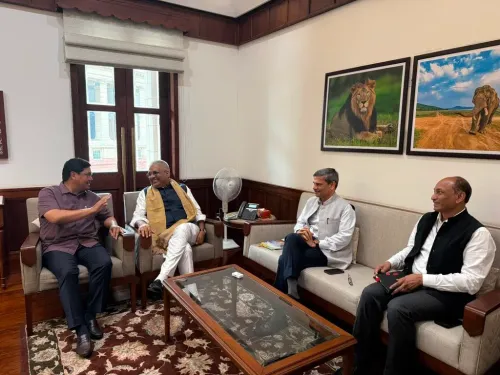
CM Sangma's post tagged Union Minister Bhupender Yadav and the Ministry of Environment, Forest and Climate Change (MoEFCC), signalling active coordination with the Centre. The certification aligns squarely with India's National Bamboo Mission, first launched in 2006-07 and significantly restructured in 2018, which promotes bamboo cultivation, value addition, and sustainable management across states — with northeastern states like Meghalaya among its primary focus areas.
The linkage between this FSC recognition and central green livelihood schemes could now unlock fresh avenues for export promotion and further investment in Meghalaya's bamboo sector. The state's next move — whether it scales FSC-certified area, deepens value-addition chains, or ties into central export incentives — will be worth tracking closely.
Meghalaya's bamboo just went global. The question now is how fast the market catches up.
Point of View
It also demonstrates that community forestry models can achieve internationally recognised benchmarks, strengthening the case for continued central funding under the National Bamboo Mission. The deliberate tagging of MoEFCC signals an intent to convert this certification into tangible policy and financial support from the Centre. If Meghalaya can scale certified area and link it to export incentives, it could emerge as a template for other northeastern states navigating the intersection of conservation, livelihoods, and global trade.
NationPress
18 Nov 2026
Frequently Asked Questions
What is the FSC certification that Meghalaya's MBMA received?
The Forest Stewardship Council (FSC) certification validates that an organisation meets international standards for responsible forest management and maintains a fully traceable, responsibly handled supply chain. MBMA received it for Group Forest Management and Chain of Custody covering Natural Bamboo.
What is the Meghalaya Basin Management Agency (MBMA)?
The MBMA is a state agency in Meghalaya responsible for river basin development and sustainable resource management projects, including community-based forestry and bamboo initiatives.
How does this FSC certification benefit bamboo farmers and communities in Meghalaya?
FSC certification gives Meghalaya's bamboo a globally recognised sustainability credential, enabling forest communities to access premium international markets that mandate verified responsible sourcing and potentially commanding better prices for their produce.
What is the National Bamboo Mission and how is it connected to this news?
The National Bamboo Mission, launched in 2006-07 and restructured in 2018, promotes bamboo cultivation, value addition, and sustainable management across Indian states. Meghalaya's FSC certification aligns with the mission's goals and could unlock additional central support for the state's bamboo sector.
Why did CM Conrad Sangma tag the Ministry of Environment in his post?
CM Sangma tagged Union Minister Bhupender Yadav and the Ministry of Environment, Forest and Climate Change (MoEFCC) to signal active Centre-state coordination and potentially invite central support, including linkage with green livelihood schemes and export promotion measures.