Meghalaya UDP MLAs join BJP: 8 legislators switch after sustained talks on key state issues
Synopsis
Eight UDP MLAs, including Meghalaya Minister Lahkmen Rymbui, joined the BJP in New Delhi on 23 September — not on impulse, but after sustained talks on four unresolved state demands: Khasi-Garo language recognition, coal mining reforms, the Meghalaya Residents Safety Act, and Harijan Colony relocation. The BJP's northeastern consolidation play just got a significant boost within the ruling coalition itself.
Key Takeaways
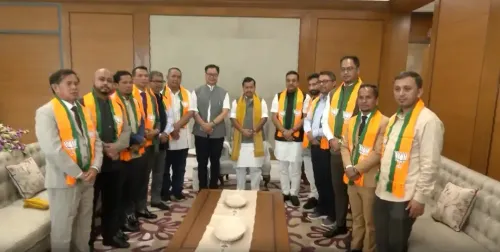
Eight UDP MLAs , led by Minister Lahkmen Rymbui , formally joined the BJP in New Delhi on 23 September 2026 .
The switch followed sustained discussions on four key issues : Khasi-Garo inclusion in the Eighth Schedule , amendments to the Meghalaya Residents Safety and Security Act , coal mining procedure reforms, and relocation of Harijan Colony from Them Iew Mawlong.
The BJP's strength in the 60-member Meghalaya Assembly rises sharply from 2 seats , while the UDP is cut from 12 to 4 seats .
Both the BJP and UDP are members of the ruling Meghalaya Democratic Alliance led by Chief Minister Conrad K.
Sangma 's NPP — the realignment stays within the coalition.
Union Minister Kiren Rijiju and BJP spokesperson Sambit Patra presided over the induction ceremony.
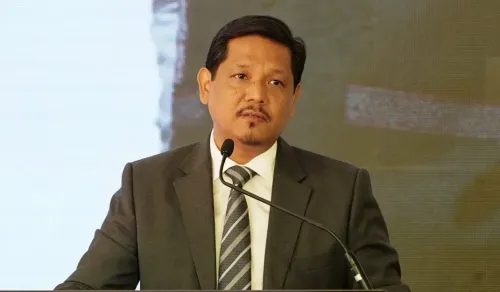
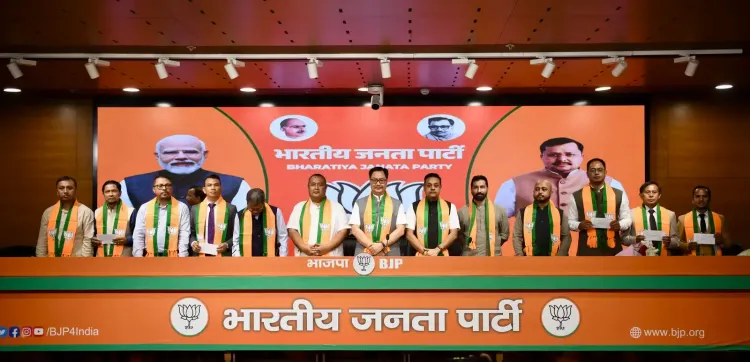
Meghalaya Minister Lahkmen Rymbui and seven other United Democratic Party (UDP) legislators formally joined the Bharatiya Janata Party (BJP) in New Delhi on Wednesday, 23 September 2026, marking a significant political realignment in the northeastern state. The eight MLAs said the decision came after sustained consultations with the BJP's Central leadership on four core issues affecting Meghalaya.
The Switch and Who Joined
The legislators who crossed over include Lahkmen Rymbui, Pius Marwein, Kyrmen Shylla, Mayralborn Syiem, Matthew Kurbah, Ollan Singh Suin, Balajied Kupar Synrem, and Synshar Kupar Roy. The formal induction took place in the presence of Union Minister Kiren Rijiju, BJP national spokesperson and party coordinator for northeastern states Sambit Patra, and other senior party leaders.
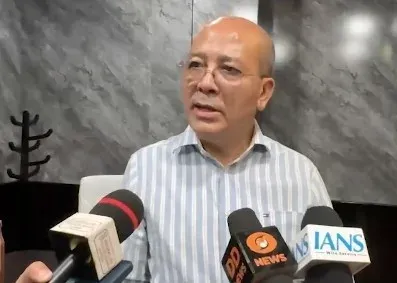
Rymbui was categorical that this was no impulsive move. 'This is not something that happened suddenly. Discussions have been going on for some time,' he said at a joint press conference after the induction ceremony.
Four Key Demands That Drove the Decision
According to Rymbui, the discussions with the BJP leadership centred on four critical issues that require Central government support. These are: the demand for inclusion of Khasi and Garo languages in the Eighth Schedule of the Constitution; amendments to the Meghalaya Residents Safety and Security Act; easing of procedures related to coal mining; and the relocation of the Harijan Colony from Them Iew Mawlong.
'These are issues which require greater support from the Centre and are linked to the aspirations of the MLAs and the people of Meghalaya,' Rymbui said. He added that several younger legislators were motivated by a desire to contribute to the state's development. 'BJP leaders have given encouraging responses to all these issues and other matters, and they will take action in the coming days. That is why we have come here to join the party,' he said.
What This Means for the Meghalaya Assembly
Before this switch, the BJP held two seats and the UDP held 12 seats in the 60-member Meghalaya Legislative Assembly. With the defection of eight UDP MLAs, the BJP's tally rises substantially while the UDP is left significantly weakened. Notably, both parties are part of the ruling Meghalaya Democratic Alliance, led by Chief Minister Conrad K. Sangma's National People's Party (NPP), meaning this realignment occurs within the ruling coalition rather than across the aisle.
BJP's Response and National Significance
Welcoming the legislators, Union Minister Rijiju described the development as significant for the Northeast, saying their decision was rooted in Meghalaya's development aspirations under Prime Minister Narendra Modi's leadership. Rymbui also expressed appreciation for Modi, saying the country had witnessed major changes during his tenure. This comes amid the BJP's broader strategy of consolidating its presence across the northeastern states, where coalition arithmetic plays a decisive role in governance.
Point of View
From constitutional language recognition to coal mining. The BJP gains Northeast Assembly numbers at minimal cost; the MLAs gain a direct line to the Centre. What this reveals is the transactional underbelly of coalition politics in the region — where smaller parties face a structural choice between irrelevance in a coalition or absorption into the dominant national party. The UDP's remaining four MLAs will now be under pressure, and the NPP's position as coalition anchor becomes more asymmetric. Whether the BJP delivers on its 'encouraging responses' will determine if this is a lasting alignment or a promise-and-forget episode that has played out before in Northeast India.
NationPress
23 Sept 2026
Frequently Asked Questions
Which UDP MLAs have joined the BJP in Meghalaya?
The eight UDP MLAs who joined the BJP are Lahkmen Rymbui, Pius Marwein, Kyrmen Shylla, Mayralborn Syiem, Matthew Kurbah, Ollan Singh Suin, Balajied Kupar Synrem, and Synshar Kupar Roy. They were formally inducted in New Delhi on 23 September 2026.
Why did the UDP MLAs join the BJP?
The MLAs cited four key issues requiring Central support — inclusion of Khasi and Garo in the Eighth Schedule of the Constitution, amendments to the Meghalaya Residents Safety and Security Act, easing of coal mining procedures, and relocation of the Harijan Colony from Them Iew Mawlong. Minister Rymbui said the BJP leadership gave encouraging responses on all these demands.
How does this affect the Meghalaya Assembly composition?
Before the switch, the BJP held 2 seats and the UDP held 12 in the 60-member Meghalaya Assembly. With eight MLAs moving to the BJP, the party's tally rises to 10 seats, while the UDP is reduced to 4. Both parties remain part of the ruling Meghalaya Democratic Alliance led by Chief Minister Conrad K. Sangma's NPP.
Does this switch threaten the ruling coalition in Meghalaya?
No, at least immediately. Both the BJP and the UDP are constituents of the ruling Meghalaya Democratic Alliance, so the realignment occurs within the coalition rather than against it. However, it does shift the internal power balance, with the BJP now holding significantly more seats than its coalition partner the UDP.
Who presided over the BJP induction ceremony?
Union Minister Kiren Rijiju and BJP national spokesperson Sambit Patra, who also serves as the party's coordinator for northeastern states, presided over the induction ceremony in New Delhi along with other senior BJP leaders.