Is Meghalaya the Second Fastest Growing Economy in India?
Synopsis
Meghalaya is making headlines as the second fastest growing economy in India, according to Chief Minister Conrad Sangma. The recent Tri Hills Ensemble festival showcases the region's rich cultural heritage while emphasizing the importance of preserving identity amidst economic growth. Learn how Meghalaya balances tradition and progress in this inspiring story.
Key Takeaways
Meghalaya is the second fastest growing economy in India.
The Tri Hills Ensemble celebrates the culture and heritage of the Khasis, Jaintias, and Garos.
Preserving cultural identity is vital amidst economic progress.
This year's theme, “Rivers, Roots, and Revival,” focuses on rediscovering lost traditions.
Efforts are underway to document tribal histories and traditions.
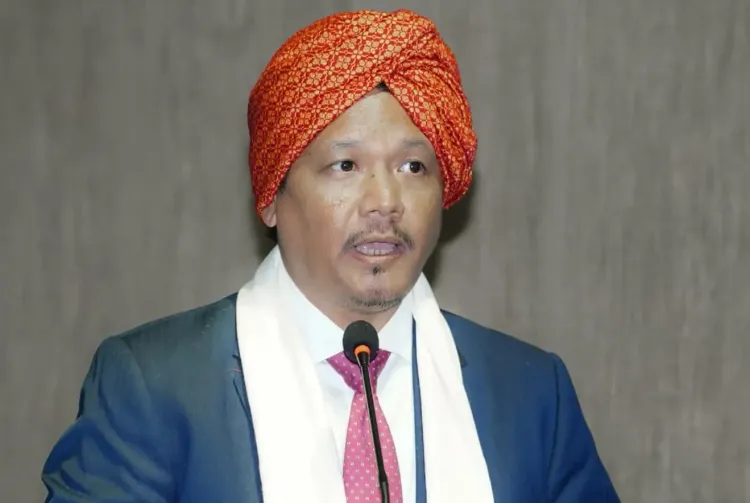
Guwahati, Dec 10 (NationPress) Meghalaya is experiencing remarkable economic growth, ranking as the second fastest growing economy in India, following the southern state of Tamil Nadu, announced Chief Minister Conrad Sangma on Wednesday.
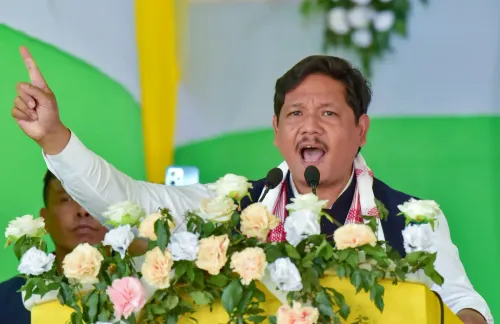
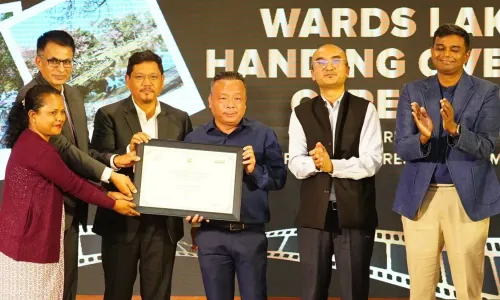
Sangma inaugurated the 4th Edition of the Tri Hills Ensemble at Ward’s Lake, Shillong. This festive event showcases the rich craft, culture, and cuisine of the Khasis, Jaintias, and Garos.
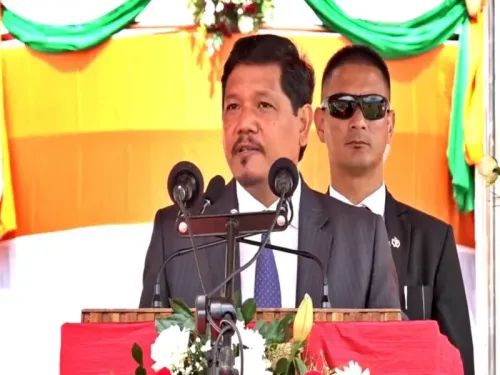
During his speech, the Chief Minister praised the Department of Arts & Culture for organizing a festival that reconnects us with our heritage, emphasizing the importance of showcasing various cultural aspects to the world, while preserving the identity and legacy of our people.
He highlighted that despite the rapid economic development, maintaining cultural identity must remain a priority. Meghalaya's significant achievement as the second fastest growing economy in the nation, following Tamil Nadu, underscores this point.
Sangma noted that the theme for this year's Tri Hills Ensemble, “Rivers, Roots, and Revival,” symbolizes a revival of lost traditions, such as the rowing and boating competitions that used to take place in Dawki and surrounding areas.
The Chief Minister called for more comprehensive documentation of tribal histories, languages, rituals, dance forms, and migratory paths.
Pointing out cultural deficiencies, he stated, “In Garo culture, there are various drum beats and unique steps for the Wangala that only drummers can identify, yet there is no formal documentation.” He urged for further research through initiatives like the Chief Minister’s Research Grant.
Sangma encouraged schools to present plays about Meghalaya’s heroes, including Tirot Sing, Kiang Nongbah, and Pa Togan Sangma, to instill a sense of pride and unity among the youth.
He concluded with hopes for enhanced cultural exchanges and extended best wishes to all participants and award recipients.
Meanwhile, Minister of Arts & Culture, Sanbor Shullai, remarked that the festival honors the rich heritage of the Khasi, Jaintia, and Garo communities, celebrating their culture, language, music, cuisine, and craftsmanship.
He noted that the Meghalaya Arts and Heritage Awards acknowledge both traditional masters and innovative young achievers who are preserving their identity and representing new excellence.
He also recognized cultural research and documentation initiatives, including the Chief Minister’s Research Grant, aimed at safeguarding cultural knowledge for future generations.
Shullai discussed the revival of traditional boat races as a return to heritage, bringing together men, youth, performers, artisans, and organizers to collaboratively maintain cultural vitality.
Point of View
Meghalaya's recognition as the second fastest growing economy is an encouraging sign of regional development. However, it is essential to ensure that economic progress does not overshadow the cultural identities that define the state's unique character. Balancing growth with cultural preservation is vital for sustainable development.
NationPress
24 Sept 2026
Frequently Asked Questions
What is the significance of Meghalaya's economic growth?
Meghalaya's rapid economic growth positions it as a key player in India's economy, emphasizing the need for sustainable development that also preserves its cultural heritage.
How does the Tri Hills Ensemble contribute to Meghalaya's culture?
The Tri Hills Ensemble showcases the cultural diversity of Meghalaya, celebrating the traditions of the Khasi, Jaintia, and Garo communities, and fostering unity among them.
What initiatives are in place for cultural documentation in Meghalaya?
The Chief Minister’s Research Grant and various cultural research projects aim to document and preserve the rich histories, languages, and traditions of Meghalaya's tribes.