Dr. Jitendra Singh: Millet Farming Transforms Majalta, Udhampur
Synopsis
Union Minister Dr. Jitendra Singh spotlights a millet cultivation drive in Majalta, Udhampur, where the Jammu and Kashmir Agriculture Department has brought 20–25 hectares under resilient coarse cereal farming, benefiting over 200 households in rain-fed hill terrain.
Key Takeaways
Millet farming in Majalta, Udhampur now covers 20–25 hectares , supported by the J&K Agriculture Department.
200–225 households in Majalta are directly benefiting from the initiative.
The programme provides farmers with seeds, training, and extension support for millet cultivation.
India designated 2023 as the International Year of Millets , launching a national push for climate-resilient coarse cereals.
Millets suit Majalta's rainfed hilly terrain, reducing dependence on water-intensive crops and lowering input costs.
The initiative reflects a broader Central and J&K government strategy of crop diversification for climate adaptation and nutritional security.
In the rain-fed hills of Majalta, Udhampur, a quiet agricultural shift is underway — one that Union Science and Technology Minister Dr. Jitendra Singh highlighted on Tuesday, 29 September 2026, calling it 'new hope' for farmers in one of Jammu and Kashmir's most challenging terrains.
Millet Takes Root Across 20–25 Hectares in Majalta
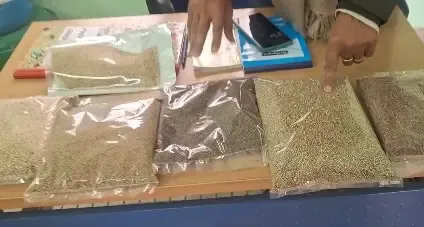
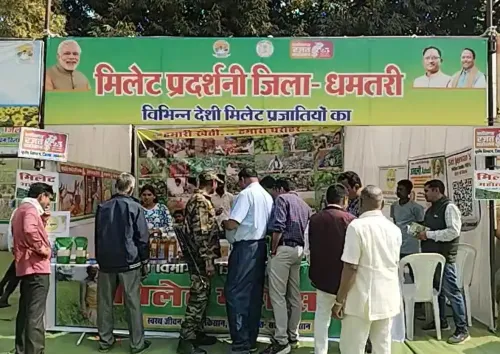
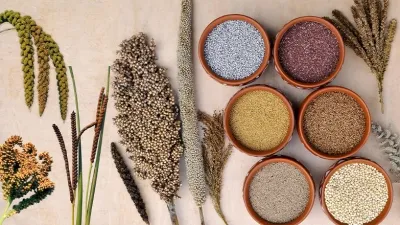
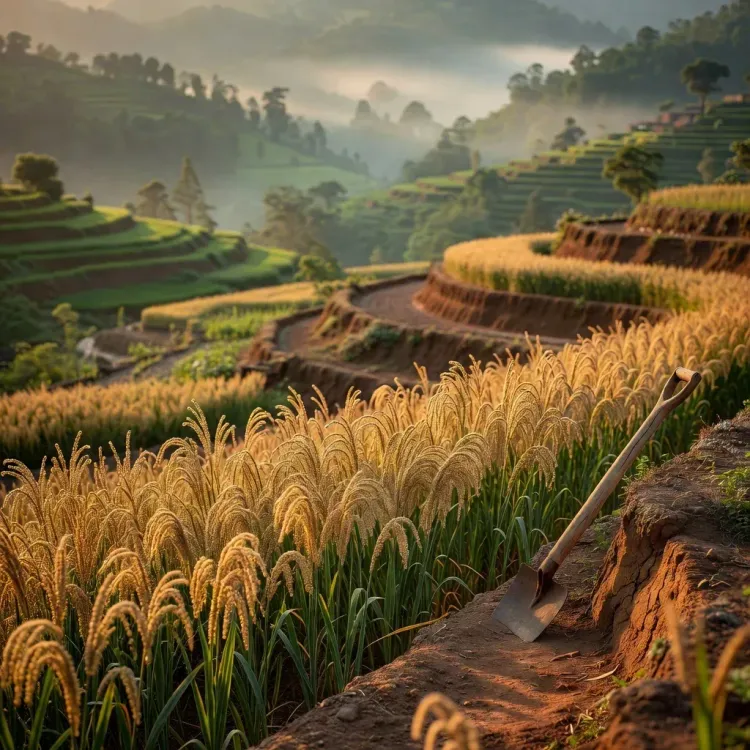
The initiative, backed by the Jammu and Kashmir Agriculture Department, has spread across 20 to 25 hectares and is directly benefiting 200 to 225 households. Millets — hardy, drought-tolerant, and nutrition-dense — are a natural fit for Majalta's hilly, rainfed landscape where water-intensive crops like paddy or wheat often struggle to deliver consistent yields.
The Agriculture Department has extended support in the form of seeds, technical training, and extension services to participating farmers, giving smallholders a structured entry point into millet cultivation rather than a solitary experiment.
Why Millets, Why Now, and Why Majalta
The push is not accidental. The Government of India designated 2023 as the International Year of Millets, seeding a national campaign to restore coarse cereals to Indian fields and plates under the National Food Security Mission. That policy momentum has filtered down to marginal districts like Udhampur, where the agrarian case for millets is especially compelling: lower water demands, better soil health, and reduced input costs.
For Jammu and Kashmir specifically, central and state agencies have been running crop diversification pilots in rainfed pockets — not just for climate adaptation but to cushion farmer incomes against the volatility that monoculture invites. Majalta, with its terrain and rainfall pattern, is a test case for whether that national ambition can translate into village-level change.
200-Plus Households and the Livelihood Calculus
The numbers Dr. Jitendra Singh cites — 200 to 225 households — may sound modest against the scale of Indian agriculture, but in a hilly sub-district economy, they represent a meaningful cluster. Each household that shifts even a fraction of its cultivable land to millets reduces its exposure to irrigation failure while gaining access to a crop that commands growing urban demand for health foods.
The broader pattern points toward possible integration with nutrition or rural livelihood programmes as the initiative matures — a logical next step if area coverage and household participation continue to climb.
From a single district in the Shivalik foothills, a crop once sidelined as 'poor man's grain' is writing a more ambitious story — and the government wants that story told loud.
Point of View
It could become a template for other marginal hill districts across the Shivaliks and the Western Himalayas.
NationPress
29 Sept 2026
Frequently Asked Questions
What is the millet farming initiative in Majalta, Udhampur?
The Jammu and Kashmir Agriculture Department is supporting millet cultivation in Majalta, covering 20–25 hectares and benefiting 200–225 households with seeds, training, and extension services to promote sustainable and climate-resilient farming.
Why are millets being promoted in Jammu and Kashmir?
Millets are drought-tolerant and require less water than conventional crops like paddy, making them ideal for J&K's rainfed hilly terrain. The initiative also aligns with India's National Food Security Mission and the 2023 International Year of Millets campaign.
How many farmers benefit from millet cultivation in Majalta?
According to Union Minister Dr. Jitendra Singh, the programme currently benefits 200–225 households in Majalta, Udhampur district.
What did India do during the International Year of Millets 2023?
India led global promotion of coarse cereals under the National Food Security Mission, encouraging states to increase millet area, improve processing infrastructure, and link farmers to domestic and export markets for nutritious grains.
What is Dr. Jitendra Singh's connection to Jammu and Kashmir?
Dr. Jitendra Singh is Union Minister of State (Independent Charge) for Science and Technology and Earth Sciences, and also MoS in the PMO — he has strong political and personal roots in Jammu and Kashmir, making J&K-specific welfare announcements a consistent feature of his public communication.