Meghalaya living root bridges: Modi highlights UNESCO bid in Mann Ki Baat
Synopsis
Modi used his national radio platform to put Meghalaya's living root bridges on the UNESCO map — literally. With India's formal nomination submitted and over 120 bridges already under community stewardship, the announcement elevates a grassroots conservation story into a matter of national cultural diplomacy.
Key Takeaways
PM Narendra Modi highlighted Meghalaya's living root bridges in his Mann Ki Baat address on 28 June .
India has formally applied to include the bridges in the UNESCO World Heritage Site network.
Local communities currently maintain more than 120 living root bridges , with annual inspections and dedicated nurseries.
Padma awardee Hally War has spent more than five decades preserving the bridges, earning national recognition from the Prime Minister.
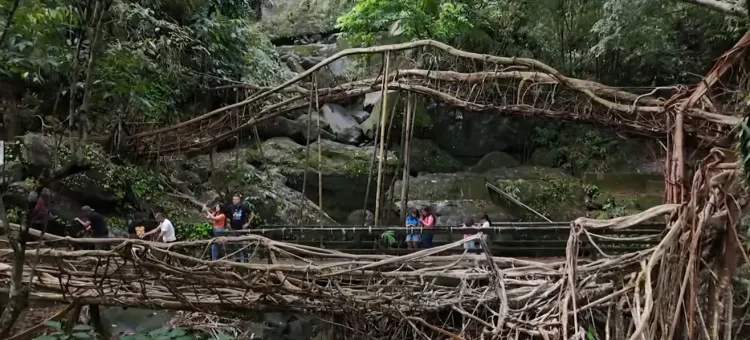
The bridges are grown over several decades by training rubber-tree roots across streams — a practice unique to indigenous communities of Meghalaya .
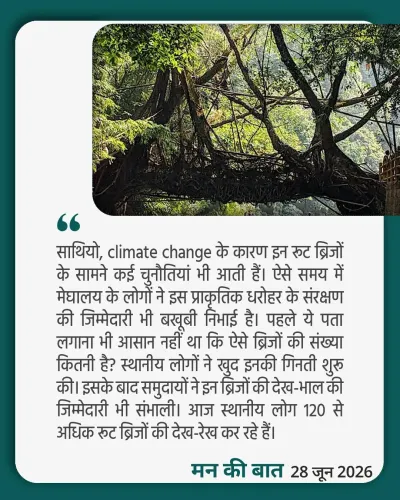
Prime Minister Narendra Modi on Sunday, 28 June spotlighted Meghalaya's iconic living root bridges during his monthly radio address 'Mann Ki Baat', calling them a priceless national heritage and confirming that India has formally applied for their inclusion in the UNESCO World Heritage Site network. The Prime Minister praised local communities and conservation champions for safeguarding the centuries-old natural structures against the pressures of climate change.
What Makes the Living Root Bridges Unique
Unlike conventional bridges built from timber or steel, Meghalaya's living root bridges are painstakingly shaped over several decades by guiding the aerial roots of rubber trees across streams until they intertwine and solidify into load-bearing spans. Modi described them as structures that 'continue to grow stronger with time,' reflecting, in his words, 'the creativity, patience and deep respect for nature of the people of Meghalaya.'
The bridges are concentrated in the East Khasi Hills and surrounding regions, embedded in one of the wettest ecosystems on Earth. Their construction and maintenance is an intergenerational practice passed down within indigenous Khasi and Jaintia communities.
Community-Led Conservation Effort
Modi highlighted that local residents took the initiative to identify and catalogue the bridges when no comprehensive record existed. Today, community teams maintain more than 120 living root bridges, conducting annual structural inspections and running nurseries to reinforce the surrounding forest ecosystem.
The Prime Minister singled out Padma awardee Hally War for dedicating more than five decades to the preservation of the bridges, calling his commitment 'an inspiration for the nation.' War's work exemplifies the grassroots stewardship that Modi credited with keeping the structures alive amid mounting environmental pressures.
UNESCO World Heritage Bid
India's formal application to nominate the living root bridges as a UNESCO World Heritage Site marks a significant step toward global recognition. A successful listing would place them alongside landmarks such as the Kaziranga National Park and the Western Ghats on UNESCO's roster, potentially boosting conservation funding and responsible tourism in the region.
Notably, Meghalaya has long attracted attention for its biodiversity and rainfall records, but the root bridges have historically received limited policy focus at the national level. Modi's public endorsement from a prime-time national platform signals a shift in that regard.
Modi's Call to Citizens
The Prime Minister urged listeners who have visited the root bridges to share photographs on social media, arguing that citizen-driven awareness would encourage wider appreciation of Meghalaya's natural and cultural heritage. He also praised the state more broadly, noting its reputation for scenic landscapes and the hospitality of its people.
With the UNESCO nomination in motion and community conservation structures already in place, the coming months will determine whether Meghalaya's living root bridges earn the global recognition that conservationists have long sought.
Point of View
If successful, could transform the root bridges from a niche eco-tourism draw into a globally recognised conservation model. But recognition without resources is a familiar trap: past UNESCO listings in India have not always translated into on-ground funding or community benefit-sharing. The real test will be whether the nomination is backed by a concrete management plan that keeps commercialisation from eroding the very ecosystem that makes the bridges possible.
NationPress
26 Sept 2026
Frequently Asked Questions
What are Meghalaya's living root bridges?
Meghalaya's living root bridges are natural structures formed by training the aerial roots of rubber trees across streams over several decades until they intertwine into sturdy, load-bearing spans. They are built and maintained by indigenous Khasi and Jaintia communities and are found primarily in the East Khasi Hills region.
Why did PM Modi mention the living root bridges in Mann Ki Baat?
PM Modi highlighted the bridges on 28 June to raise national awareness about their cultural and ecological significance, announce India's formal UNESCO World Heritage Site nomination, and praise community-led conservation efforts. He called them a 'priceless heritage' of the country.
Has India applied for UNESCO World Heritage status for the living root bridges?
Yes. PM Modi confirmed during his Mann Ki Baat address that India has formally submitted an application to include Meghalaya's living root bridges in the UNESCO World Heritage Site network. A successful listing would place them alongside India's other globally recognised natural and cultural landmarks.
Who is Hally War and why was he praised by PM Modi?
Hally War is a Padma awardee who has dedicated more than five decades to the preservation of Meghalaya's living root bridges. PM Modi cited his work as a national inspiration, highlighting him as an example of the grassroots stewardship that has kept the bridges alive.
How many living root bridges exist in Meghalaya?
According to PM Modi's Mann Ki Baat address, local communities currently maintain more than 120 living root bridges. Residents undertook the task of identifying and counting them after no comprehensive official record previously existed.