PM Modi Calls Kuwait Amir, Condemns Attacks on Sovereignty

Synopsis
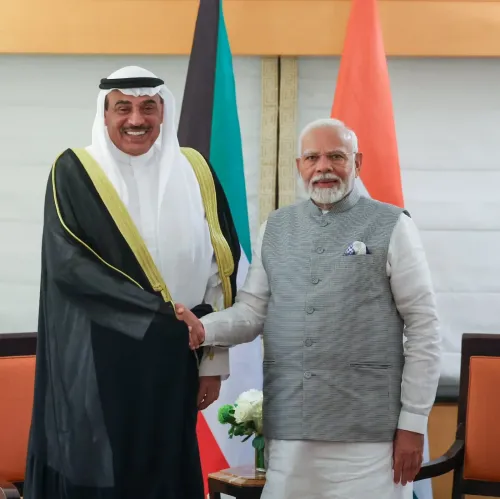
Prime Minister Narendra Modi spoke with Kuwait's Amir Sheikh Meshal Al-Ahmad Al-Jaber Al-Sabah on 9 June 2026, strongly condemning attacks on Kuwait's sovereignty and reiterating India's support amid the ongoing West Asia conflict, in a call reflecting New Delhi's deepening Gulf diplomacy.
Key Takeaways
PM Modi held a telephone call with Kuwait's Amir Sheikh Meshal Al-Ahmad Al-Jaber Al-Sabah on 9 June 2026 .
Modi 'strongly condemned attacks on Kuwait's sovereignty and territorial integrity' during the call.
Kuwait hosts over 10 lakh Indian expatriates and is a key supplier of crude oil and LPG to India .
In 1990 , India evacuated over 1.7 lakh citizens from Kuwait under Operation Safe Homecoming during the Iraqi invasion.
The call is part of India's broader 'Act West' diplomatic strategy of high-level engagement with GCC states during regional crises.
Further Indian diplomatic statements at the UN Security Council or an India-GCC ministerial meeting are anticipated.
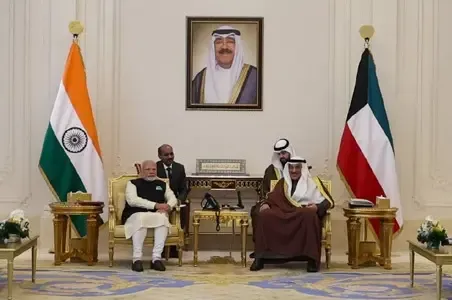
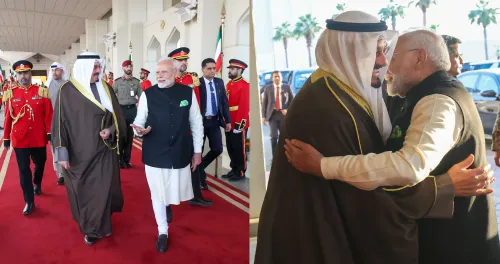
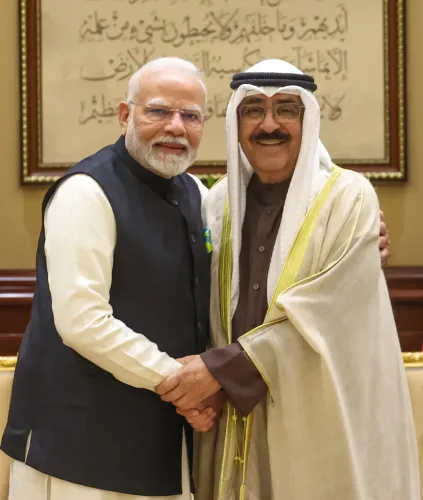
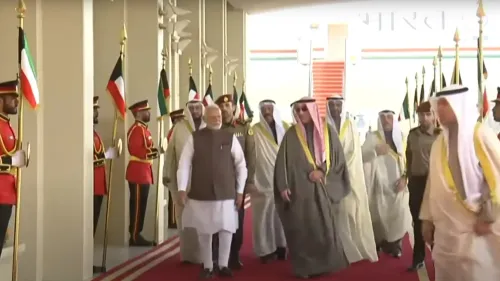
Prime Minister Narendra Modi spoke by telephone with Kuwait's Amir, His Highness Sheikh Meshal Al-Ahmad Al-Jaber Al-Sabah, on Tuesday, 9 June 2026, holding a detailed discussion on the ongoing conflict in West Asia and strongly condemning attacks on Kuwait's sovereignty and territorial integrity.
Context
Modi disclosed the call in a post on 10 June 2026, stating he 'strongly condemned attacks on Kuwait's sovereignty and territorial integrity' and 'reiterated our support' — signalling India's continued alignment with the principle of non-interference and respect for international borders in a volatile regional environment. The brevity of the post, combined with the gravity of the language, points to an active diplomatic effort to reassure a key Gulf partner.
Sheikh Meshal Al-Ahmad Al-Jaber Al-Sabah has been Amir of Kuwait since December 2023, continuing the Al-Sabah ruling family's long-standing foreign policy focus on sovereignty and regional stability. Kuwait is a member of the Gulf Cooperation Council (GCC) and has historically positioned itself as a mediator in regional disputes.
Policy Backdrop
India's engagement with Kuwait carries deep historical weight. In 1990, New Delhi condemned Iraq's invasion of Kuwait, backed UN resolutions on Kuwaiti sovereignty, and launched Operation Safe Homecoming — evacuating over 1.7 lakh Indian citizens from the conflict zone in one of the largest civilian evacuations in history.
The current call fits within what analysts describe as India's 'Act West' approach — a framework combining defence cooperation, energy partnerships, and diaspora protection with GCC states. New Delhi has consistently advocated respect for territorial integrity in regional conflicts, a position that aligns with its broader non-alignment posture and its own sensitivities over sovereignty.
Kuwait is a significant energy supplier to India, providing crude oil and LPG, and is home to over one million Indian expatriates, making the bilateral relationship one of both strategic and humanitarian consequence.
Stakeholders and Impact
The most immediately affected constituency is India's expatriate community in Kuwait, numbering over 10 lakh citizens, whose safety and livelihoods are directly tied to stability in the Gulf. Any escalation of conflict in the region risks disrupting remittances, employment, and in extreme scenarios, could trigger evacuation operations similar to those seen in past Gulf crises.
On the economic side, Indian energy importers and downstream industries dependent on Kuwaiti crude and LPG are watching the situation closely. Disruptions to Gulf supply lines have historically translated into fuel price pressures and inflationary stress on the broader Indian economy.
Diplomatically, Modi's direct outreach to the Amir reinforces India's standing as a responsible stakeholder in West Asian affairs — a position New Delhi has cultivated carefully as it deepens ties across the region without taking sides in intra-regional rivalries.
What's Next
The conversation is likely to be followed by diplomatic activity at multilateral forums. India may articulate its position on the West Asian conflict at the UN Security Council or at the next India-GCC ministerial meeting, where maritime security and expatriate welfare are expected to feature prominently on the agenda.
As the conflict in West Asia continues to evolve, New Delhi's ability to maintain open lines of communication with all parties — while firmly defending the sovereignty of partner states — will be a key test of its 'Act West' diplomatic architecture and its ambition to play a larger stabilising role in global affairs.
Point of View
Suggesting the situation on the ground is serious enough to warrant a public stance. This fits a clear pattern of India using telephone diplomacy to pre-empt crises before they affect diaspora welfare or energy supply lines. It also advances India's positioning as an indispensable partner in Gulf security — a role New Delhi has been quietly building through its 'Act West' framework since 2014.
NationPress
25 Oct 2026
Frequently Asked Questions
Why did PM Modi call the Amir of Kuwait?
PM Modi called Kuwait's Amir Sheikh Meshal Al-Ahmad Al-Jaber Al-Sabah on 9 June 2026 to discuss the ongoing conflict in West Asia and to strongly condemn attacks on Kuwait's sovereignty and territorial integrity.
How many Indians live in Kuwait?
Over 10 lakh (one million) Indian expatriates live and work in Kuwait, making the Indian community one of the largest foreign communities in the country.
What is India's historical connection to Kuwait's sovereignty?
In 1990, India condemned Iraq's invasion of Kuwait, supported UN resolutions backing Kuwaiti sovereignty, and evacuated over 1.7 lakh Indian citizens in Operation Safe Homecoming — one of the largest civilian evacuations in history.
What is India's 'Act West' policy?
'Act West' is India's diplomatic framework for deepening engagement with Gulf Cooperation Council states, combining defence cooperation, energy partnerships, and diaspora protection while advocating respect for territorial integrity in regional conflicts.
What could follow Modi's call to the Kuwait Amir?
India may articulate its position on the West Asia conflict at the UN Security Council or at the next India-GCC ministerial meeting, where maritime security and expatriate welfare are expected to be key agenda items.