PM Modi at Diwali Milan: 'Cameras were few, relationships strong' with journalists
Synopsis
At the BJP's annual Diwali Milan, Modi went beyond festival pleasantries — sharing a candid account of journalists who attended his 2001 swearing-in at their own cost, and contrasting today's camera-saturated media landscape with an era when relationships, not equipment, were the currency of trust. It was a rare personal window into the PM's pre-Delhi political life.
Key Takeaways
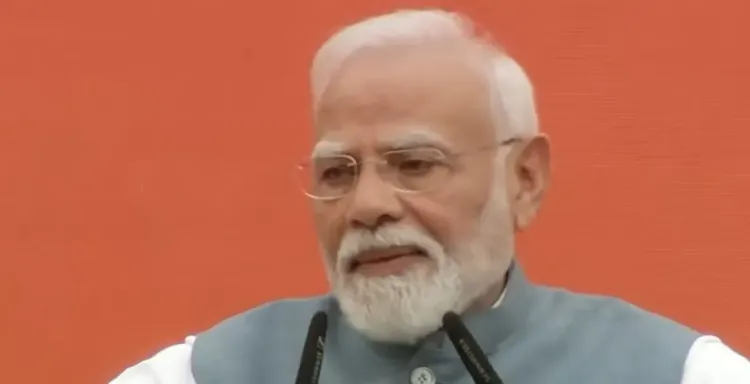
PM Modi attended the Diwali Milan at the BJP headquarters , New Delhi, on 12 November .
He recalled his association with journalists dating to the early 1990s , when press releases were sent by fax machine.
Modi shared that journalist friends attended his 2001 Gujarat oath-taking ceremony at their own expense, out of personal affection.
He praised the newsroom culture of deadlines and the courage of field reporters who move toward disasters, not away from them.
Modi noted he has completed 25 years as a head of government across his Gujarat and national tenures.
He extended greetings for Diwali and the upcoming Chhath Puja to journalists and their families.
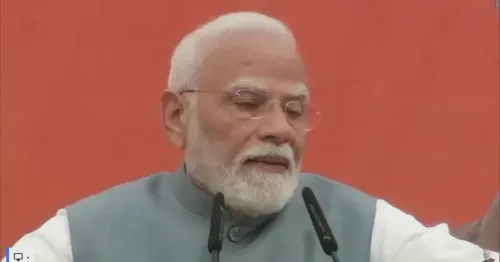
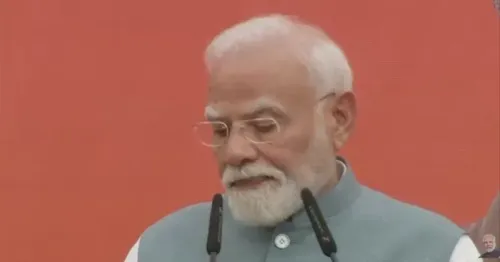
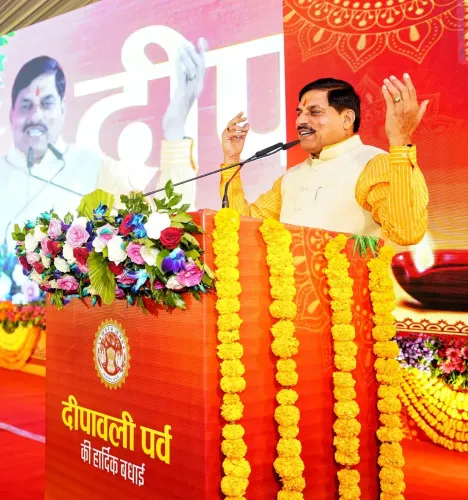
Prime Minister Narendra Modi on Thursday, 12 November attended the Diwali Milan programme at the Bharatiya Janata Party (BJP) headquarters in New Delhi, where he reflected on his decades-long bond with the media fraternity — recalling a time when cameras were scarce but personal relationships ran deep. The gathering brought together journalists from across generations for a festive meet ahead of Chhath Puja.
A Journey from Fax Machines to Instagram Reels
Addressing the assembled journalists, Modi traced the arc of media communication he had witnessed firsthand — from the early 1990s, when press releases had to be transmitted through fax machines, to the present era of social media and instant publishing. 'From press releases to Instagram reels, I have witnessed a long journey of media communication,' he said, noting that his national organisational responsibilities began in that period.
He recalled that the BJP office on Ashoka Road in Delhi had hosted Diwali Milan gatherings even then. 'At that time, cameras were not so common and were in few numbers, but relationships were strong,' Modi said, drawing a pointed contrast between the technology-abundant present and the relationship-rich past.
Journalists Who Came on Their Own at the 2001 Oath Ceremony
One of the more personal anecdotes the Prime Minister shared involved his oath-taking ceremony in 2001, when he was sworn in as Chief Minister of Gujarat. Several journalist friends, he said, had attended using their own resources — without informing him in advance so that he could arrange for them. When he enquired afterwards, they told him they had come on their own, out of personal warmth. 'It reflected the personal warmth and affection they shared with him,' Modi noted, visibly moved by the memory.
Acknowledging Journalism's Demands: Deadlines and Disaster Coverage
Modi also paid tribute to the professional discipline that defines newsrooms, singling out two aspects in particular. On deadlines, he said: 'Your entire life revolves around deadlines. Whether it is the time to print a newspaper or broadcast a story, everything has a deadline. Without deadlines, everyone, from the desk to the field, would have the same attitude — there is still time, it will get done.'
On field reporters, he was equally emphatic: 'Whether there is an accident, an earthquake or a devastating flood, while the rest of the world is moving away from the affected area, some people go against the tide.' He described this counter-instinct as one of journalism's most remarkable qualities.
Festival Greetings and a Note on Shared Sacrifice
Opening his remarks, Modi extended greetings to journalists and their families for Diwali and the upcoming Chhath Puja. He acknowledged that festivals are ordinarily a time for family, but that journalists routinely forgo that comfort to cover breaking developments. 'You all have come at a time when there is no news being created. I am grateful to you all,' he said.
Drawing a parallel between career evolution in journalism and his own political trajectory, Modi observed that responsibilities shift naturally with position — a reporter becomes an editor, and his own role changed when he came to power. He noted that he has now completed 25 years as a head of government, counting both his tenure as Gujarat Chief Minister and as Prime Minister.
The event underscored Modi's long-cultivated relationship with the press corps — one that predates his national political rise — and signalled a deliberate effort to sustain that personal connect even from the highest office.
Point of View
Personal continuity with the media going back to his RSS-era organising days. The 2001 oath-ceremony anecdote is carefully chosen; it positions affection, not access, as the foundation of his press relationships. This comes at a moment when the government's record on press-freedom indices is under scrutiny — the personal warmth narrative does not engage with that critique, but it does create an alternative frame that is harder to dismiss as purely transactional.
NationPress
12 Nov 2026
Frequently Asked Questions
What is the Diwali Milan programme at BJP headquarters?
The Diwali Milan is an annual festive gathering organised by the BJP where senior party leaders, including the Prime Minister, meet journalists, well-wishers, and party workers to exchange Diwali greetings. The event at the BJP's New Delhi headquarters on 12 November brought together journalists from multiple generations.
What did PM Modi say about journalists at the 2001 oath ceremony?
Modi recalled that several journalist friends attended his Gujarat Chief Minister oath-taking ceremony in 2001 using their own resources, without informing him beforehand so he could make arrangements. When he asked why, they said they came on their own out of personal warmth — a moment he described as reflecting deep affection beyond professional ties.
What did Modi mean by 'cameras were few, relationships were strong'?
Modi was contrasting the early 1990s media environment — when cameras were expensive and rare — with today's technology-saturated newsrooms. He argued that the scarcity of equipment in that era was offset by the depth of personal relationships between political figures and journalists, a dynamic he suggested has shifted with modern media.
What did PM Modi say about journalism and deadlines?
Modi described deadlines as the defining discipline of newsroom life, saying the entire profession — from desk editors to field reporters — revolves around them. He argued that without deadlines, the default attitude would be complacency, crediting them as the engine that keeps journalism functional.
How long has PM Modi served as a head of government, according to his remarks?
Modi stated at the Diwali Milan that he has completed 25 years as a head of government, a figure that encompasses his tenure as Chief Minister of Gujarat beginning in 2001 and his subsequent years as Prime Minister from 2014 onwards.