FM Sitharaman's MPLADS funds India's first LED planetarium in Mysore
Synopsis
Prime Minister Modi will inaugurate Cosmos-Mysore on November 13, 2026 — India's first LED-dome planetarium, built by IIA and backed by Finance Minister Sitharaman's ₹5 crore MPLADS grant. The 15-metre dome features 4.2 crore LEDs and real-time programmable panels for immersive astronomy education in Kannada, English, and Hindi.
Key Takeaways
PM Narendra Modi will inaugurate Cosmos-Mysore planetarium on November 13, 2026 in Mysore, Karnataka.
Cosmos-Mysore is India's first LED-dome planetarium , built by the Indian Institute of Astrophysics (IIA) .
The dome spans 15 metres and contains approximately 6,150 panels and 4.2 crore individual LEDs controllable in real time.
Finance Minister Nirmala Sitharaman contributed ₹5 crore from her MPLADS fund to the project; Mysore is her parliamentary constituency.
Shows will be available in Kannada, English, and Hindi , including a special documentary on Mysore's historical links to astronomy.
Unlike traditional projector-based planetariums, the LED system allows live, interactive control during presentations.
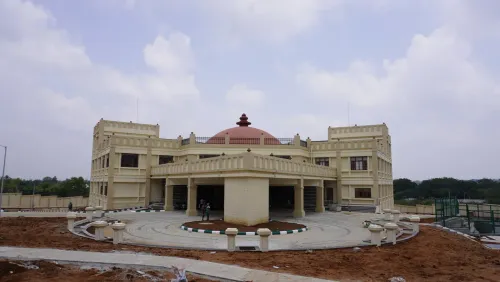
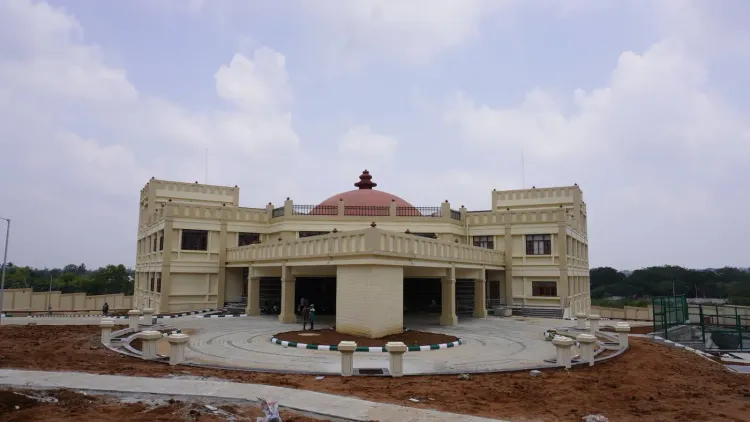
India's first LED-dome planetarium is about to open its doors — and it has a Finance Minister's constituency fund to thank for a crucial push. Union Finance Minister Nirmala Sitharaman announced on Thursday, November 12, 2026, that Prime Minister Narendra Modi will inaugurate 'Cosmos-Mysore', a first-of-its-kind planetarium built by the Indian Institute of Astrophysics (IIA), in Mysore, Karnataka, on November 13, 2026.
What makes the Cosmos-Mysore dome unlike any other in the country
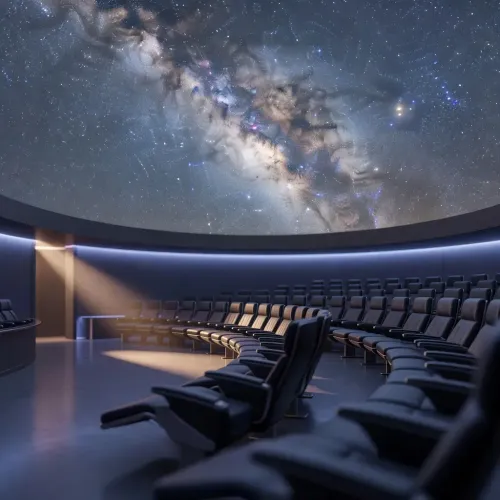
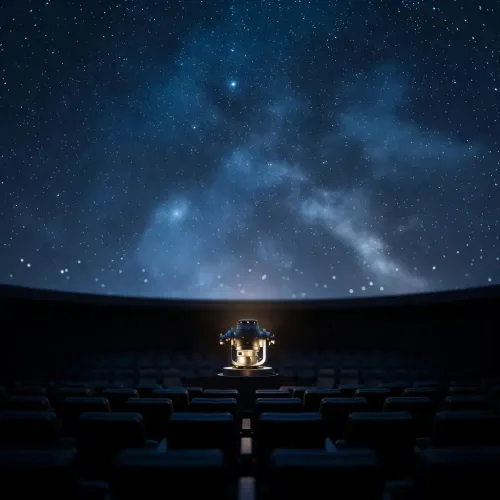
Forget the old-school projector throwing static star-maps onto a curved ceiling. Cosmos-Mysore scraps that model entirely. The facility is built around a 15-metre tilted dome lined with roughly 6,150 panels and an estimated 4.2 crore individual LEDs — a system whose panels can be controlled in real time, not frame-by-frame like a film projector.
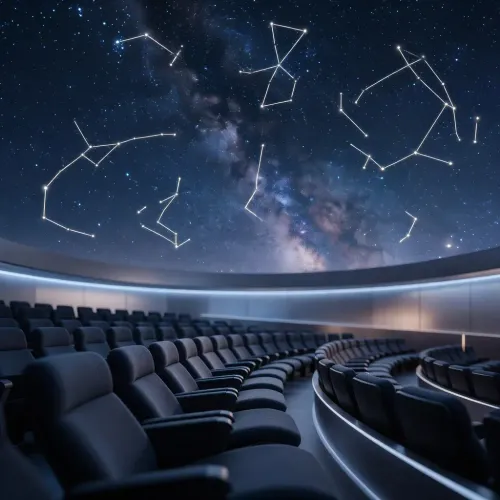
That distinction matters enormously for educators. A live-programmable dome means a presenter can pause the night sky mid-show, zoom into a nebula, rewind a solar eclipse, or pivot instantly to a student's question — something no traditional planetarium in India can do on the fly. The result is a sky theatre that behaves less like a cinema and more like an interactive classroom built for 360 degrees.
Sitharaman's ₹5 crore MPLADS bet on Mysore's science future
Mysore is Sitharaman's parliamentary constituency, and she directed ₹5 crore from her Members of Parliament Local Area Development Scheme (MPLADS) allocation toward the project. MPLADS, launched in December 1993, allows MPs to recommend small-scale infrastructure works — schools, roads, cultural centres — in their constituencies. Channelling that fund into a cutting-edge LED planetarium rather than routine civic works signals a deliberate bet on science literacy as local development.
The Indian Institute of Astrophysics, established in 1971 and operating under the Department of Science and Technology, designed and built the facility. IIA has long run astronomy outreach programmes across southern India; Cosmos-Mysore represents its most ambitious public-facing infrastructure yet.
Multilingual sky shows and Mysore's own astronomy story
The sky theatre will screen professionally produced astronomy programmes alongside a special documentary that traces the historical links between Mysore and astronomical science — the city has a rich heritage of royal patronage for scientific institutions. All shows will be available in Kannada, English, and Hindi, a multilingual approach that mirrors the broader national push to deliver science education in regional languages rather than gating it behind English fluency.
India's planetarium network has grown steadily since the Birla Planetarium chain began in the 1960s, but most facilities still run ageing projector technology. A fully LED-driven dome sets a new technical benchmark — and if it performs as designed, it becomes a template other cities will want to replicate.
The stars over Mysore have waited long enough. Tomorrow, they get a stage worthy of them.
Point of View
And using MPLADS as a vehicle for constituency-level investments that go beyond routine civic works. Sitharaman's decision to direct ₹5 crore toward a high-tech planetarium rather than more conventional projects is a deliberate signal about what 'local development' can mean. If the LED-dome model proves scalable, it could prompt a broader rethink of India's aging planetarium network — currently dominated by projector-era halls — and IIA's role in driving that upgrade.
NationPress
12 Nov 2026
Frequently Asked Questions
What is Cosmos-Mysore planetarium?
Cosmos-Mysore is India's first LED-dome planetarium, built by the Indian Institute of Astrophysics in Mysore, Karnataka. It features a 15-metre tilted dome fitted with approximately 6,150 LED panels and 4.2 crore individual LEDs that can be controlled in real time for immersive astronomy shows.
When will PM Modi inaugurate the Cosmos-Mysore planetarium?
Prime Minister Narendra Modi is scheduled to inaugurate the Cosmos-Mysore planetarium on November 13, 2026.
How did Nirmala Sitharaman contribute to the Cosmos-Mysore planetarium?
Union Finance Minister Nirmala Sitharaman, whose parliamentary constituency is Mysore, allocated ₹5 crore from her MPLADS (Members of Parliament Local Area Development Scheme) fund to support the construction of the planetarium.
What is different about an LED-dome planetarium compared to a traditional one?
Traditional planetariums use projectors to display images onto a passive dome, limiting flexibility. The Cosmos-Mysore LED dome's panels can be controlled in real time, allowing presenters to interact live with the sky display, zoom in on celestial objects, and adapt shows dynamically for audiences.
In which languages will shows be available at Cosmos-Mysore?
Shows at Cosmos-Mysore will be available in Kannada, English, and Hindi, including a special documentary on the historical connections between Mysore and astronomical science.