Nadda Renews SAANS Pledge on World Pneumonia Day
Synopsis
On World Pneumonia Day 2026, Union Health Minister J. P. Nadda renewed India's commitment to the SAANS Campaign, urging complete PCV immunisation, exclusive breastfeeding and reduced indoor air pollution exposure to protect children under five from preventable pneumonia.
Key Takeaways
Union Health Minister J.
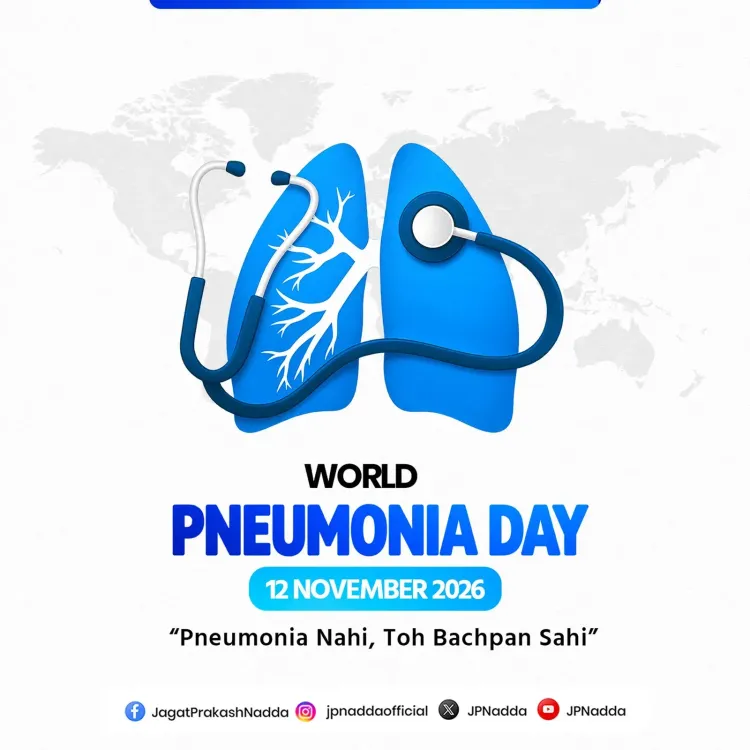
Nadda marked World Pneumonia Day on 12 November 2026 by calling for renewed action under the SAANS Campaign .
The SAANS Campaign, launched in 2019 , focuses on awareness, early identification, timely care-seeking and appropriate treatment for children below five years of age .
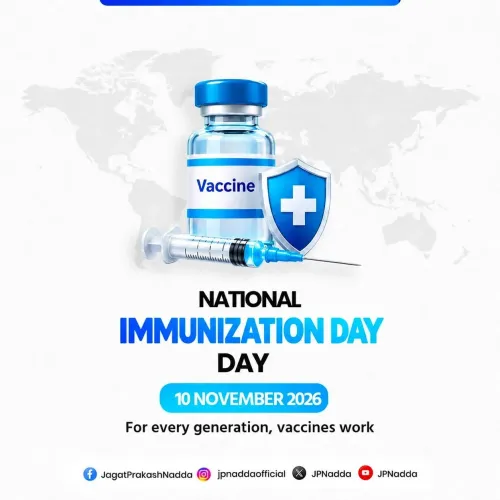
Nadda specifically urged parents to complete all three doses of PCV (Pneumococcal Conjugate Vaccine), which has been part of India's Universal Immunisation Programme since 2017 .
Other key interventions highlighted: exclusive breastfeeding for the first six months , appropriate complementary feeding and minimising indoor air pollution exposure.
The SAANS Campaign is embedded within India's National Health Mission and Mission Indradhanush immunisation drive, both part of the country's under-five mortality reduction strategy.
India's National Health Policy 2017 set explicit targets for reducing under-five mortality, with pneumonia among the priority causes.
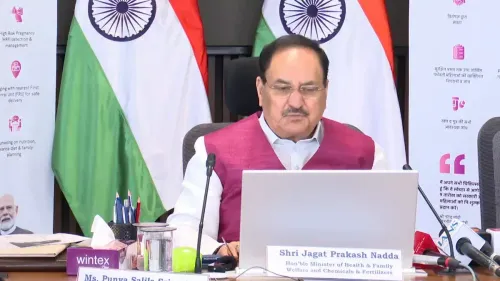
Every year, pneumonia quietly claims the lives of thousands of Indian children before their fifth birthday — a tragedy the government calls preventable. On World Pneumonia Day, 12 November 2026, Union Health Minister J. P. Nadda used the occasion to renew India's commitment to the SAANS Campaign, calling on every parent and caregiver to act before the first warning signs appear.
Posting on X under the rallying cry 'Pneumonia Nahi, Toh Bachpan Sahi!' — 'No Pneumonia, Then a Proper Childhood!' — Nadda outlined a clear action agenda: complete immunisation including all three doses of PCV (Pneumococcal Conjugate Vaccine), exclusive breastfeeding for the first six months, appropriate complementary feeding, reduced indoor air pollution exposure for children, and prompt medical attention at the earliest signs of illness. The message was directed squarely at the most vulnerable cohort: children below five years of age.
What the SAANS Campaign actually does on the ground
Launched in 2019 by the Ministry of Health and Family Welfare, the SAANS Campaign — Social Awareness and Actions to Neutralise Pneumonia Successfully — was designed to plug the gaps between vaccination, nutrition, and community-level care-seeking behaviour. Its four pillars mirror Nadda's post almost exactly: awareness, early identification, timely care-seeking, and appropriate treatment. The campaign sits within India's broader National Health Mission framework and complements routine immunisation drives under Mission Indradhanush, which has been running since 2014.
PCV itself arrived in India's Universal Immunisation Programme in 2017, with phased expansion across states. Its inclusion was a significant shift — the vaccine protects infants against pneumococcal bacteria, one of the leading causes of severe childhood pneumonia. Three doses, administered at set intervals in infancy, are recommended for full protection.
India's child-health architecture behind the message
Nadda's statement is not simply a ceremonial World Pneumonia Day post. It lands inside a layered policy architecture. The National Health Policy 2017 set explicit targets for reducing under-five mortality, with respiratory infections among the priority causes. Mission Indradhanush accelerated vaccine coverage for hard-to-reach populations, bringing PCV and other newer vaccines to communities that had historically missed routine immunisation rounds.
The minister's specific call to minimise indoor air pollution is a pointer to a less-discussed driver of childhood pneumonia in India — households that still rely on solid fuels for cooking. Government programmes on clean cooking fuel run parallel to, and intersect with, the child-health agenda.
World Pneumonia Day is observed every 12 November and serves as an annual checkpoint for governments, health workers, and civil society to assess progress and reinforce public messaging. India's consistent ministerial engagement on this date reflects the country's alignment with global targets on reducing childhood mortality from respiratory infections.
When a minister frames pneumonia as preventable — not inevitable — the implicit promise is that the system will hold up its end. That is the benchmark against which the SAANS Campaign and PCV roll-out will continue to be measured, one state health report at a time.
Point of View
The SAANS Campaign's on-ground penetration — particularly in aspirational districts — will be the real test of whether the ministerial messaging translates into measurable outcomes. The framing of pneumonia as 'preventable' implicitly raises political accountability: every child death from the disease becomes a governance question, not just a medical one.
NationPress
12 Nov 2026
Frequently Asked Questions
What is the SAANS Campaign in India?
The SAANS Campaign — Social Awareness and Actions to Neutralise Pneumonia Successfully — was launched in 2019 by India's Ministry of Health and Family Welfare to reduce pneumonia deaths in children under five through awareness, early identification, timely care-seeking and appropriate treatment.
What is PCV and why does it matter for children?
PCV stands for Pneumococcal Conjugate Vaccine, included in India's Universal Immunisation Programme since 2017. Three doses protect infants against pneumococcal bacteria, one of the leading causes of severe childhood pneumonia. Union Health Minister J. P. Nadda specifically urged parents to ensure all three doses are administered.
When is World Pneumonia Day observed?
World Pneumonia Day is observed every year on 12 November to highlight pneumonia as a leading cause of under-five child mortality and to promote prevention and treatment efforts globally and in India.
How can parents protect children from pneumonia at home?
According to the SAANS Campaign guidelines reinforced by J. P. Nadda, parents should ensure complete immunisation including all three PCV doses, practise exclusive breastfeeding for the first six months, provide appropriate complementary feeding, minimise children's exposure to indoor air pollution and seek medical attention at the earliest signs of pneumonia.
What is Mission Indradhanush and how is it linked to pneumonia prevention?
Mission Indradhanush, launched in 2014, is India's intensified immunisation drive aimed at reaching unvaccinated and under-vaccinated children. It has helped expand PCV and other newer vaccine coverage across states, forming a key pillar of India's childhood pneumonia prevention strategy alongside the SAANS Campaign.