Khattar hails Namo Bharat RRTS milestone, credits commuter trust
Synopsis
Union Minister Manohar Lal Khattar congratulated the NCRTC team on November 12, 2026, marking a significant milestone for the Namo Bharat RRTS corridor and crediting growing commuter trust in the NCR's high-speed regional rail network.
Key Takeaways
Union Minister Manohar Lal Khattar publicly congratulated the NCRTC on a 'significant milestone' for the Namo Bharat RRTS on November 12, 2026 .
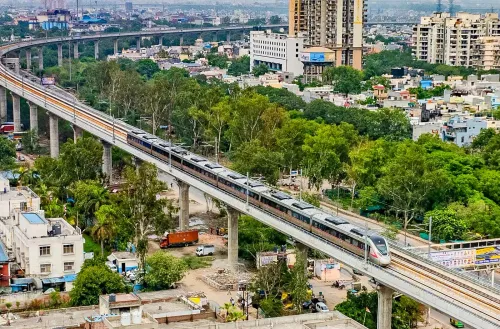
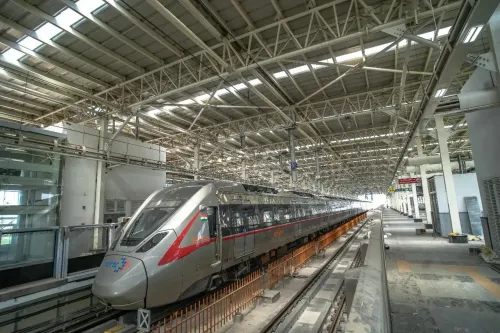
The Namo Bharat RRTS is India's first high-speed regional rail service, linking Delhi with Ghaziabad and Meerut.
PM Narendra Modi inaugurated the first operational section of the corridor in October 2023 .
The Delhi-Meerut RRTS corridor was approved by the Union Cabinet in 2013 under the NCR planning framework.
Future corridors toward Panipat and Alwar are in various stages of planning and construction.
The minister framed the milestone as central to the government's 'Ease of Living' agenda for urban citizens.
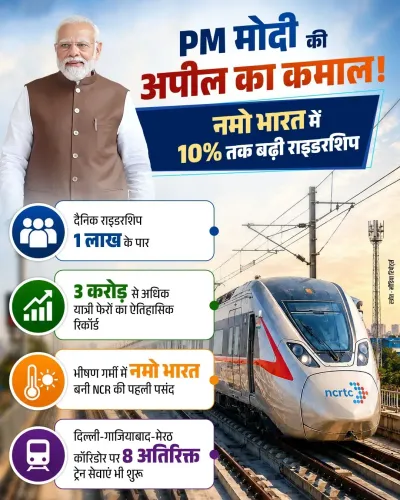
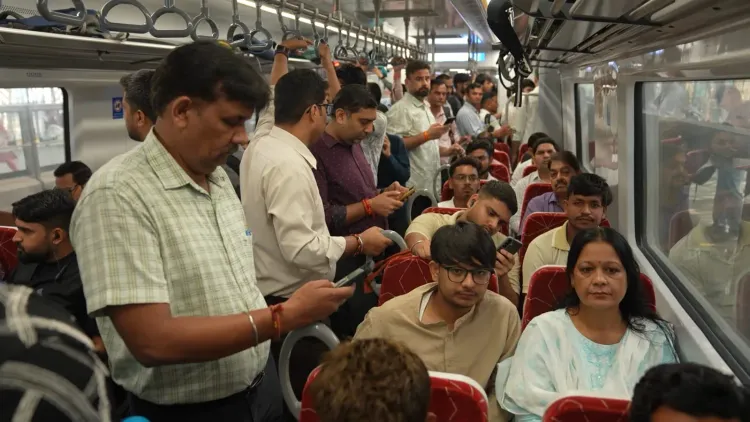
A quiet but telling number is building inside India's fastest regional rail corridor. Union Minister Manohar Lal Khattar on Thursday, November 12, 2026, congratulated the National Capital Region Transport Corporation (NCRTC) team on what he called a 'significant milestone' for the Namo Bharat RRTS — framing it as proof that commuters across the NCR are actively choosing speed and comfort over older alternatives.
What the milestone signals for Namo Bharat ridership
Khattar's post, addressed to the @officialncrtc team, pointed to 'growing trust of commuters' as the clearest measure of the corridor's success. While the minister did not specify the exact figure — whether a ridership count, a revenue threshold, or an operational benchmark — the framing is deliberate: milestones in public transit are as much political as they are operational, signalling that taxpayer-backed infrastructure is delivering results on the ground.
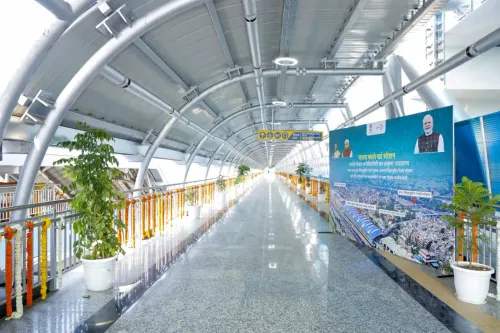
The Namo Bharat RRTS is India's first high-speed regional rail service, linking Delhi with Ghaziabad and onward toward Meerut at speeds designed to slash inter-city commute times. Prime Minister Narendra Modi inaugurated the first operational section in October 2023, and successive phases have been progressively opened since.
From Cabinet approval to prime-time commuter route
The corridor's journey spans more than a decade. The Union Cabinet approved the Delhi-Meerut RRTS corridor in 2013 under the National Capital Region planning framework — long before it carried its first passenger. The NCRTC, the nodal agency driving all three priority RRTS corridors, has since positioned Namo Bharat as the spine of a wider NCR connectivity overhaul that complements metro lines, expressways, and freight corridors.
Khattar tied the achievement directly to the government's 'Ease of Living' agenda — a phrase that has become the central government's shorthand for making everyday infrastructure visibly better for ordinary citizens. 'Modern, efficient, and people-centric transport infrastructure,' he wrote, is the instrument through which that promise is being kept.
What comes next on the RRTS network map
The Delhi-Meerut corridor is only the beginning. Corridors toward Panipat and Alwar are in various stages of planning and construction, and the government's ambition is a fully integrated high-speed ring around the NCR. Ridership trends and fare-box revenue on the operational sections will be the numbers that determine how quickly political will translates into funding for the next phases.
For now, a minister's congratulatory post is also a progress report — and in the competitive theatre of urban infrastructure politics, claiming a milestone publicly is itself a move.
Point of View
Making the milestone politically portable across NCR constituencies. Watching whether NCRTC follows with an official ridership data release will reveal how deep the substance behind the celebration runs.
NationPress
12 Nov 2026
Frequently Asked Questions
What is the Namo Bharat RRTS?
Namo Bharat RRTS (Regional Rapid Transit System) is India's first high-speed regional rail service, operated by the NCRTC, connecting Delhi with Ghaziabad and Meerut at significantly higher speeds than conventional metro or rail services. Its first section was inaugurated by PM Modi in October 2023.
What milestone did Khattar congratulate NCRTC for in November 2026?
Union Minister Manohar Lal Khattar congratulated the NCRTC team on a 'significant milestone' for Namo Bharat RRTS on November 12, 2026, citing growing commuter trust, though the specific metric — ridership figure, revenue target, or operational benchmark — was not stated in his post.
Who is Manohar Lal Khattar?
Manohar Lal Khattar is India's Union Minister of Power and Housing and Urban Affairs, a senior BJP leader, and former Chief Minister of Haryana.
Which RRTS corridors are planned beyond Delhi-Meerut?
Beyond the operational Delhi-Ghaziabad-Meerut corridor, RRTS corridors toward Panipat and Alwar are in various stages of planning and construction as part of the broader NCR transport network.
When was the Delhi-Meerut RRTS corridor approved?
The Union Cabinet approved the Delhi-Meerut RRTS corridor in 2013 under the National Capital Region planning framework. The first operational section was inaugurated by PM Narendra Modi in October 2023.