CM Dhami's Office Clears Survey for Namo Bharat to Rishikesh
Synopsis
The Chief Minister's Office of Uttarakhand approved a survey on 18 June 2026 to extend the Namo Bharat RRTS from Meerut to Rishikesh, the first formal step toward bringing semi-high-speed rail into the Himalayan state and boosting pilgrimage connectivity.
Key Takeaways
The Chief Minister's Office of Uttarakhand announced survey approval on 18 June 2026 for a Namo Bharat extension from Meerut to Rishikesh .
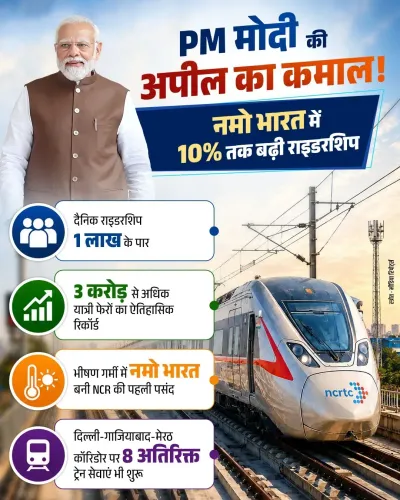
Namo Bharat is India's Regional Rapid Transit System (RRTS) ; the Delhi–Meerut corridor has been operational since 2023 .
The proposed corridor would be the first RRTS link into Uttarakhand , crossing state boundaries from Uttar Pradesh.
A survey approval is a preliminary step; a Detailed Project Report (DPR) and central Cabinet sanction are still required.
NCRTC is the nodal agency for RRTS planning and would coordinate with both state governments.
Rishikesh attracts millions of pilgrims and tourists annually; improved rail connectivity could ease road congestion on the Char Dham yatra route.
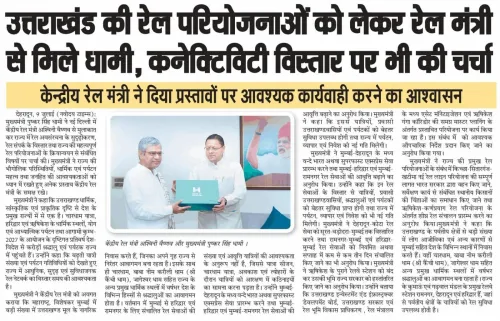
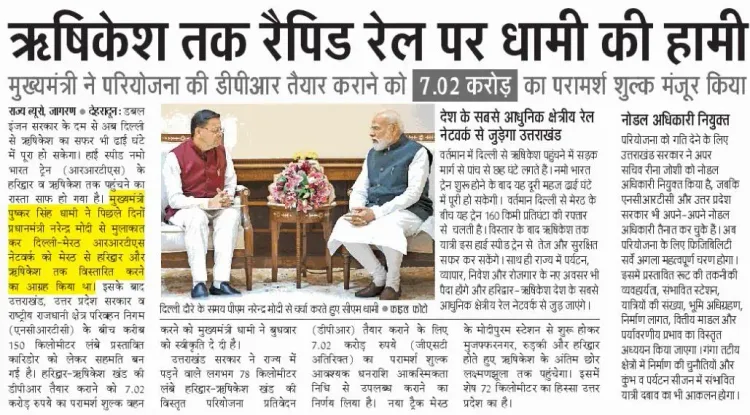
The Chief Minister's Office of Uttarakhand announced on Thursday, 18 June 2026 that a survey has been approved to extend the Namo Bharat semi-high-speed rail service from Meerut to Rishikesh, marking the first formal step toward bringing India's Regional Rapid Transit System into the Himalayan state.
The post, shared by the office of Chief Minister Pushkar Singh Dhami, stated in Hindi: 'Meerut mein Rishikesh tak Namo Bharat train chalaane ke liye survey ko manzuri' — meaning 'Approval granted for a survey to run the Namo Bharat train from Meerut to Rishikesh.'
Context
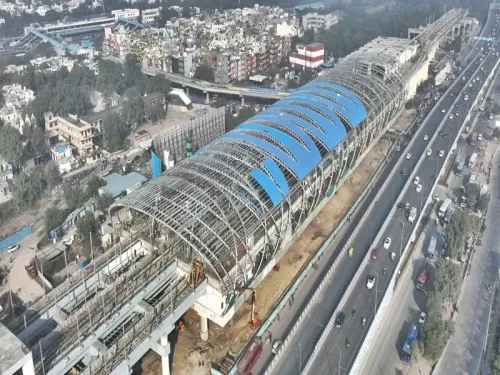
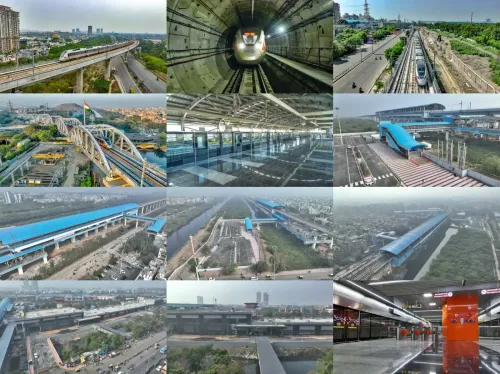
Namo Bharat is the brand name for India's Regional Rapid Transit System (RRTS), a network of semi-high-speed rail corridors designed to connect the National Capital Region with surrounding cities. The Delhi–Meerut RRTS corridor, India's first operational Namo Bharat line, received formal sanction in 2013 and began commercial operations in 2023. Meerut, a major NCR hub in western Uttar Pradesh, currently serves as the eastern terminus of that corridor.
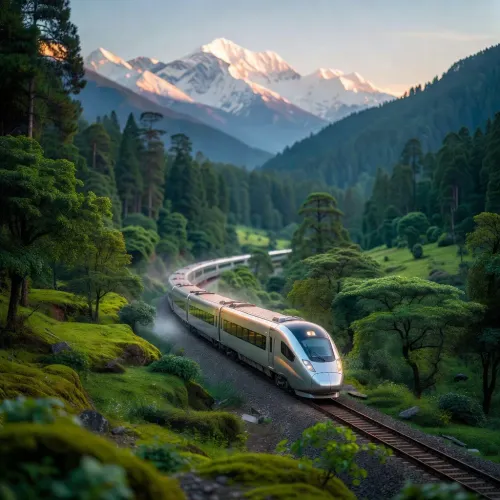
The proposed extension would stretch the network further north-east, crossing state boundaries into Uttarakhand and terminating at Rishikesh, a pilgrimage and tourism centre situated on the banks of the Ganga in the Himalayan foothills. A survey approval is the first procedural milestone before a Detailed Project Report can be prepared and submitted to the central government for funding sanction.
Policy Backdrop
In 2019, the central government approved three priority RRTS corridors under the NCR Transport Plan, establishing the institutional framework for further network expansion. The National Capital Region Transport Corporation (NCRTC), the central agency responsible for planning and operating RRTS services, would be the nodal body for any such extension.
Successive central and state administrations have prioritised RRTS corridors radiating outward from Delhi to integrate the NCR with adjacent states, supporting both daily commuters and religious tourism. A Meerut–Rishikesh alignment would continue this pattern by pushing the network into Uttarakhand for the first time, potentially reducing travel time between the plains and one of India's most visited pilgrimage destinations.
Stakeholders and Impact
Rail commuters travelling between Delhi, Meerut, and the Uttarakhand foothills stand to benefit most directly if the project advances. Rishikesh draws millions of pilgrims and tourists annually for the Char Dham yatra circuit and its yoga and wellness economy; faster, high-frequency rail access could significantly ease the seasonal congestion on road corridors leading to the town.
The Uttarakhand tourism sector, hoteliers, and the broader religious-tourism supply chain are key stakeholders watching the project's progress. State and central government revenues from tourism could also see a long-term uplift if connectivity improves.
What's Next
The survey approval is a preliminary step. The next milestones will include completion of the alignment survey, preparation and submission of a Detailed Project Report (DPR) to the central Ministry of Railways, and subsequent Cabinet approval covering funding modalities and land acquisition. The NCRTC will need to coordinate with both the Uttarakhand state government and the Uttar Pradesh government given that the proposed corridor traverses two states.
If the project clears central approval and secures funding, it would represent a significant expansion of the Namo Bharat network beyond the NCR and set a precedent for RRTS connectivity reaching Himalayan destinations.
Point of View
A move with clear electoral and economic logic ahead of future state cycles. By anchoring the announcement to the Namo Bharat brand, the state government aligns itself with a high-visibility central scheme, reinforcing cooperative federalism optics between Dehradun and New Delhi. The Meerut–Rishikesh alignment also fits the broader RRTS strategy of connecting religious and tourism hubs to the NCR, potentially unlocking private investment in Rishikesh's hospitality sector. However, the gap between survey approval and a funded, construction-ready project remains wide, and the cross-state coordination required adds procedural complexity.
NationPress
17 Sept 2026
Frequently Asked Questions
What is the Namo Bharat train and where does it currently run?
Namo Bharat is the brand name for India's Regional Rapid Transit System (RRTS), a semi-high-speed rail network. It currently operates on the Delhi–Meerut corridor, which became commercial in 2023 and is India's first RRTS line.
Why is a survey needed before the Meerut–Rishikesh Namo Bharat project can start?
A survey is the first technical step to assess the alignment, terrain, land requirements and engineering challenges. Its findings feed into a Detailed Project Report (DPR), which must be approved by the central government before construction funding is sanctioned.
Who approved the survey for the Namo Bharat extension to Rishikesh?
The Chief Minister's Office of Uttarakhand announced the survey approval on 18 June 2026, reflecting the state government's push for the extension under Chief Minister Pushkar Singh Dhami.
How will a Namo Bharat link to Rishikesh benefit pilgrims and tourists?
Rishikesh is a key gateway for the Char Dham yatra and draws millions of visitors annually. A high-frequency RRTS connection from Meerut would offer a faster, more comfortable alternative to road travel, reducing seasonal congestion on mountain highways.
What is NCRTC and what role will it play in this project?
NCRTC, the National Capital Region Transport Corporation, is the central agency responsible for planning, building and operating RRTS corridors. It would be the nodal body for the Meerut–Rishikesh extension, coordinating with both Uttar Pradesh and Uttarakhand state governments.