CISF Takes Charge of Security for RRTS ‘Namo Bharat’ Corridor
Synopsis
In a landmark move for the NCR, the CISF has officially assumed the security oversight of the RRTS ‘Namo Bharat’ corridor, marking a new era for urban transit safety. Discover the implications of this strategic transition and what it means for commuters.
Key Takeaways
CISF's deployment signifies improved transit security.
Advanced surveillance and access control technologies will be implemented.
The RRTS aims to significantly reduce travel times in NCR.
Collaboration between CISF and NCRTC is essential for passenger safety.
Infrastructure support for CISF personnel is being enhanced.
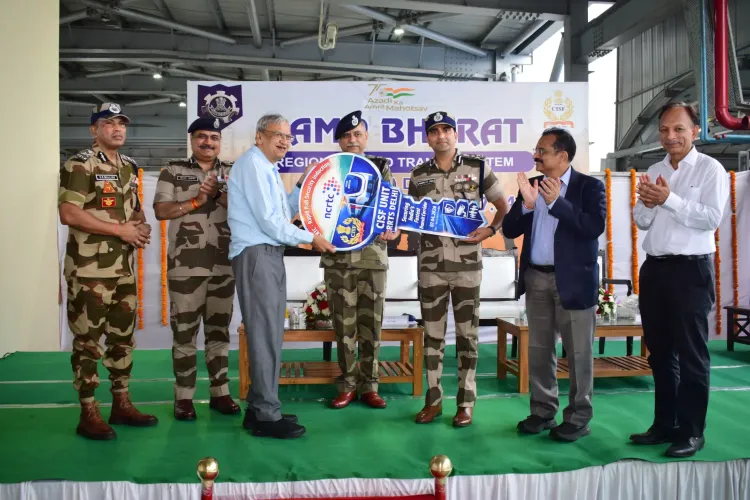
New Delhi, April 7 (NationPress) In a pivotal move for urban transit security within the National Capital Region (NCR), the Central Industrial Security Force (CISF) has officially taken over the security responsibilities for the Regional Rapid Transit System (RRTS) ‘Namo Bharat’ corridor. This significant ceremony took place at Delhi's New Ashok Nagar.
This induction represents a critical advancement towards a cohesive, technology-enhanced security framework for India’s inaugural high-speed regional transit system in the NCR. It initiates comprehensive CISF deployment aimed at ensuring safe, secure, and efficient travel for commuters throughout the NCR.
During the ceremony, the Managing Director of NCRTC, Shalabh Goel, presented a symbolic key insignia to the CISF Director General, Praveer Ranjan, signifying the formal transfer of security duties for the RRTS ‘Namo Bharat’ corridor.
Additionally, Praveer Ranjan laid the groundwork for the establishment of bachelor accommodations, which are essential for bolstering the infrastructure support for CISF personnel assigned to RRTS operations.
High-ranking officials from the CISF and NCRTC evaluated operational readiness, infrastructure conditions, and engaged with the personnel tasked with securing the corridor.
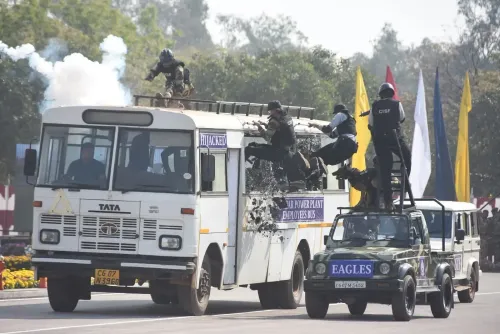
The CISF’s integration will provide extensive security coverage across the RRTS network, employing advanced surveillance technologies, access control systems, anti-sabotage measures, and expedited response capabilities, as stated by officials.
Highlighting the significance of this event, the DG remarked: "The integration of CISF into the RRTS ‘Namo Bharat’ network signifies a crucial advancement in fortifying India’s cutting-edge transport infrastructure. As mobility systems evolve to be quicker and better interconnected, our security strategies must also become more sophisticated, integrated, and technology-led."
He emphasized CISF's dedication to establishing a seamless, strong, and passenger-focused security atmosphere that not only protects infrastructure but also fosters confidence among commuters.
"We anticipate collaborating closely with NCRTC and all involved parties to set new standards in transit security," asserted the CISF DG.
Praveer Ranjan, alongside Goel and other dignitaries, undertook a brief journey along the Namo Bharat corridor as part of a familiarization tour. They traveled from New Ashok Nagar to Anand Vihar, and subsequently from Anand Vihar to Sarai Kale Khan RRTS stations in the Namo Bharat system.
As per the official announcement, the CISF's formal induction, along with its previous integration with the Delhi Metro system through a collaboratively established Standard Operating Procedure (SOP), ensures a cohesive and coordinated security structure across transit networks, featuring uniform protocols, synchronized inspections, access management, and improved passenger safety.
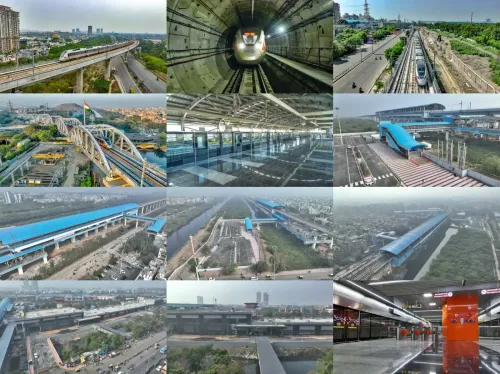
The RRTS ‘Namo Bharat’ initiative, spearheaded by the NCRTC under the Ministry of Housing and Urban Affairs, represents a flagship program designed to deliver rapid, reliable, and sustainable regional connectivity. With trains engineered to reach speeds of up to 180 km/h, the Delhi–Meerut corridor under Phase I is poised to substantially decrease travel durations across NCR.
Point of View
This development underscores a vital progression in enhancing transit security. The integration of the CISF into the RRTS ‘Namo Bharat’ corridor is a strategic move that not only prioritizes passenger safety but also represents a broader commitment to modernizing infrastructure in India.
NationPress
13 Oct 2026
Frequently Asked Questions
What is the significance of the CISF's involvement in the RRTS?
The CISF's involvement is crucial for ensuring advanced, integrated security for the RRTS, enhancing safety for commuters and supporting the region's urban transport infrastructure.
What technologies will the CISF implement for security?
The CISF will employ advanced surveillance systems, access control mechanisms, and anti-sabotage checks to ensure comprehensive security coverage across the RRTS network.
How does the RRTS ‘Namo Bharat’ improve regional connectivity?
The RRTS ‘Namo Bharat’ aims to provide rapid and reliable transit options, significantly reducing travel times within NCR, with trains capable of reaching speeds up to 180 km/h.
When did the CISF officially take charge of RRTS security?
The CISF officially took charge of the security for the RRTS ‘Namo Bharat’ corridor during a ceremony held on April 7, 2023.
What is the role of the bachelor accommodation for CISF personnel?
The bachelor accommodation will provide necessary infrastructure support for CISF personnel tasked with securing the RRTS, ensuring they are well-supported in their duties.