Chandrayaan-3 success: Modi credits New Zealand's space tech in Auckland address
Synopsis
Speaking to the Indian diaspora in Auckland, PM Modi revealed that New Zealand's space technology played a direct role in Chandrayaan-3's historic Moon south pole landing — a detail that reframes the mission as a quiet bilateral achievement, not just an Indian one. With India's space economy targeting $40–45 billion over the next decade, this partnership signals a new frontier in India-NZ ties.
Key Takeaways
PM Modi told the Indian diaspora in Auckland on 11 July that New Zealand's space technology contributed to the success of Chandrayaan-3 .
Chandrayaan-3 landed near the Moon's south pole on 23 August 2023 , making India the fourth country to soft-land on the Moon and the first to reach its southern polar region.
Modi described the space sector as the 'perfect example' of how India and New Zealand can contribute to each other's economic growth.
India's space economy is projected to rise from $8–9 billion to $40–45 billion over the next decade.
Modi indicated both nations are working to deepen space cooperation beyond existing collaborations.
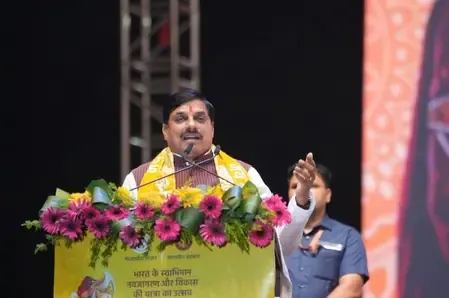
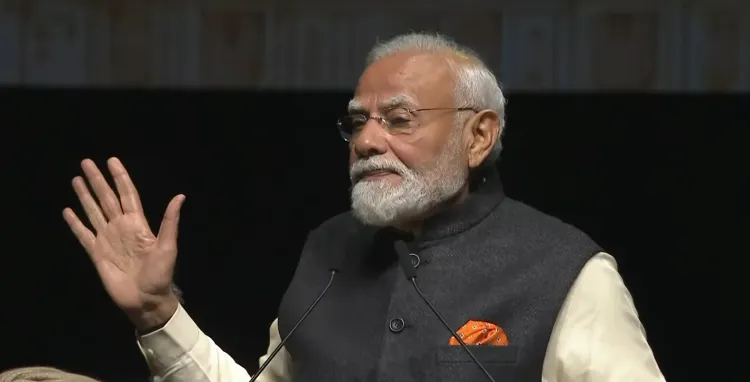
Prime Minister Narendra Modi on Saturday, 11 July credited New Zealand's space sector with contributing to the success of India's landmark lunar mission Chandrayaan-3, speaking before a large gathering of the Indian diaspora in Auckland. The remarks mark a significant diplomatic acknowledgement of bilateral space cooperation between the two nations.
What Modi Said in Auckland
'India's Chandrayaan-3, when it landed on the Moon's South Pole, the whole of New Zealand was dancing that day. And that day, we all felt proud. Now let me tell you one more thing to be proud of. New Zealand's technology has also contributed to this success,' Modi told the gathering.
He recalled scenes of celebration within the Kiwi-Indian community following the historic touchdown, describing the moment as one of shared national pride. He also noted that New Zealand's space company had collaborated with India on several occasions and expressed intent to deepen that cooperation further.
Chandrayaan-3: The Historic Achievement
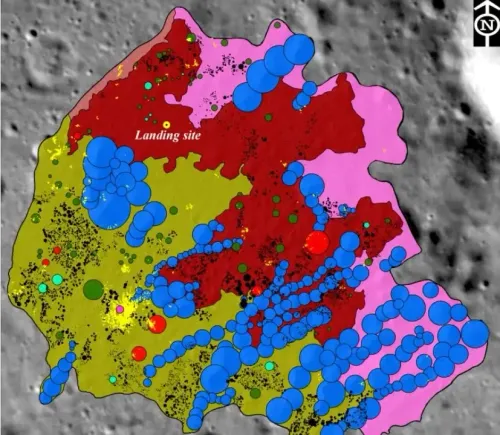
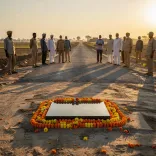
Launched by the Indian Space Research Organisation (ISRO), Chandrayaan-3 successfully touched down near the Moon's south pole on 23 August 2023. The mission made India the fourth country in history to achieve a soft lunar landing — and the first nation ever to reach the Moon's elusive southern polar region. The achievement elevated India's standing among the world's leading space-faring nations.
India-New Zealand Space Cooperation
Modi described the space sector as a 'perfect example' of how both economies can contribute to each other's growth. The acknowledgement of New Zealand's technological role adds a new dimension to what has typically been characterised as a bilateral relationship focused on trade and people-to-people ties.
Notably, New Zealand has developed a growing commercial space launch industry, with private launch operators having established a significant presence there. India's expanding private space ecosystem makes such cross-border partnerships increasingly relevant.
India's Space Economy Outlook
India's space economy is projected to grow from its current valuation of approximately $8–9 billion to nearly $40–45 billion over the next decade, driven by policy reforms, rising private sector participation, and an expanding innovation ecosystem. The upcoming Gaganyaan human spaceflight programme is expected to further cement India's position in the global space order.
Space-based applications have also been integrated into India's infrastructure planning, project monitoring, and public service delivery at a scale that officials say is rarely matched elsewhere. With bilateral space cooperation now publicly on the agenda, both nations appear poised to formalise what has so far been a quietly productive partnership.
Point of View
And India's acknowledgement of its role signals that ISRO's partnerships now extend well beyond the traditional big-power axis of the US, Russia, and Europe. What mainstream coverage misses is the strategic logic: as India scales Gaganyaan and its commercial launch ambitions, smaller but technologically capable partners like New Zealand offer agility that legacy space alliances do not. The $40–45 billion space economy target will require exactly these kinds of distributed partnerships — and Auckland may have just become a node in that network.
NationPress
10 Oct 2026
Frequently Asked Questions
What role did New Zealand play in Chandrayaan-3's success?
According to Prime Minister Modi, New Zealand's space technology directly contributed to the success of the Chandrayaan-3 lunar mission. He made the disclosure during an address to the Indian diaspora in Auckland on 11 July, though specific technical details of the contribution were not elaborated upon publicly.
When did Chandrayaan-3 land on the Moon?
Chandrayaan-3 successfully landed near the Moon's south pole on 23 August 2023. It was launched by ISRO and made India the fourth country to achieve a soft lunar landing and the first to reach the southern polar region.
Why is India-New Zealand space cooperation significant?
PM Modi described the space sector as the ideal pillar for mutual economic growth between India and New Zealand. With India's space economy projected to grow from $8–9 billion to $40–45 billion over the next decade, partnerships with technologically capable nations like New Zealand are increasingly strategic.
What is the Gaganyaan programme mentioned by Modi?
Gaganyaan is India's upcoming human spaceflight mission being developed by ISRO. It aims to send Indian astronauts to space and is expected to further establish India among the world's leading space-faring nations.
How large is India's space economy expected to grow?
India's space economy is projected to expand from its current size of approximately $8–9 billion to nearly $40–45 billion over the next decade, driven by policy reforms, private sector participation, and a growing innovation ecosystem.