Kishan Reddy highlights PM Modi's Mann Ki Baat on Indian mango exports
Synopsis
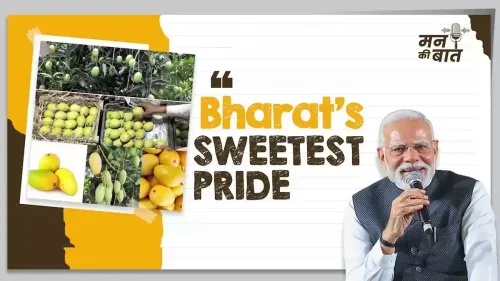
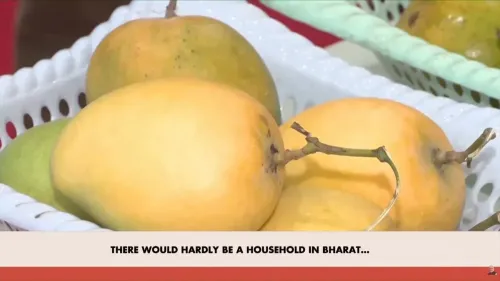
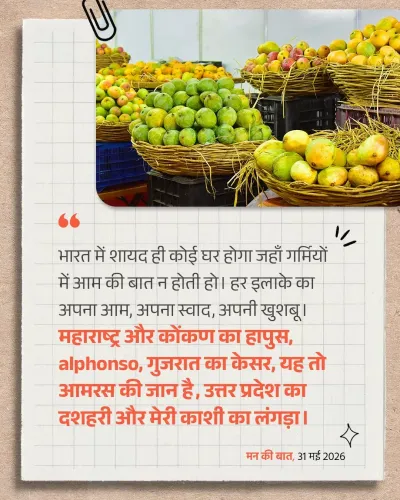
PM Modi's Mann Ki Baat address spotlighted Indian mango varieties — including Telangana's Banganpalli and Alphonso, Kesar, Dasheri, Langra, and Himsagar — as symbols of agricultural excellence reaching new international markets, with Union Minister Kishan Reddy amplifying the message.
Key Takeaways
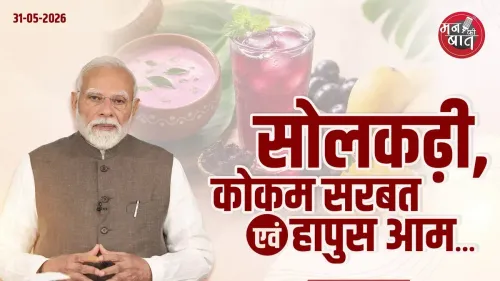
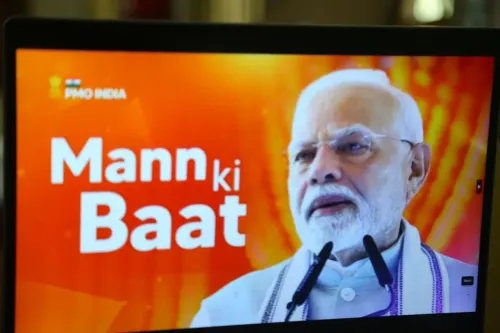
PM Modi highlighted Indian mango varieties in his Mann Ki Baat address on 31 May 2026 , calling them symbols of Bharat's agricultural excellence.
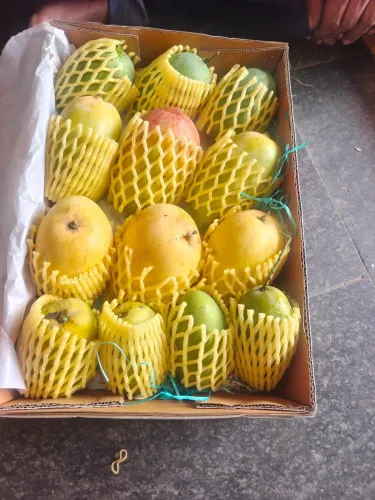
Varieties named include Banganpalli (Telangana), Alphonso , Kesar , Dasheri , Langra , and Himsagar from different regions.
Multiple Indian mango varieties hold Geographical Indication (GI) tags secured between 2011 and 2018 , enabling premium branding in export markets.
The Agriculture Export Policy of 2018 provides the policy framework for expanding India's farm export basket, including mangoes.
Growing international demand is cited as generating fresh income opportunities for mango farmers and strengthening India's agricultural exports .
Kishan Reddy , Union Minister and BJP Telangana president, shared the highlights, underscoring the regional significance of Banganpalli's global recognition.
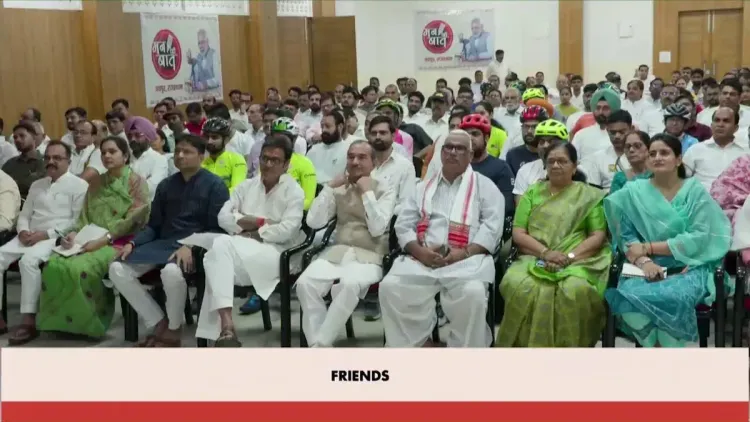
Union Coal and Mines Minister G. Kishan Reddy on Sunday, 31 May 2026, shared highlights from Prime Minister Narendra Modi's latest Mann Ki Baat address, drawing attention to the Prime Minister's remarks on India's diverse mango varieties and their growing presence in international markets.
Context
In his monthly radio address, PM Modi spoke at length about the cultural and agricultural significance of Indian mangoes, naming several regional varieties that are gaining traction in global markets. The Prime Minister specifically mentioned Banganpalli mangoes from Telangana, along with Alphonso, Kesar, Dasheri, Langra, and Himsagar from different states across the country.
Kishan Reddy, who also serves as BJP Telangana state president, highlighted the Prime Minister's observation that the growing international demand for these varieties is creating new economic opportunities for Indian farmers and bolstering the country's agricultural export earnings.
Policy Backdrop
India's push to position regional mango varieties as premium export commodities has been building for over a decade. Between 2011 and 2018, multiple mango varieties received Geographical Indication (GI) tags, enabling exporters to market them as origin-specific, traceable products — a key requirement in high-value markets in Europe, the Middle East, and North America.
The Agriculture Export Policy of 2018 laid a broader framework for diversifying India's farm export basket and raising the country's share in global agricultural trade. The Agricultural and Processed Food Products Export Development Authority (APEDA) has since worked to facilitate market access and certification for fruit exporters, including mango growers from states such as Telangana, Maharashtra, Uttar Pradesh, West Bengal, and Bihar.
Successive governments have treated GI tagging and targeted export promotion as complementary tools for moving Indian agriculture toward higher-value, brand-differentiated markets rather than bulk commodity trade.
Stakeholders and Impact
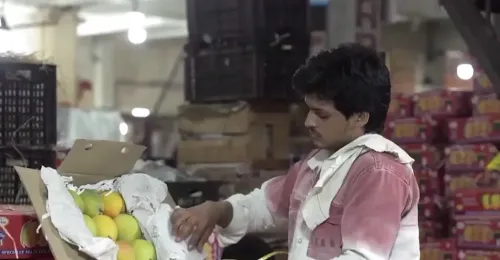
The primary beneficiaries of increased mango exports are smallholder and mid-scale mango farmers, particularly in producing belts of Andhra Pradesh, Telangana, Maharashtra, Uttar Pradesh, and West Bengal. Higher international demand translates into better farmgate prices and reduced dependence on domestic wholesale markets, which are often subject to seasonal price crashes.
Agricultural exporters and cold-chain logistics operators also stand to gain as volumes to premium markets grow. For Telangana specifically, the mention of Banganpalli mangoes in a nationally broadcast address is seen as a boost for the variety's brand recognition both domestically and abroad.
What's Next
Attention will now turn to the Ministry of Commerce's next quarterly agricultural export figures, which will indicate whether rising global interest in Indian mangoes is translating into measurable export growth. Any fresh GI applications for state-specific mango varieties would further strengthen India's ability to command premium pricing in international markets.
As India positions its agricultural sector as a meaningful contributor to foreign exchange earnings, the spotlight on regional produce in high-profile platforms like Mann Ki Baat is likely to continue.
Point of View
The address effectively signals that export promotion is not confined to traditionally dominant producing states. For BJP Telangana president Kishan Reddy, amplifying this message carries a dual purpose: aligning the state unit with a nationally popular narrative while drawing attention to Telangana's agricultural credentials ahead of a competitive political cycle. The broader arc here is India's gradual shift from bulk commodity exports toward GI-backed, premium-positioned farm products — a transition that Mann Ki Baat now appears to serve as a soft-launch platform for.
NationPress
17 Oct 2026
Frequently Asked Questions
What did PM Modi say about mangoes in Mann Ki Baat?
PM Modi spoke about the variety of Indian mangoes — including Banganpalli, Alphonso, Kesar, Dasheri, Langra, and Himsagar — describing them as symbols of India's agricultural excellence that are earning recognition in new international markets.
What is Banganpalli mango and where is it from?
Banganpalli is a well-known mango variety from Telangana, recognised for its distinctive taste and texture. It holds a Geographical Indication tag that helps market it as an origin-specific premium product in export markets.
Which Indian mango varieties have GI tags?
Several Indian mango varieties received Geographical Indication tags between 2011 and 2018, including Alphonso, Banganpalli, Dasheri, Langra, Himsagar, and Kesar, enabling exporters to brand them by their region of origin.
How is India promoting mango exports?
India promotes mango exports through the Agriculture Export Policy of 2018, GI tagging of regional varieties, and the work of APEDA, which facilitates market access and certification for exporters targeting Europe, the Middle East, and North America.
Why did Kishan Reddy post about Mann Ki Baat mangoes?
G. Kishan Reddy, Union Minister of Coal and Mines and BJP Telangana state president, shared the highlights to draw attention to PM Modi's remarks — particularly the mention of Telangana's Banganpalli mango — and to align with the Centre's agricultural export narrative.