Goyal: Modi Govt Approves NBS Rates for Rabi 2026-27
Synopsis
The Modi government has approved Nutrient Based Subsidy rates for phosphate and potash fertilizers for Rabi 2026-27, with a projected budgetary requirement of ₹62,370 crore, to ensure affordable farm inputs ahead of the winter sowing season.
Key Takeaways
The Modi government has approved NBS rates for P&K fertilizers for the Rabi 2026-27 season.
The anticipated budgetary requirement is approximately ₹62,370 crore .
The approval aims to ensure subsidised, affordable fertilizers are available to farmers before Rabi sowing begins.
The Nutrient Based Subsidy scheme has been in operation since April 2010 , tying subsidy to nutrient content rather than product price.
Pre-season approvals are standard practice to allow supply chains to stock fertilizers at district and village levels in time for sowing.
Union Minister Piyush Goyal made the announcement on November 11, 2026 , citing farmer welfare as the government's priority.
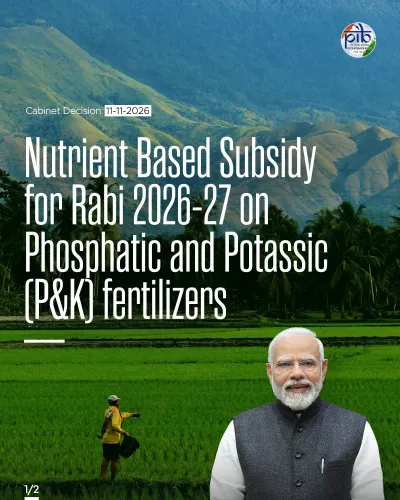
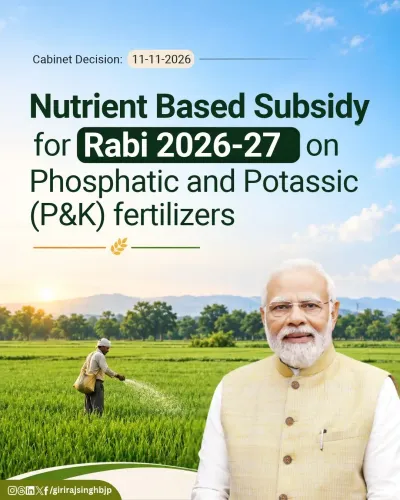
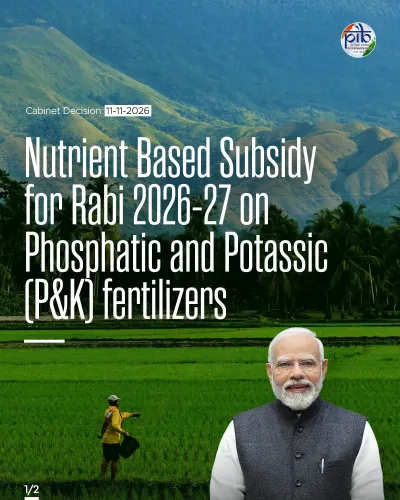
With the Rabi 2026-27 sowing season approaching, the Modi government has approved Nutrient Based Subsidy (NBS) rates for phosphate and potash (P&K) fertilizers — a decision Union Commerce and Industry Minister Piyush Goyal announced on Wednesday, November 11, 2026, signalling the Centre's intent to keep farm input costs in check ahead of the critical winter crop cycle.
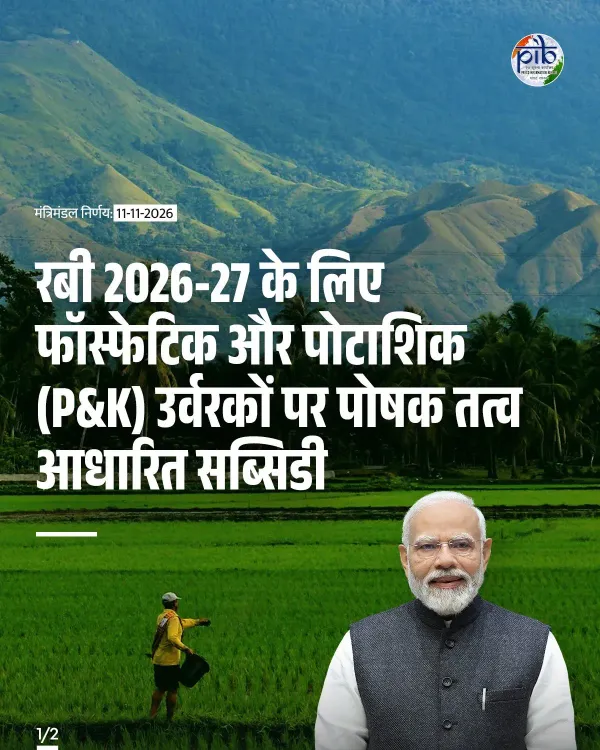
Goyal posted on X in Hindi: 'मोदी सरकार ने किसान हित में महत्वपूर्ण निर्णय लेते हुए रबी 2026-27 के लिए फॉस्फेट और पोटाश (P&K) उर्वरकों पर पोषक तत्व आधारित सब्सिडी (NBS) दरों को स्वीकृति दी है' — ('The Modi government, taking an important decision in the interest of farmers, has approved Nutrient Based Subsidy rates on phosphate and potash fertilizers for Rabi 2026-27.') The government pegs the anticipated budgetary requirement for this approval at approximately ₹62,370 crore.
What the NBS Scheme Does — and Why It Matters Every Season
The Nutrient Based Subsidy scheme was introduced in April 2010, replacing a flat-rate concession system that had long been criticised for distorting fertilizer use patterns. Under NBS, subsidy is linked to the nutrient content of decontrolled P&K fertilizers rather than to a fixed product price — meaning manufacturers absorb market price volatility while farmers receive a government-cushioned rate at the retail counter.
Successive governments have maintained the practice of clearing NBS rates before each major sowing season, precisely to give manufacturers and distributors enough lead time to stock fertilizers at district and village levels. A pre-season approval of this scale is therefore less a surprise than a critical gear-shift: without it, supply chains stall and farmers face shortages or price spikes at the worst possible moment.
₹62,370 Crore on the Table — What Farmers Stand to Gain
The government lists three direct benefits: assured availability of fertilizers at subsidised, affordable, and fair prices; adequate fertilizer stock ahead of the Rabi season; and farmer interests being treated as the first priority in budget planning. The ₹62,370 crore figure represents the projected fiscal outgo to make those promises real.
Rabi crops — wheat, mustard, gram, barley — are sown between October and December and form the backbone of India's winter harvest. P&K fertilizers are essential secondary nutrients for these crops, and their timely availability at affordable rates can directly affect yield and farm income across millions of households.
What to Watch as the Season Unfolds
The approval sets the policy floor; execution is what counts. The key questions now are whether fertilizer stocks reach block-level storage facilities before peak sowing demand hits, and whether the allocated ₹62,370 crore proves sufficient or requires supplementary budget support mid-season. Any revision to NBS rates — driven by shifts in global raw-material prices for phosphate or potash — will also be watched closely by both farmers and manufacturers.
India's fertilizer subsidy architecture has always walked a tightrope between fiscal prudence and agricultural welfare. This approval confirms the government is not stepping off that rope ahead of Rabi — but the tightrope walk continues through every sack that reaches a farmer's field.
Point of View
370 crore, the outgo underscores how central input-cost support remains to the government's rural compact. The timing — announced by the Commerce Minister rather than the Agriculture Ministry — also reflects how senior BJP leadership increasingly uses welfare decisions to frame the party's farmer-first narrative. The harder test, as always, will be last-mile delivery rather than the headline approval.
NationPress
11 Nov 2026
Frequently Asked Questions
What is the Nutrient Based Subsidy (NBS) scheme for fertilizers?
The NBS scheme, introduced in April 2010, provides subsidies on decontrolled phosphate and potash (P&K) fertilizers based on their nutrient content rather than a fixed product price, helping keep retail costs affordable for farmers while allowing manufacturers some pricing flexibility.
How much has the government allocated for P&K fertilizer subsidies for Rabi 2026-27?
The government has pegged the anticipated budgetary requirement at approximately ₹62,370 crore for NBS-based support to P&K fertilizers for the Rabi 2026-27 season.
Why is the NBS rate approved before the Rabi season?
Pre-season approval allows fertilizer manufacturers and distributors enough lead time to stock P&K fertilizers at district and village levels before peak Rabi sowing demand, preventing shortages and price spikes.
Which crops does the Rabi season cover, and why do P&K fertilizers matter?
Rabi crops — including wheat, mustard, gram, and barley — are sown between October and December. Phosphate and potash are essential secondary nutrients for these crops, and their affordable availability directly influences yield and farmer income.
Who announced the NBS approval for Rabi 2026-27?
Union Commerce and Industry Minister Piyush Goyal announced the approval on November 11, 2026, posting details on X and linking to an official government press release.