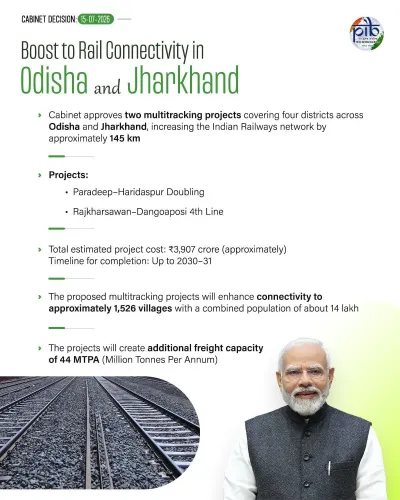
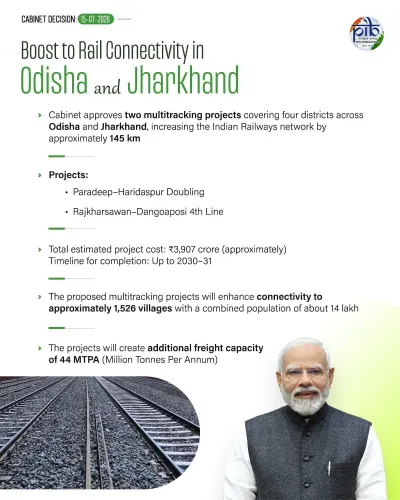
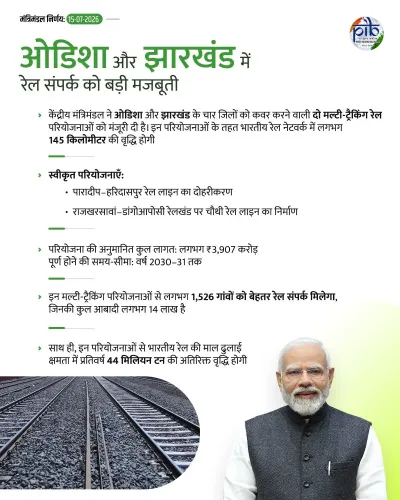
Yadav: Modi Govt Clears ₹9,450 Cr Rail Multitracking Across 4 States
Synopsis
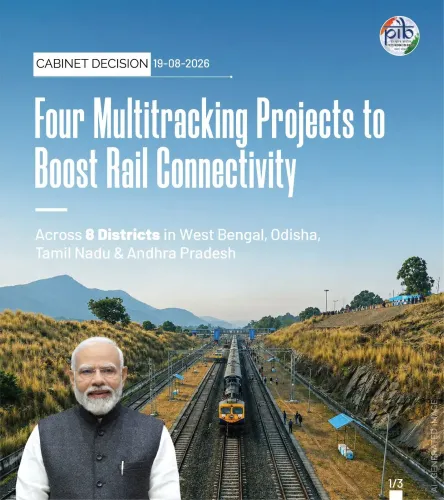
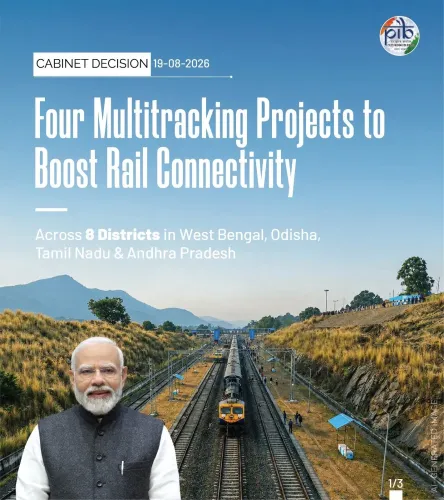
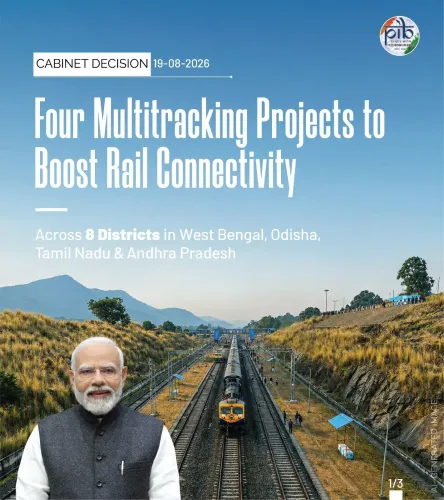
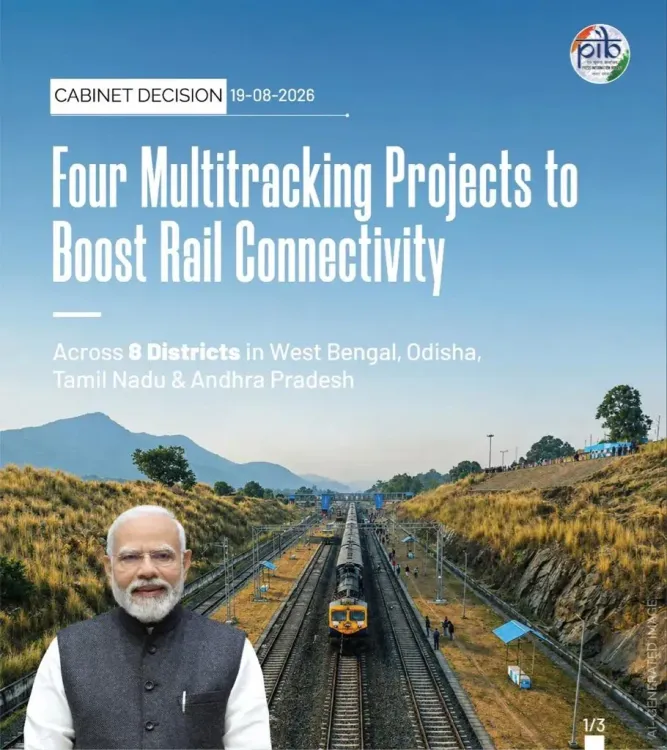
The Modi government has approved four multitracking railway projects across eight districts in West Bengal, Odisha, Tamil Nadu and Andhra Pradesh at approximately ₹9,450 crore, aimed at boosting capacity, cutting delays and strengthening freight and passenger connectivity on high-density corridors.
Key Takeaways
The Cabinet has approved four multitracking railway projects at a total cost of approximately ₹9,450 crore .
The projects span eight districts across West Bengal , Odisha , Tamil Nadu , and Andhra Pradesh .
The stated goals are enhanced mobility, improved operational efficiency, and stronger service reliability on Indian Railways .
The approvals align with the National Rail Plan 2030 targets for multitracking and route-doubling on congested corridors.
Next steps include project-wise tendering, construction timelines, and any required land-acquisition or environmental clearances.
Four railway multitracking projects spanning eight districts across West Bengal, Odisha, Tamil Nadu, and Andhra Pradesh have received government approval at a combined cost of approximately ₹9,450 crore — a significant push to decongest some of India's busiest rail corridors in the east and south. Union Environment Minister Bhupender Yadav announced the Cabinet decision on Wednesday, August 19, 2026, crediting the initiative to the leadership of Prime Minister Narendra Modi.
Posting on X, Minister Yadav stated that the projects 'will significantly enhance mobility, improve operational efficiency and strengthen service reliability across Indian Railways.'
Four Projects, Eight Districts, One Capacity Push
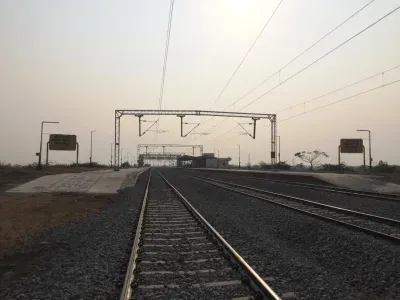
The approval covers four distinct multitracking projects, each targeting corridors where single or double lines have long been a bottleneck for both passenger and freight movement. The districts fall across two eastern states — West Bengal and Odisha — and two southern states — Tamil Nadu and Andhra Pradesh — reflecting a deliberate geographic spread aimed at easing pressure on high-density routes that feed India's major ports, industrial belts, and metropolitan centres. Multitracking — the addition of third or fourth rail lines alongside existing ones — is the most direct tool available to Indian Railways for increasing throughput without building entirely new corridors. On saturated routes, a single additional track can dramatically cut delays, improve punctuality, and free up slots for freight trains that currently compete with passenger services.A Decade of Rail Capital Outlays Behind This Moment
The ₹9,450 crore approval does not arrive in a vacuum. Since 2014, successive Union Budgets have steadily escalated capital expenditure on railway network expansion, and the National Rail Plan 2030 — released around 2021 — set out explicit targets for multitracking and route-doubling on congested corridors. The current projects are consistent with that longer arc: systematic, state-by-state capacity augmentation designed to reduce transit times and strengthen economic connectivity across regions. Railway passengers, freight operators, and residents across the eight beneficiary districts stand to gain most directly — faster, more reliable services and reduced congestion on routes that serve both daily commuters and bulk cargo movers.What Comes Next for These Projects
Approval is the starting gun, not the finish line. Project-wise construction timelines, tendering processes, and any land-acquisition or environmental clearances will determine how quickly the ₹9,450 crore translates into track on the ground. Watchers of railway infrastructure will look to upcoming budget cycles and ministry announcements for additional phases or complementary investments in signalling and electrification along the same corridors. For now, the government has signalled that eastern and southern India's rail network is firmly in the expansion queue — and at nearly ten thousand crore rupees, this is not a token gesture.Point of View
450 crore multitracking approval reinforces the Modi government's decade-long strategy of using capital-heavy railway investment as both an economic stimulus and a regional connectivity signal. Targeting eastern and southern states simultaneously suggests a calibrated political geography — spreading visible infrastructure wins across electorally significant terrain. The announcement also keeps the government on track with its National Rail Plan 2030 commitments, lending credibility to long-range capacity targets. Whether project execution matches the approval speed will be the real test of this infrastructure push.
NationPress
5 Oct 2026
Frequently Asked Questions
What are the four multitracking railway projects approved by the Modi government?
The government has approved four multitracking projects covering eight districts across West Bengal, Odisha, Tamil Nadu and Andhra Pradesh at a total cost of approximately ₹9,450 crore. Specific route names and district-level details are expected to be released through official project documentation.
What does multitracking mean in Indian Railways?
Multitracking refers to the addition of third or fourth rail lines alongside existing ones on busy corridors, increasing the number of trains that can run simultaneously and reducing delays for both passenger and freight services.
How much has the government approved for the new railway projects?
The Cabinet has approved approximately ₹9,450 crore for the four multitracking projects spanning eight districts in four states.
Which states will benefit from the ₹9,450 crore railway multitracking projects?
West Bengal, Odisha, Tamil Nadu and Andhra Pradesh are the four states whose districts are covered under the newly approved multitracking projects.
What is the National Rail Plan 2030 and how do these projects relate to it?
The National Rail Plan 2030, released around 2021, set targets for multitracking and doubling of high-density rail routes across India. The newly approved projects are consistent with those capacity-augmentation goals.