PM Modi Greets Kutchi Community on Ashadhi Beej New Year

Synopsis
Prime Minister Narendra Modi marked Ashadhi Beej on 16 July 2026 by posting new year greetings in the Kutchi language for the global Kutchi community, using the traditional salutations 'Ram Ram' and 'Jiji Jiji' in a culturally resonant outreach on X.
Key Takeaways
PM Narendra Modi posted Ashadhi Beej greetings in the Kutchi language on 16 July 2026 .
Ashadhi Beej is the traditional new year of the Kutchi community, observed on the second day of the bright fortnight of the month of Ashadha .
The post included a Kutchi verse comparing the community's global spread to a fish at home in the ocean, wherever it swims.
Traditional salutations 'Ram Ram' and 'Jiji Jiji' were used, reflecting authentic Kutchi cultural practice.
The Kutchi community is present across India and in diaspora hubs in East Africa, the Gulf, the UK , and North America .
The post continues PM Modi's pattern of engaging India's linguistic communities in their native tongues on significant cultural occasions.
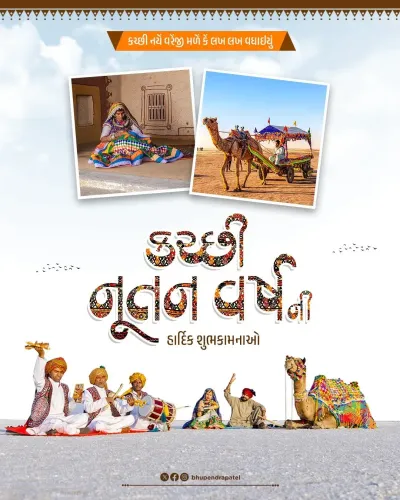
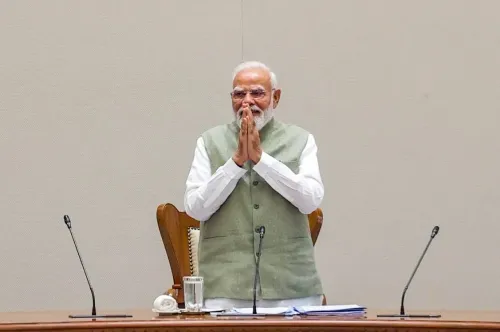
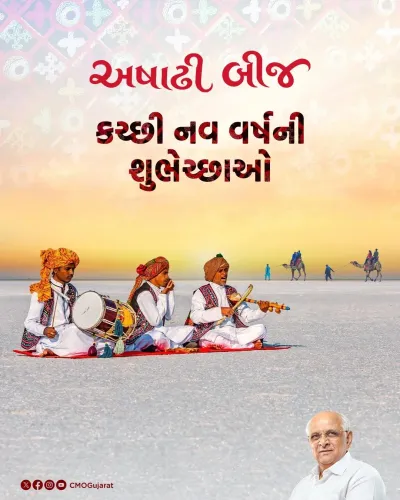
Prime Minister Narendra Modi on Thursday, 16 July 2026, extended new year greetings to the global Kutchi community on the occasion of Ashadhi Beej, the traditional new year of the Kutchi people. In a post on X written in the Kutchi language, the Prime Minister offered warm wishes to Kutchi brothers and sisters living across India and around the world.
The post, rendered in Kutchi script, opens with a verse: 'Kachhddo khele khalakmen jin mahasagarmen machh, jite hikdo Kachhi vase ute dinyan din Kachh' — meaning, 'Just as a fish plays in the ocean of the world, wherever a Kutchi lives, that place is Kutch every day.' The Prime Minister then greeted the community with the traditional salutation 'Ram Ram' and 'Jiji Jiji' on the occasion of Ashadhi Beej, describing it as the Kutchi new year (Kachhi nayo varen).
Context
Ashadhi Beej falls on the second day of the bright fortnight of the Hindu month of Ashadha, which typically arrives in June or July. It is celebrated as the new year by the Kutchi community — a distinct linguistic and cultural group native to the Kutch district of Gujarat. The festival holds deep significance for Kutchis both within India and across a widespread global diaspora.
The Kutchi language, distinct from Gujarati though related, has its own script and literary tradition. Greetings in the native tongue carry particular resonance for a community that has historically maintained strong cultural ties across generations and geographies.
Policy Backdrop
Prime Minister Modi, who has deep political roots in Gujarat, has consistently made a practice of issuing festival greetings in regional and minority languages on culturally significant occasions. This pattern of outreach reflects a broader communications approach aimed at acknowledging India's linguistic diversity and engaging diaspora communities.
The Kutch district holds particular political and emotional significance — it was the site of the devastating 2001 earthquake and has since undergone significant infrastructure and economic development, a transformation that has been highlighted by successive Gujarat governments and the central government alike.
Stakeholders and Impact
The Kutchi community is spread across Gujarat, Maharashtra, Rajasthan, and major Indian cities, as well as in countries including Kenya, the United Kingdom, the United States, and the Gulf states — regions where Kutchi traders and professionals migrated over centuries. A greeting from the Prime Minister in their native tongue, rather than in Gujarati or Hindi, is seen as a direct and personal acknowledgement of their distinct cultural identity.
Cultural organisations and community groups within the Kutchi diaspora typically mark Ashadhi Beej with gatherings, traditional music, and communal prayers. The Prime Minister's post amplifies the visibility of the festival on a national and global platform.
What's Next
State-level cultural programmes in Gujarat around Ashadhi Beej are expected to follow, with local administrations and community bodies organising events to mark the Kutchi new year. PM Modi's continued engagement with regional festivals signals that such cultural outreach will remain a feature of his public communications calendar. For the Kutchi community worldwide, the greeting serves as a reaffirmation of their cultural place within the broader Indian national narrative.
Point of View
The message is calibrated to resonate with a diaspora that prizes its distinct identity within the broader Gujarati and Indian fold. This fits a longer arc in Modi's political communication: using vernacular languages and local cultural codes to build direct affinity with communities that might otherwise feel subsumed by dominant linguistic identities. For a community whose homeland was rebuilt after a catastrophic earthquake, such recognition from the highest office carries layered emotional weight.
NationPress
15 Oct 2026
Frequently Asked Questions
What is Ashadhi Beej?
Ashadhi Beej is the traditional new year of the Kutchi community, celebrated on the second day of the bright fortnight of the Hindu month of Ashadha, which falls in June or July each year.
Why did PM Modi post in Kutchi language?
PM Modi posted in the Kutchi language to directly address the Kutchi community — both in India and abroad — in their native tongue on their traditional new year, Ashadhi Beej, as part of his broader cultural outreach to India's diverse linguistic communities.
What do 'Ram Ram' and 'Jiji Jiji' mean in Kutchi culture?
'Ram Ram' and 'Jiji Jiji' are traditional Kutchi salutations used to greet and wish well, equivalent to saying 'greetings' or 'blessings' in the community's cultural context.
Where is the Kutchi community located?
The Kutchi community originates from the Kutch district of Gujarat, India, but has a large diaspora spread across Maharashtra, Rajasthan, East Africa, the Gulf states, the United Kingdom, and North America.
Has PM Modi greeted regional communities in their native languages before?
Yes, PM Modi has a consistent pattern of posting greetings in regional and minority languages on culturally significant occasions, using this as a tool to engage India's linguistic diversity and diaspora communities.