PM Modi lauds Mission ShaktiSAT: 12,000 girls from 108 nations building lunar satellite

Synopsis
On Mann Ki Baat, PM Modi spotlighted Mission ShaktiSAT — a programme quietly connecting 12,000 girls from 108 countries to build a satellite destined for lunar orbit. It is arguably the most ambitious girl-led space education effort in the world, and India is at its centre.
Key Takeaways
PM Modi praised Mission ShaktiSAT during the 137th episode of Mann Ki Baat on 30 August .
The initiative connects 12,000 girl students from 108 countries with satellite technology and STEM education.
The second phase was launched on 23 August (National Space Day) at Gautam Buddha University , Greater Noida .
Around 100 female students from India and multiple countries attended the Phase 2 launch event.
The programme's ultimate goal is to place a satellite built entirely by female students into lunar orbit .
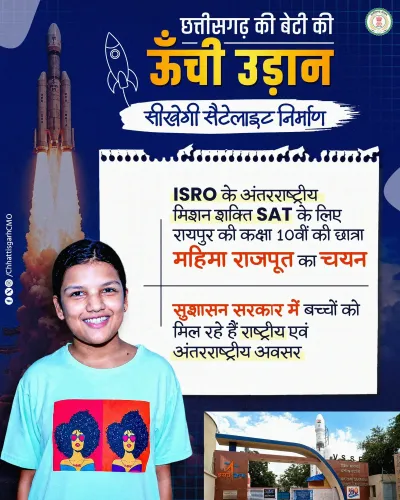
Students from India's remote regions are also among the participants, widening the programme's domestic reach.
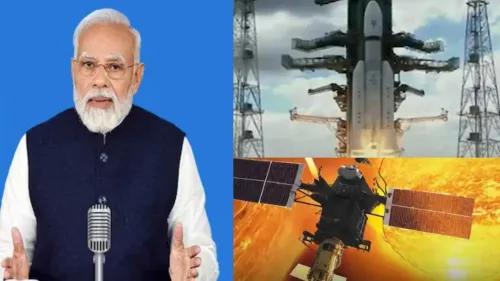
Prime Minister Narendra Modi on Sunday, 30 August praised the Mission ShaktiSAT initiative during the 137th episode of his monthly radio programme 'Mann Ki Baat', describing it as a landmark effort to channel girls' aspirations toward outer space. The mission connects 12,000 girl students from 108 countries with satellite technology and STEM education, with the ultimate goal of placing a student-built satellite into lunar orbit.
What Mission ShaktiSAT Is
Mission ShaktiSAT is a global space initiative that brings together female students from across the world to learn the full spectrum of space science — from satellite design and construction to the fundamentals of space science. The programme is not limited to Indian students; it is designed as a cross-border collaboration intended to build a new generation of women in space technology.
The initiative's stated aim is to empower girls in science and technology, and its scope — spanning 108 countries — makes it one of the broadest youth-focused space education programmes currently active.
Phase Two Launched at Gautam Buddha University
On 23 August, celebrated as National Space Day in India, the second phase of Mission ShaktiSAT was launched at Gautam Buddha University in Greater Noida, Uttar Pradesh. Approximately 100 female students from India and several other countries gathered for the occasion. Modi noted that students selected from India's remote regions are also participating, broadening the initiative's domestic reach beyond urban centres.
What PM Modi Said
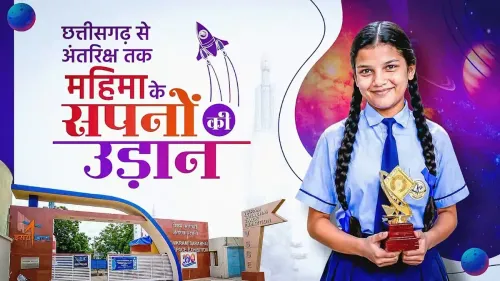
'Today the flight of our daughters' dreams is soaring from the earth to outer space,' Modi said during his broadcast. 'And you will be proud to know that India is bringing together thousands of daughters who are nurturing such dreams, from across the globe. This initiative is named Mission ShaktiSAT.'
He added: 'The goal of this entire initiative is truly special: preparations are underway to send a satellite — developed entirely through the participation of female students — into lunar orbit.' Modi expressed confidence that many of the participating students 'will carve out a distinct identity for themselves in the fields of science, technology, and innovation in the future.'
Why It Matters
The initiative arrives at a moment when India's space sector is expanding rapidly following Chandrayaan-3's successful lunar landing in 2023. Notably, Mission ShaktiSAT attempts to translate that national momentum into a structured pipeline for women in STEM — a demographic that remains underrepresented in space agencies globally. If the student-built satellite reaches lunar orbit as planned, it would mark a significant symbolic and technical milestone for girl-led space science worldwide.
What Comes Next
With the second phase now under way, attention will turn to the technical roadmap for the lunar-orbit satellite mission and the timeline for its launch. Industry observers and educators will be watching whether the programme's global enrolment translates into sustained careers in space technology for its participants.
Point of View
If achieved, would be a verifiable milestone rather than a policy aspiration. What the programme still needs to demonstrate is long-term career conversion: how many of these 12,000 students will enter space agencies or deep-tech firms a decade from now? That metric, not the enrolment number, will determine whether ShaktiSAT is transformative or symbolic.
NationPress
14 Oct 2026
Frequently Asked Questions
What is Mission ShaktiSAT?
Mission ShaktiSAT is a global space education initiative that connects 12,000 girl students from 108 countries with satellite technology and STEM education. Its primary goal is to empower girls in space science, culminating in the launch of a student-built satellite into lunar orbit.
What did PM Modi say about Mission ShaktiSAT on Mann Ki Baat?
During the 137th episode of Mann Ki Baat on 30 August, Modi said the initiative is sending 'the flight of our daughters' dreams soaring from the earth to outer space.' He highlighted that 12,000 girls from 108 countries are learning satellite technology through the programme and expressed confidence they will build careers in science and innovation.
Where was the second phase of Mission ShaktiSAT launched?
The second phase was launched at Gautam Buddha University in Greater Noida, Uttar Pradesh, on 23 August — India's National Space Day. Around 100 female students from India and other countries attended the launch event.
What is the ultimate goal of Mission ShaktiSAT?
The programme aims to send a satellite developed entirely by female students into lunar orbit. This would make it one of the few girl-led space missions to achieve an actual orbital objective rather than a purely educational one.
Who can participate in Mission ShaktiSAT?
The initiative is open to girl students globally, with participants currently drawn from 108 countries. Indian students, including those from remote regions of the country, are also part of the programme alongside international participants.