PM Modi in Slovakia: First Indian PM visit in 33 years to deepen bilateral ties
Synopsis
For the first time in 33 years of diplomatic relations, an Indian Prime Minister has set foot in Slovakia — and the visit is far more than symbolic. With bilateral trade at $1.8 billion, defence joint-manufacturing underway, and the India-EU FTA on the horizon, Modi's two-day Bratislava stop is about building the institutional framework for a partnership that both sides believe has significantly more to give.
Key Takeaways
PM Narendra Modi arrived in Bratislava on 15 June for a two-day State visit — the first by an Indian Prime Minister since Slovakia's independence in 1993 .
Bilateral trade reached $1.8 billion in 2025 , up from $1.3 billion in 2024 , with Indian exports at $1.52 billion .
Agreements are expected in defence , digital technologies , cybersecurity , and mobility of skills and talent .
Slovak firm Grand Power is setting up a subsidiary near Coimbatore ; Indian companies have signed joint-manufacture deals in artillery and armoured systems.
Slovakia facilitated evacuation of 1,113 Indian nationals during Operation Ganga in 2022 and has backed India's UN Security Council permanent membership bid.
The visit follows President Droupadi Murmu's State Visit to Slovakia in April 2025 and President Pellegrini's India trip in February 2026 .
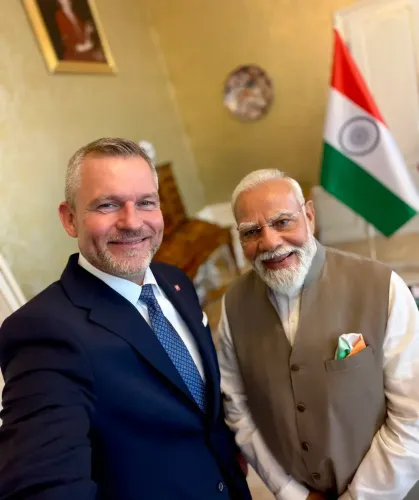
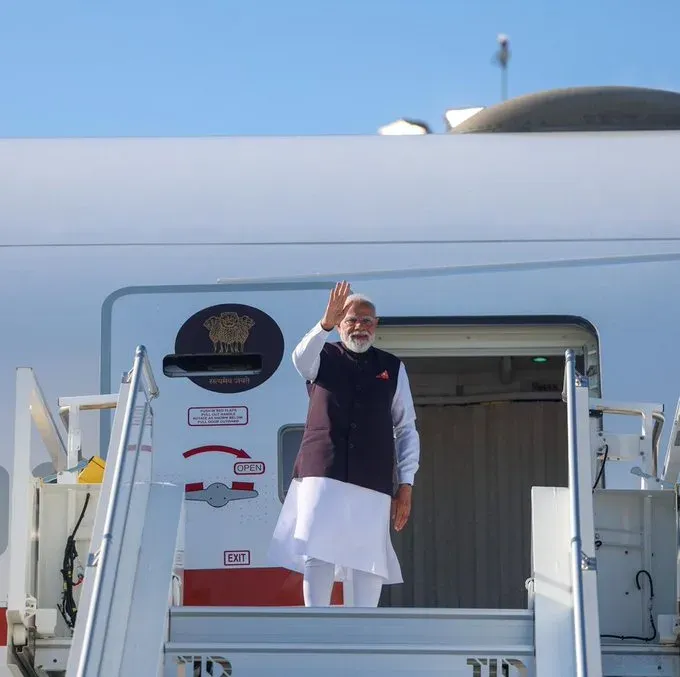
Prime Minister Narendra Modi arrived in Bratislava, the capital of Slovakia, on Sunday, 15 June for an official two-day State visit — the first by an Indian Prime Minister since Slovakia's independence in 1993. Modi said the visit offers an opportunity to deepen India-Slovakia relations and explore new avenues of cooperation between the two countries.
Posting on his official X account after landing, Modi wrote: 'Reached Bratislava. This visit provides an opportunity to deepen India-Slovakia relations and explore new avenues of cooperation. Looking forward to productive meetings with President Pellegrini and Prime Minister Fico.'
Key Meetings on the Agenda
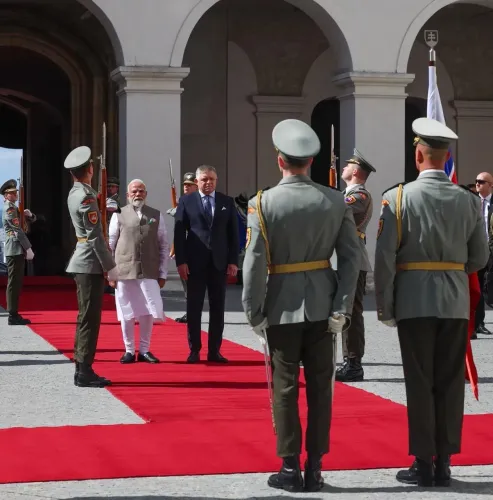
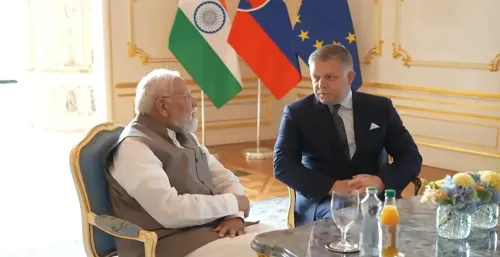
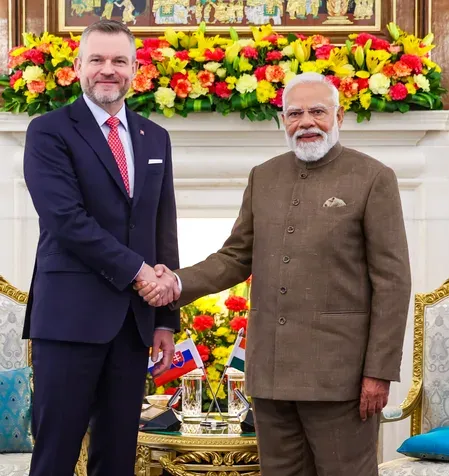
Prime Minister Modi is scheduled to hold talks with Slovak Prime Minister Robert Fico, at whose invitation the visit was arranged. He will also meet Slovak President Peter Pellegrini. A ceremonial welcome was accorded to Modi on Monday morning. The visit, which runs until 16 June, is the second leg of a broader European tour that began with a stop in Nice, France.
The Indian diaspora in Slovakia — numbering around 11,000, with roughly 500 students enrolled at universities in Bratislava, Kosice, and Nitra — is reported to be highly enthused about the maiden Prime Ministerial visit.
Trade and Economic Ties on the Rise
The numbers underpinning this visit are notable. Bilateral trade crossed the $1 billion mark for the first time in 2024, reaching $1.3 billion, before climbing further to $1.8 billion in 2025. Indian exports accounted for $1.52 billion of that figure, against imports of $284 million.
Slovakia's endorsement of the finalised India-EU Free Trade Agreement (FTA) adds strategic weight to the bilateral relationship. President Pellegrini has publicly described the FTA as 'a strong signal of strategic unity and an opportunity to boost economies and diversify supply chains.' For Indian businesses, Slovakia's position as a manufacturing hub within the EU single market makes it a potential gateway into Europe.
Defence, Digital and Space Cooperation
Modi's agenda in Bratislava is expected to yield agreements across several sectors. In defence, an MoU has been in place since 1995, but the relationship has gained fresh momentum, with Indian companies signing agreements with Slovak defence firms for joint manufacture in artillery and armoured systems. Slovak firearm manufacturer Grand Power is in the process of setting up a subsidiary near Coimbatore — a concrete signal of two-way industrial intent.
In digital technologies, negotiations are underway between India's Ministry of Electronics and Information Technology and its Slovak counterpart. A separate agreement on cybersecurity and post-quantum technologies is being discussed between C-DOT and Slovakia's Critical Infrastructure Association. On the space front, Slovakia's first satellite was launched aboard an Indian PSLV rocket from Sriharikota in June 2017, and both countries' space agencies remain in contact over future collaborations.
A Relationship With Historical Depth
Slovakia has stood by India in significant moments. During Operation Ganga in 2022, Slovakia facilitated the evacuation of 1,113 Indian nationals and two foreign nationals fleeing Ukraine following the Russian invasion. More recently, President Pellegrini and the Slovak Foreign Ministry formally condemned the Pahalgam terrorist attack, with Pellegrini expressing personal solidarity with the Indian people. Slovakia has also consistently backed India's bid for a permanent seat on the UN Security Council.
People-to-people ties reinforce the official relationship. Six Indian cultural troupes performed across Slovakia last year, and the first-ever translation of the Upanishads from Sanskrit into Slovak was significant enough to merit mention on Prime Minister Modi's Mann ki Baat. The visit follows President Droupadi Murmu's State Visit to Slovakia in April 2025 and President Pellegrini's visit to India for the AI Impact Summit in February 2026.
What This Visit Signals
A first Prime Ministerial visit after 33 years of diplomatic relations could easily be read as ceremony catching up with reality. But the breadth of expected agreements — spanning defence, digital technologies, and mobility of skills and talent — suggests this visit is less about optics and more about institutional architecture. For India, deepening ties with EU member states has taken on renewed urgency with the India-EU FTA in sight, and Slovakia, strategically placed at the heart of the EU single market, is emerging as a more consequential partner than its size might suggest.
Point of View
Defence co-production is already underway, and Slovakia has positioned itself as a vocal advocate for India inside EU institutions — from the FTA to the UN Security Council bid. What mainstream coverage tends to miss is that Slovakia's value to India is disproportionate to its size: as a manufacturing hub inside the EU single market, it offers Indian industry a credible entry point at a moment when supply-chain diversification is a strategic imperative. The real test of this visit will be whether the expected agreements come with implementation timelines and review mechanisms, or remain aspirational frameworks like many bilateral MoUs before them.
NationPress
14 Sept 2026
Frequently Asked Questions
Why is PM Modi's visit to Slovakia historically significant?
This is the first-ever visit by an Indian Prime Minister to Slovakia since the country gained independence in 1993 — making it a landmark moment after 33 years of diplomatic relations. The visit is intended to formalise and deepen a relationship that has grown substantially in trade, defence, and technology.
What is the current state of India-Slovakia bilateral trade?
Bilateral trade between India and Slovakia reached $1.8 billion in 2025, up from $1.3 billion in 2024 when it crossed the $1 billion mark for the first time. Indian exports stood at $1.52 billion against imports of $284 million.
What agreements are expected to be signed during Modi's Bratislava visit?
Agreements are expected across defence (joint manufacture in artillery and armoured systems), digital technologies, cybersecurity and post-quantum technologies, and mobility of skills and talent. Slovak firm Grand Power is also setting up a manufacturing subsidiary near Coimbatore.
How has Slovakia supported India in recent years?
Slovakia facilitated the evacuation of 1,113 Indian nationals during Operation Ganga in 2022 following the Russian invasion of Ukraine. It has also formally condemned the Pahalgam terrorist attack and consistently backed India's bid for a permanent seat on the UN Security Council.
How does the India-EU Free Trade Agreement factor into Modi's Slovakia visit?
Slovakia has publicly endorsed the finalised India-EU FTA, with President Pellegrini calling it a strong signal of strategic unity. For Indian businesses, Slovakia's role as a manufacturing hub within the EU single market positions it as an attractive gateway into Europe, making the FTA a key backdrop to this visit.