PM Modi inaugurates redeveloped Barmer Railway Station, a 125-year landmark

Synopsis
A 125-year-old station that survived Pakistani aerial bombing in 1971 and once ran trains to Karachi has been reborn. PM Modi's virtual inauguration of Barmer Railway Station under the Amrit Bharat Scheme is as much a history lesson as a rail upgrade — this border-district hub has been at the centre of every major chapter in India-Pakistan rail relations.
Key Takeaways
PM Narendra Modi virtually inaugurated the redeveloped Barmer Railway Station on 17 July under the Amrit Bharat Station Scheme .
The station was established around 1899 , making it one of western Rajasthan's oldest railway hubs.
It came under Pakistani aerial bombardment on 8–9 December 1971 during the India-Pakistan war but remained operational throughout.
The Thar Express between Jodhpur and Khokhrapar ran from 2006 until it was suspended in 2019 amid bilateral tensions.
The Jodhpur–Munabao metre-gauge line was converted to broad gauge in 2005–2006 , backed by then Defence Minister Jaswant Singh .
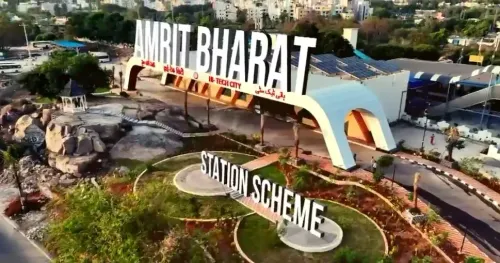
The redeveloped station is located opposite Ahimsa Circle and Barmer's main market, now serving as a modern gateway to the city.
Prime Minister Narendra Modi on Friday, 17 July virtually inaugurated the redeveloped Barmer Railway Station under the Amrit Bharat Station Scheme, ushering in a new era for one of western Rajasthan's oldest and most historically significant rail hubs. The station, which railway experts say was established around 1899, has stood witness to colonial-era expansion, two India-Pakistan wars, and cross-border train services stretching nearly to Karachi.
Key Developments at the Inauguration
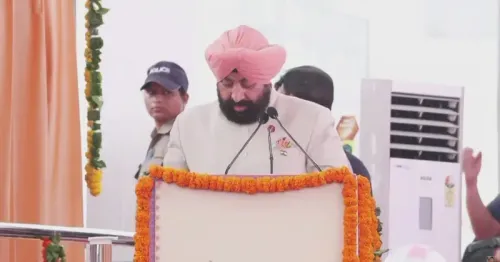
The inauguration ceremony was attended by Barmer-Jaisalmer MP Ummeda Ram Beniwal, Barmer MLA Priyanka Chaudhary, Baytu MLA Aaduram Meghwal, and former Union Minister Kailash Choudhary. The redeveloped station, located opposite the city's main market and Ahimsa Circle, now functions as a modern gateway to Barmer while retaining the legacy of one of Rajasthan's oldest railway hubs.
A Station Forged Through History
The railway line linking Luni, Balotra, and Barmer was completed in 1899, while the extension from Barmer to Hyderabad (Sindh) — now in Pakistan — became operational in 1900, making the station a critical node in western India's rail network. Until the 1965 India-Pakistan war, trains from Barmer connected with Karachi via the cross-border route.
During the 1971 India-Pakistan war, the station came under heavy aerial bombardment by Pakistani forces on 8 and 9 December 1971. Diesel drums stored in a nearby warehouse were moved to safety by officials before they could be struck, averting what could have been catastrophic damage to the station and surrounding residential areas. Despite the attacks, railway operations continued without interruption.
The original station featured a simple tin-roofed structure, later rebuilt during the British era with a distinctive rounded roof designed to prevent water accumulation and withstand extreme weather — an architectural style typical of colonial-era railway buildings.
The Broad Gauge Conversion and Cross-Border Rail
A pivotal transformation came in 2005–2006, when the Jodhpur–Munabao metre-gauge line was converted to broad gauge, a project strongly backed by then Union Defence Minister Jaswant Singh. The conversion led to the launch of the Malani Express, significantly boosting regional rail connectivity.
In 2006, the Thar Express between Jodhpur and Khokhrapar restored rail connectivity between India and Pakistan after several decades, and the international railway station at Munabao was established, enhancing Barmer's strategic importance. The cross-border service remained operational until 2019, when it was suspended following heightened bilateral tensions.
What the Amrit Bharat Upgrade Delivers
Barmer Railway Station was first modernised in 2006 with a new station building, upgraded platforms, improved passenger amenities, and a washing line. Its latest redevelopment under the Amrit Bharat Station Scheme has further elevated passenger infrastructure while refreshing the station's visual identity. This comes amid a broader national push to upgrade hundreds of stations across India under the same scheme, aiming to blend modern facilities with local architectural character.
With its layered history and renewed infrastructure, Barmer Railway Station stands as both a functional transit hub and a living record of the region's past — and its redevelopment signals the Centre's continued focus on rail modernisation in border districts of western Rajasthan.
Point of View
Partition, two wars, and a cross-border train that ran for 13 years before geopolitics shut it down. The Amrit Bharat upgrade is welcome, but the deeper question is whether rail investment in border districts like Barmer is being matched with the strategic connectivity planning that once made this station matter beyond passenger convenience. With the Thar Express suspended since 2019 and no visible diplomatic pathway to resumption, a modernised station without a cross-border service is only half the story.
NationPress
16 Oct 2026
Frequently Asked Questions
Why did PM Modi inaugurate Barmer Railway Station?
PM Modi virtually inaugurated the redeveloped Barmer Railway Station on 17 July under the Amrit Bharat Station Scheme, which aims to modernise hundreds of stations across India. The upgrade has improved passenger facilities and refreshed the station's appearance while preserving its historical legacy.
How old is Barmer Railway Station?
According to railway experts, Barmer Railway Station was established around 1899, making it approximately 125 years old. The railway line connecting Luni, Balotra, and Barmer was completed that year, and the extension to Hyderabad (Sindh) became operational in 1900.
Was Barmer Railway Station attacked during the 1971 war?
Yes. Pakistani forces carried out heavy aerial bombardment of Barmer Railway Station on 8 and 9 December 1971. Officials moved diesel drums stored near the station to safety before they could be hit, preventing extensive damage. Despite the attacks, railway operations continued uninterrupted.
What was the Thar Express and why was it suspended?
The Thar Express was a cross-border train service between Jodhpur and Khokhrapar (Pakistan) launched in 2006, restoring rail connectivity between India and Pakistan after several decades. It was suspended in 2019 following heightened tensions between the two countries.
What is the Amrit Bharat Station Scheme?
The Amrit Bharat Station Scheme is a central government initiative to redevelop and modernise railway stations across India, improving passenger amenities, platforms, and station aesthetics. Barmer Railway Station's latest upgrade was carried out under this scheme.