PM Modi Connects Dandi March Legacy to Viksit Bharat Amid Global Challenges
Synopsis
Prime Minister Modi draws a striking parallel between Gandhi's Dandi March and India's present vision for a developed nation, emphasizing resilience amidst global turmoil and the aspirations of 140 crore citizens driving change.
Key Takeaways
Historical Context: PM Modi draws parallels between the Dandi March and modern India's aspirations.
Global Recognition: India is increasingly seen as a key player in addressing global challenges.
Unity in Adversity: Calls for collective action similar to the response during the Covid-19 pandemic.
Economic Transformation: Significant reforms driving India's growth narrative.
Resilience and Hope: India positioned as a beacon of stability amidst global turmoil.
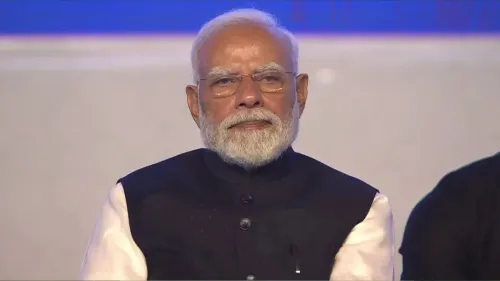
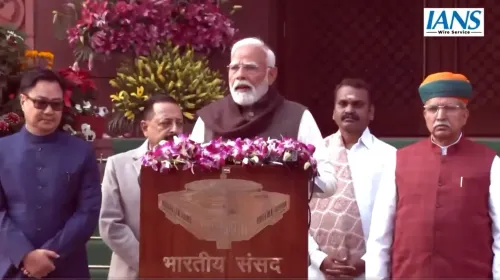
New Delhi, March 12 (NationPress) Prime Minister Narendra Modi on Thursday made a comparison between the legendary Dandi March of 1930, led by Mahatma Gandhi, which unified the nation in its quest for independence, and the current collective endeavor of India to establish a developed nation under the Viksit Bharat vision.
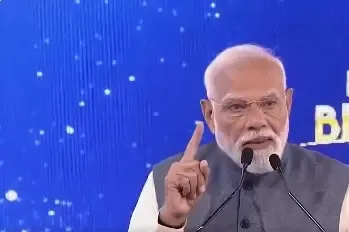
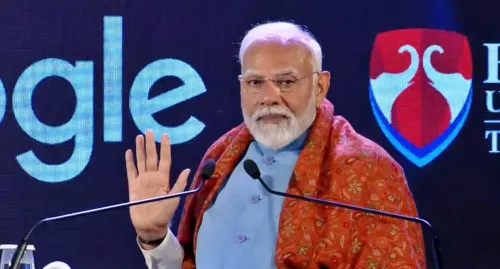
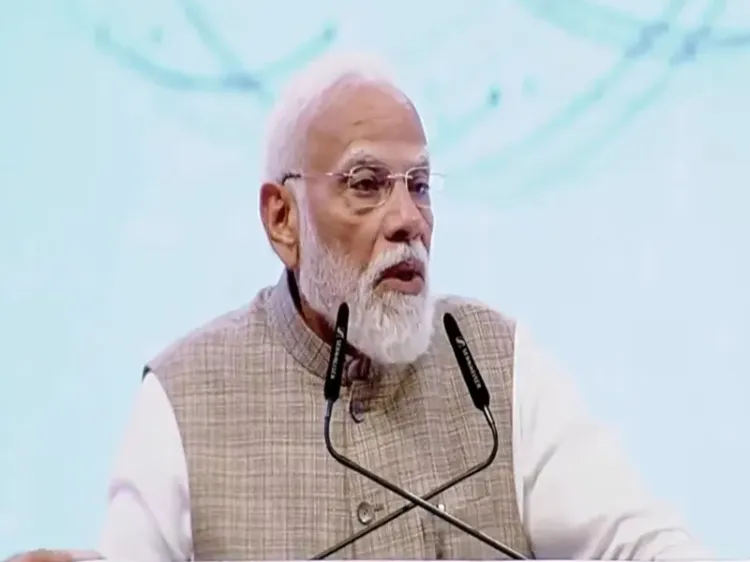
Speaking at the iTV Network's NXT Summit in Delhi on the anniversary of the historic Salt March, the Prime Minister characterized the current global situation as one rife with conflicts, disruptions, and uncertainties.
In the face of these challenges, PM Modi emphasized that India is emerging as a symbol of hope, resilience, and stability on the global stage.
He noted that international leaders and experts are increasingly recognizing India as a rising power and an essential partner for tackling urgent global issues.
According to the Prime Minister, the aspirations and confidence of 140 crore Indians are the catalysts for the country's transformation, turning long-held dreams into concrete achievements and enabling India to confront today's global crises with unity and resolve.
He stated that many global leaders have acknowledged India's expanding role in shaping the future world order.
The President of Finland remarked that the Global South will be pivotal in determining the world's future trajectory, while Mark Carney from Canada described India as the shifting center of global economic gravity in the coming decades.
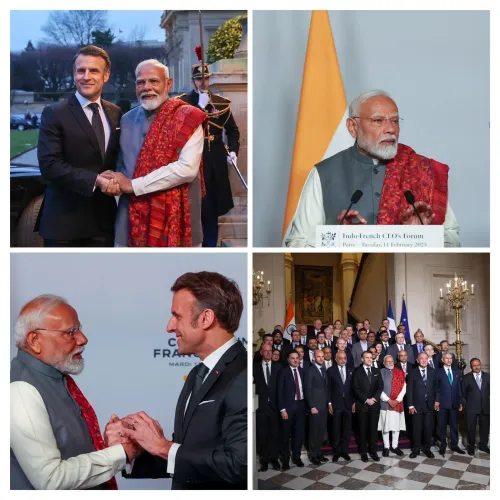
French President Emmanuel Macron referred to India as an indispensable ally in addressing worldwide challenges.
PM Modi asserted that for the world to remain relevant, it must engage with and invest in India.
In light of ongoing conflicts in West Asia, which have triggered a global energy crisis and disrupted supply chains, the Prime Minister called for peace, patience, and increased public awareness.
He urged collaborative efforts from political parties, the media, and industry—akin to the unified response during the Covid-19 pandemic—to protect national interests.
The Prime Minister also advocated for responsible public discourse grounded in facts rather than misinformation, particularly concerning issues such as LPG availability, and stressed the need for ongoing dialogue with world leaders to tackle emerging challenges.
Highlighting the increasing confidence among citizens, PM Modi likened the public's interest in the nation’s economic progress to the enthusiasm for cricket.
"Just as fans eagerly track T20 match scores, they now desire a continuous update on India’s growth narrative," he stated.
He added that this growing self-belief is the bedrock of global trust in India and elevates the country’s responsibility at a time when the world is observing its progress closely.
PM Modi mentioned that India has progressed beyond mere incremental advancements and is now constructing world-class physical and digital infrastructure.
He pointed out significant achievements such as the abrogation of Article 370, connecting over 50 crore individuals to the banking system through Jan Dhan accounts, and the enactment of a 33% reservation for women in legislatures.
In the realm of technology, he noted that India is advancing through dedicated missions in space, semiconductors, and quantum computing, propelling the nation toward new horizons.
The Prime Minister stated that the country has transitioned from aspiration to implementation through reforms across various sectors.
Expressing faith in India's resilience, he affirmed that the nation demonstrated its strength during the pandemic and would similarly overcome current global challenges.
He reiterated that the government would continue prioritizing public welfare and mitigate the effects of global upheavals on citizens, farmers, and vulnerable communities.
PM Modi emphasized that India's momentum is unstoppable, fueled by the aspirations of its people, reiterating his commitment to achieving a self-reliant and fully developed India.
Point of View
It's clear that PM Modi's remarks resonate deeply in the current global climate. The emphasis on unity, resilience, and the recognition of India's potential as a key player in shaping global dynamics underscores a nation poised for significant transformation.
NationPress
3 Oct 2026
Frequently Asked Questions
What was the Dandi March?
The Dandi March, led by Mahatma Gandhi in 1930, was a pivotal event in India's struggle for independence, symbolizing nonviolent resistance against British colonial rule.
What is the Viksit Bharat vision?
The Viksit Bharat vision aims to transform India into a developed nation by focusing on economic growth, infrastructure, and social equity.
How does PM Modi view India's role in the world?
PM Modi sees India as an emerging power and a vital partner in addressing global challenges, emphasizing the country's growing influence on the international stage.
What challenges is India facing currently?
India is navigating a complex global landscape marked by geopolitical conflicts, economic uncertainties, and the ongoing impacts of the Covid-19 pandemic.
What initiatives has India undertaken for economic progress?
India has launched several initiatives, including reforms in banking, women's reservation in legislatures, and advancements in technology sectors like space and semiconductors.