PM Modi meets Netherlands PM, King Willem-Alexander in The Hague visit
Synopsis
Modi's second visit to the Netherlands in eight years is more than a diplomatic courtesy call — with semiconductors, defence, and renewable energy now on the bilateral table alongside traditional trade ties, The Hague is shaping up as a key node in India's European strategic pivot. The royal audience and diaspora address add both symbolism and soft-power weight to what is a substantively upgraded partnership.
Key Takeaways
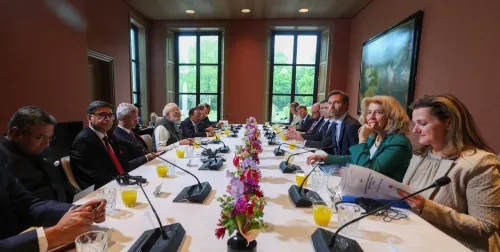
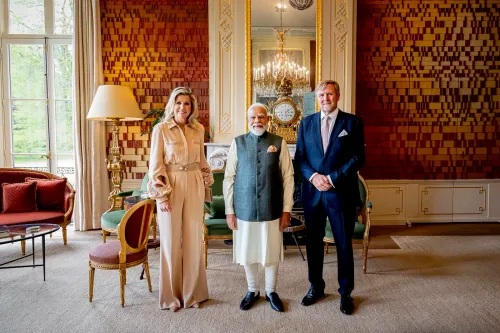
PM Narendra Modi held bilateral talks with Netherlands PM Rob Jetten and met King Willem-Alexander and Queen Maxima in The Hague on Saturday, 17 May .
This is Modi's second visit to the Netherlands; his first was in 2017 .
The Netherlands hosts more than 90,000 non-resident Indians and over 2,00,000 members of the Suriname Hindustani community .
Around 3,500 Indian students are currently studying at Dutch universities.
Expanded cooperation areas include semiconductors, defence, renewable energy, and maritime sectors, beyond traditional trade and investment.
MEA Secretary Sibi George highlighted the WAH framework — water, agriculture, and health — as priority sectors in the partnership.
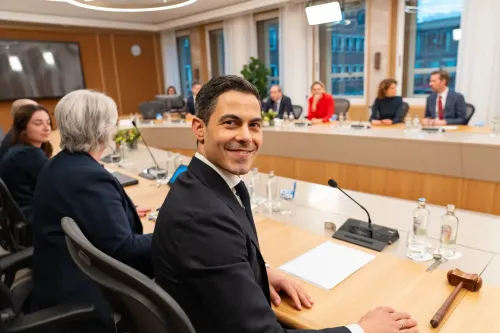
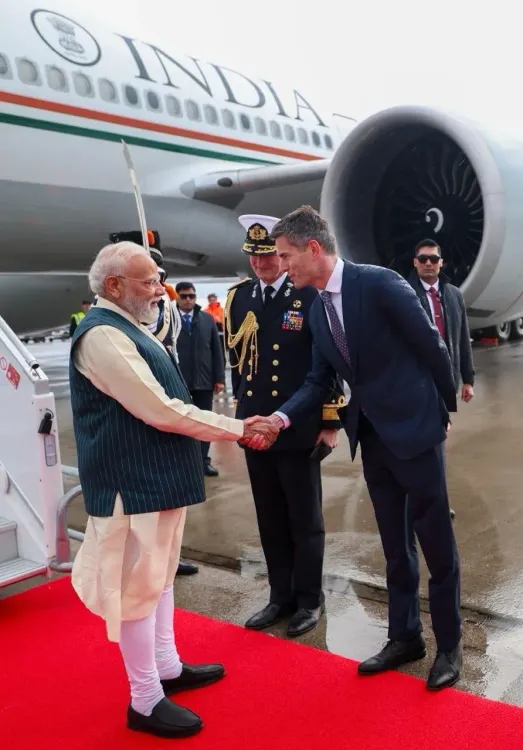
Prime Minister Narendra Modi held bilateral talks with Netherlands Prime Minister Rob Jetten and met King Willem-Alexander and Queen Maxima on Saturday during his official visit to The Hague, marking a significant diplomatic engagement aimed at deepening the India-Netherlands strategic partnership. The visit, which runs through 17 May, is Modi's second to the Netherlands — his first was in 2017 — and comes at what officials describe as a pivotal moment in bilateral ties.
Key Engagements on the Agenda
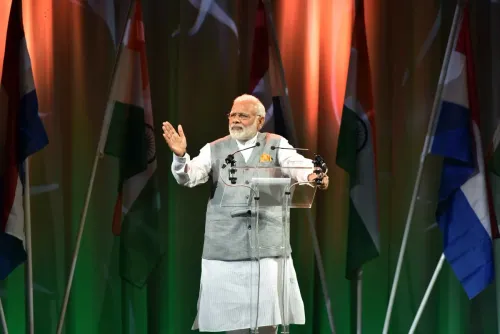
Beyond the royal audience and prime ministerial talks, Modi is expected to address the Indian diaspora — the largest on mainland Europe — and hold interactions with leading Dutch business leaders. The visit forms part of a broader multi-nation European diplomatic tour focused on advancing India's strategic, economic, and technological partnerships across the continent.
What Officials Said
Ministry of External Affairs spokesperson Randhir Jaiswal announced Modi's arrival on X, writing: 'Goedeavond Nederland! PM @narendramodi has arrived in the Netherlands. The visit will provide an opportunity to further strengthen the multifaceted India–Netherlands partnership and to engage with the largest Indian diaspora on mainland Europe.'
Secretary (West) in the Ministry of External Affairs, Sibi George, had earlier told a special briefing: 'Our partnership has considerably deepened over the last few years across traditional sectors of trade, investment, and priority sectors of WAH — water, agriculture, and health — as well as people-to-people ties. In recent years, cooperation has further expanded into strategic areas such as technology, innovation, defence, security, semiconductors, renewable energy, education, and the maritime domain.'
The Diaspora Dimension
People-to-people ties form a central pillar of the bilateral relationship. The Netherlands is home to more than 90,000 non-resident Indians and persons of Indian origin, in addition to over 2,00,000 members of the Suriname Hindustani community. Around 3,500 Indian students are currently enrolled at Dutch universities, adding an educational dimension to the relationship.
Strategic Significance
The visit arrives at a moment when the India-Netherlands partnership is expanding well beyond its traditional trade-and-investment base. Semiconductors — a sector where the Netherlands holds global influence through companies such as ASML — have emerged as a focal area, mirroring India's broader push to build domestic chip capacity. Notably, this is only Modi's second visit to the country in over a decade, signalling the renewed priority both governments are placing on the relationship.
What Comes Next
With Modi scheduled to depart by 17 May, outcomes from the bilateral talks — including any joint statements or agreements on technology, defence, or trade — are expected to be formalised before his departure. The visit is widely seen as a foundation-setter for a more structured strategic dialogue between the two nations in the months ahead.
Point of View
But the real story in The Hague is semiconductors. The Netherlands is home to ASML, the world's sole manufacturer of extreme ultraviolet lithography machines — the chokepoint of global chip supply chains. India's presence at the table signals that New Delhi understands where the leverage lies in the next decade of tech geopolitics. What is less clear is whether these visits translate into concrete access agreements or remain at the level of intent. Modi's 2017 visit produced goodwill; the 2025 iteration needs deliverables — particularly on chip technology transfer — to mark a genuine upgrade in the relationship.
NationPress
23 Oct 2026
Frequently Asked Questions
Why is PM Modi visiting the Netherlands in May 2025?
PM Modi is visiting the Netherlands as part of a multi-nation European diplomatic tour to strengthen India's strategic, economic, and technological partnerships. The visit includes bilateral talks with Dutch PM Rob Jetten and a meeting with King Willem-Alexander and Queen Maxima.
Is this PM Modi's first visit to the Netherlands?
No, this is Modi's second official visit to the Netherlands. His first visit took place in 2017. The 2025 visit is seen as a significant upgrade, with new areas such as semiconductors, defence, and renewable energy added to the bilateral agenda.
What are the key areas of cooperation between India and the Netherlands?
The India-Netherlands partnership covers traditional sectors like trade, investment, water, agriculture, and health, and has expanded into technology, innovation, defence, semiconductors, renewable energy, education, and the maritime domain, according to MEA Secretary Sibi George.
How large is the Indian community in the Netherlands?
The Netherlands is home to more than 90,000 non-resident Indians and persons of Indian origin, over 2,00,000 members of the Suriname Hindustani community, and around 3,500 Indian students currently pursuing higher education at Dutch universities.
What is expected to come out of Modi's Netherlands visit?
Outcomes including joint statements or agreements on technology, defence, or trade are expected to be announced before Modi's departure on 17 May. The visit is widely seen as laying the groundwork for a more structured strategic dialogue between India and the Netherlands.