PM Modi, President Murmu Offer Prayers at Goshani Pith in Odisha
Synopsis
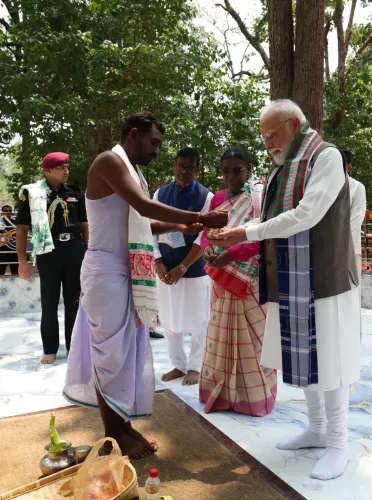
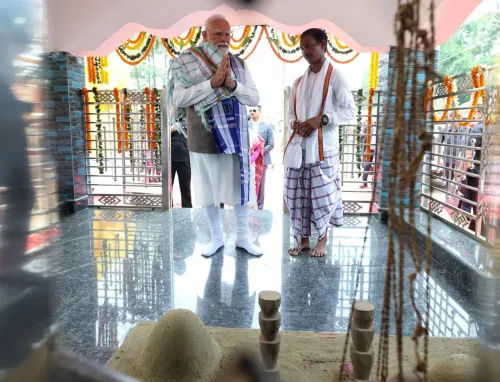
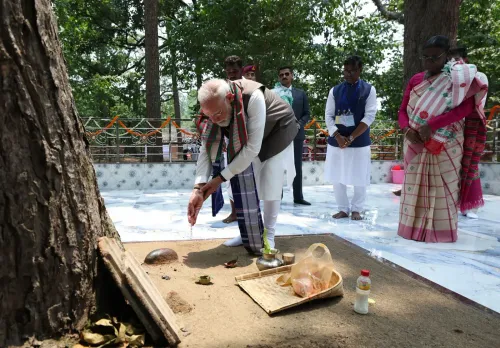
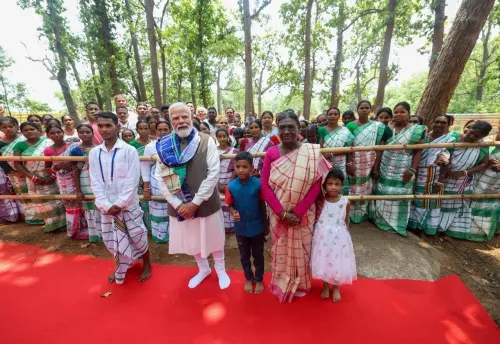
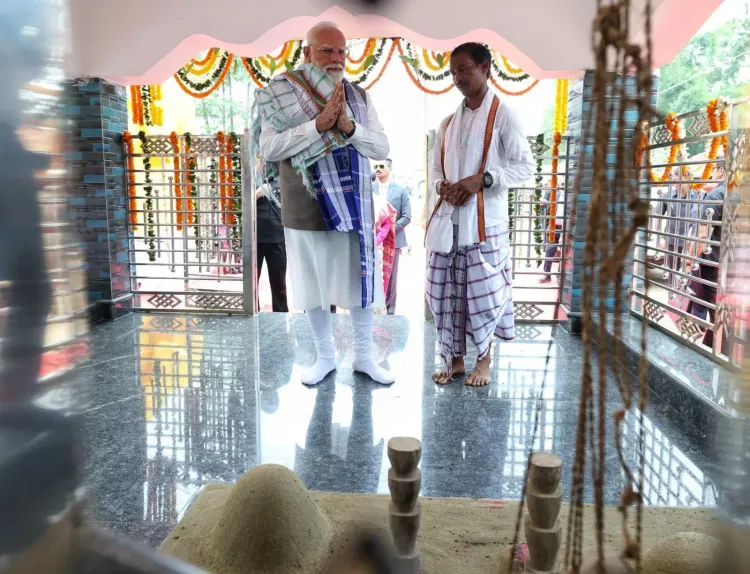
Prime Minister Narendra Modi and President Droupadi Murmu jointly offered prayers at the Goshani Pith, a sacred tribal shrine in Pahadpur village, Odisha, on 20 June 2026. Modi described the site as holding immense significance in Adivasi culture and called the visit a matter of personal fortune.
Key Takeaways
Prime Minister Narendra Modi and President Droupadi Murmu offered prayers together at the Goshani Pith in Pahadpur village, Odisha on 20 June 2026 .
The Goshani Pith is a sacred tribal shrine recognised for its role in indigenous goddess worship and community rituals.
PM Modi posted about the visit in Odia , describing the Goshani Pith as holding 'immense significance in Adivasi culture.' President Droupadi Murmu , India's first tribal head of state and an Odisha native, lent particular symbolic weight to the joint appearance.
The visit fits a broader pattern of BJP-led government outreach to Scheduled Tribe communities in eastern and central India.
Possible follow-up announcements on tribal cultural heritage or tourism circuits under schemes like Swadesh Darshan may emerge.
Prime Minister Narendra Modi and President Droupadi Murmu on Saturday, 20 June 2026 offered prayers together at the Goshani Pith, a sacred tribal shrine located in Pahadpur village in Odisha, in a joint visit that underscored the constitutional head of state and the head of government's shared acknowledgement of Adivasi spiritual heritage.
Posting in Odia on X, Prime Minister Modi wrote: 'Rashtrapati ji ebam mun Pahadpur gaanra Goshani Pithare puja kalu' ('The President and I offered prayers at the Goshani Pith in Pahadpur village'). He added that the Goshani Pith holds immense significance in Adivasi culture and described the visit as a matter of personal fortune.
Context
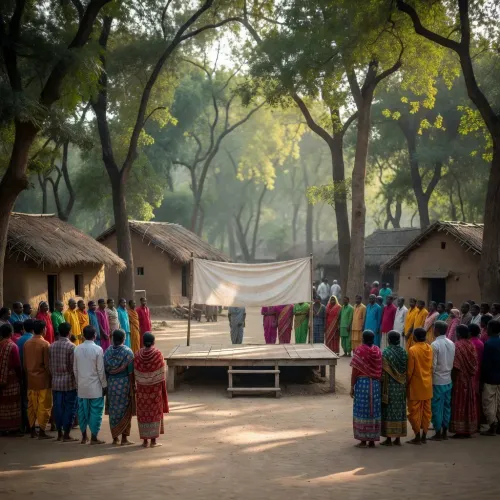
The Goshani Pith in Pahadpur village is a site of indigenous goddess worship and community ritual, deeply embedded in the spiritual life of tribal communities in Odisha. Such shrines function as living centres of Adivasi identity, distinct from mainstream Hindu temple traditions, though they are often recognised as part of India's broader civilisational fabric.
President Droupadi Murmu, who assumed office in 2022 as India's first tribal head of state, hails from Odisha's Santhal community. Her presence at the Goshani Pith alongside the Prime Minister carried particular symbolic weight, given her own roots in the state's indigenous traditions.
Policy Backdrop
The constitutional framework for protecting Adivasi cultural practices dates to Article 342 of the Constitution (1950), which provided for the recognition of Scheduled Tribes. The Ministry of Tribal Affairs, established in 1999, institutionalised central government attention to tribal heritage alongside development programmes.
High-profile visits to tribal cultural and spiritual locations have been a recurring feature of BJP-led government outreach, particularly aimed at Scheduled Tribe communities in eastern and central India. Joint appearances by the Prime Minister and the President at such sites reinforce a narrative of civilisational continuity that explicitly includes indigenous traditions.
Stakeholders and Impact
The visit is significant for Adivasi communities across Odisha and beyond, who often cite underrepresentation of their spiritual and cultural heritage in mainstream public discourse. A joint appearance by the country's two highest constitutional offices at a tribal shrine is an uncommon gesture with both symbolic and political resonance.
Tribal districts in Odisha — home to communities such as the Santhals, Kondhs, and Gonds — are electorally significant and have been a focus of welfare and cultural outreach by successive central governments. The post, written in Odia rather than Hindi or English, signals a deliberate choice to address a regional audience in its own language.
What's Next
The visit may be followed by announcements related to tribal cultural documentation, heritage conservation, or tourism development under schemes such as Swadesh Darshan, which has previously been used to develop circuits around indigenous and spiritual sites in Odisha and neighbouring states.
With tribal cultural identity increasingly foregrounded in national political messaging, the Goshani Pith visit adds to a pattern of high-visibility engagements that blend cultural reverence with outreach to one of India's most electorally consequential demographic groups.
Point of View
This episode reflects a sustained strategic effort to embed indigenous cultural identity within the ruling party's national narrative.
NationPress
19 Sept 2026
Frequently Asked Questions
Where is the Goshani Pith located?
The Goshani Pith is a sacred tribal shrine located in Pahadpur village in Odisha. It is a site of indigenous goddess worship and holds deep significance in Adivasi community rituals.
Why did PM Modi visit the Goshani Pith?
PM Modi visited the Goshani Pith along with President Droupadi Murmu to offer prayers and acknowledge the shrine's importance in Adivasi culture. He described the visit as a matter of personal fortune.
Who is Droupadi Murmu and why is her presence significant?
Droupadi Murmu is the President of India since 2022 and the country's first tribal head of state. She hails from Odisha's Santhal community, making her presence at a tribal shrine in her home state particularly meaningful.
What is the significance of the Goshani Pith in Adivasi culture?
The Goshani Pith is a centre of indigenous goddess worship and community ritual, representing a living tradition of Adivasi spiritual identity distinct from mainstream temple worship.
What government schemes support tribal cultural heritage in Odisha?
The Ministry of Tribal Affairs, established in 1999, oversees tribal heritage programmes at the central level. Schemes such as Swadesh Darshan have previously been used to develop tourism circuits around indigenous and spiritual sites in Odisha and neighbouring states.