PM Modi Visits Gosani Pith in Paharpuri, Honours Tribal Heritage
Synopsis
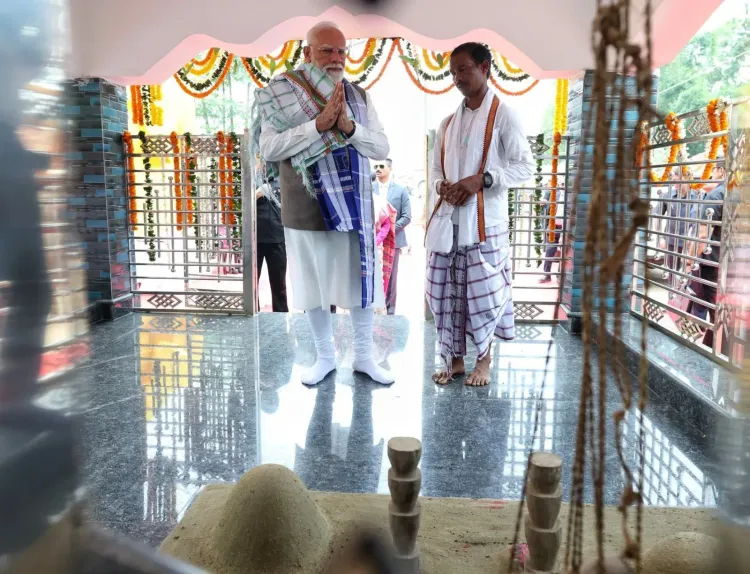
Prime Minister Narendra Modi visited the Gosani Pith shrine in Paharpuri on 20 June 2026, offering prayers at the revered Adivasi site. He shared the visit on X in Santali script, underscoring the government's sustained cultural outreach toward tribal communities in eastern India.
Key Takeaways
Prime Minister Narendra Modi visited the Gosani Pith in Paharpuri on 20 June 2026 and offered prayers.
The Prime Minister posted about the visit in Santali (Ol Chiki script) , a scheduled tribal language of India.
The Gosani Pith is described as a site of great importance in Adivasi religious and cultural tradition.
The visit continues a pattern of direct engagement by Modi with tribal communities and sacred sites in eastern India.
The government has observed Janjatiya Gaurav Diwas annually since 2021 to honour tribal heritage.
Tribal voters in states like Jharkhand and Odisha remain a key demographic in the government's outreach strategy.
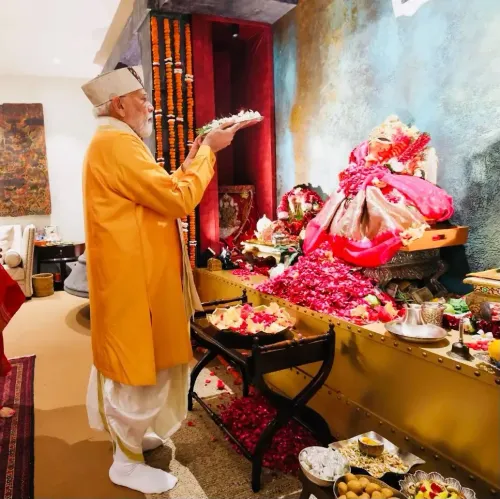
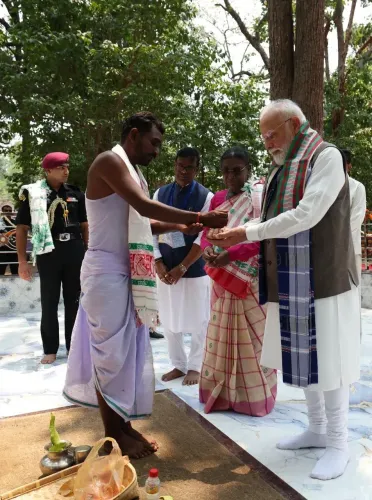
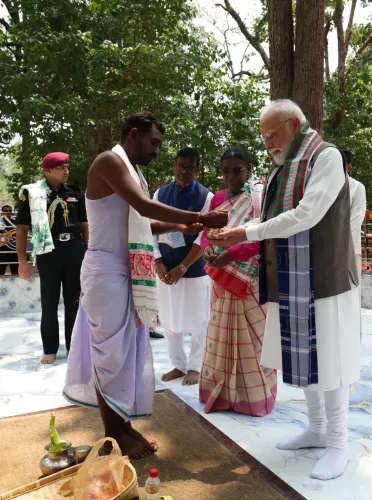
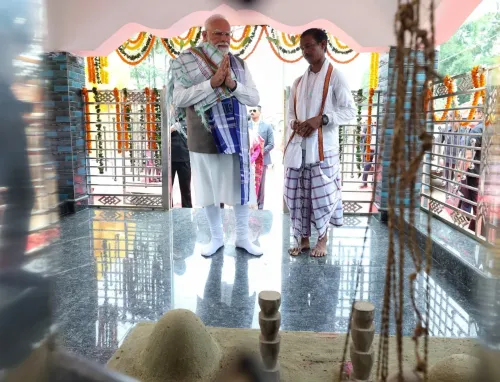
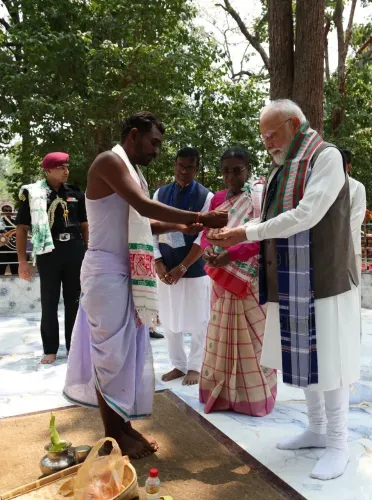
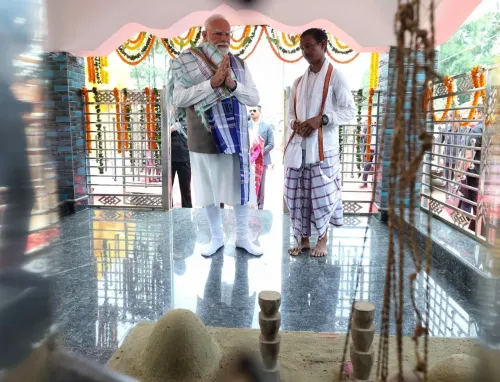
Prime Minister Narendra Modi on Saturday, 20 June 2026 visited the Gosani Pith in the Paharpuri region, offering prayers at the sacred tribal shrine and describing the experience as deeply moving. Modi shared images from the visit on X, noting the spiritual and cultural significance of the site.
In his post, written in Santali — one of India's scheduled tribal languages — the Prime Minister conveyed, 'Deshom gomke ar iñ Paharpuri atu reyag Gosani Pith re sen kate liñ Bonga Buru keda' ('The nation's leader and I went to the Gosani Pith in the Paharpuri area and paid obeisance'). He added that the Gosani Pith holds immense importance in Adivasi religious and cultural life.
Context
The Gosani Pith is a revered shrine within tribal communities, particularly among Santali-speaking Adivasi populations in eastern India. Shrines of this type serve as centres of indigenous spiritual practice, distinct from mainstream Hindu temple traditions, and are integral to the cultural identity of Scheduled Tribe communities. The Prime Minister's decision to post in Santali script (Ol Chiki) underscores a deliberate act of cultural acknowledgement.
Modi's engagement with tribal languages and sacred sites is not incidental. Since assuming office in 2014, he has made repeated outreach gestures toward Adivasi communities, including addresses in regional tribal languages and visits to culturally significant locations in states such as Jharkhand, Odisha, and Chhattisgarh.
Policy Backdrop
The visit comes against the backdrop of the government's Janjatiya Gaurav Diwas, observed annually since 2021 on 15 November — the birth anniversary of tribal icon Birsa Munda — to honour the contributions and heritage of India's tribal communities. The initiative reflects a broader institutional effort to mainstream tribal culture within the national narrative.
The Ministry of Tribal Affairs has in recent years expanded welfare programmes covering education, health, and livelihood for Scheduled Tribe populations. Cultural recognition through visits like this one is seen as complementing those policy efforts.
Stakeholders and Impact
Adivasi communities across eastern India — who constitute a significant share of the electorate in states like Jharkhand and Odisha — are the primary stakeholders of such outreach. Tribal voters have historically been courted by multiple political formations, and direct engagement by a sitting Prime Minister at a sacred site carries both cultural and political weight.
Scholars of tribal affairs note that visits to indigenous sacred sites, when accompanied by respectful use of tribal languages, can strengthen community trust. The use of Ol Chiki script — the writing system for Santali — in an official social media post by the Prime Minister is itself a notable gesture of linguistic inclusion.
What's Next
Observers will watch whether this visit is followed by specific announcements from the Ministry of Tribal Affairs regarding welfare schemes or cultural preservation initiatives for Santali-speaking communities. State-level electoral dynamics in tribal belts of Jharkhand and Odisha will also be a lens through which this outreach is assessed in the months ahead.
Point of View
Communicated in Santali script, is a carefully calibrated act of cultural diplomacy directed at Adivasi communities in eastern India. It fits a consistent pattern: pairing welfare policy with symbolic gestures of linguistic and spiritual recognition to consolidate Scheduled Tribe voter support. The use of Ol Chiki script on a national leader's official social media account is a meaningful signal of inclusion that goes beyond ceremonial optics. Whether it translates into deeper policy commitments for tribal cultural preservation will be the real measure of its significance.
NationPress
19 Sept 2026
Frequently Asked Questions
Where is the Gosani Pith that PM Modi visited?
The Gosani Pith is located in the Paharpuri area, a tribal region in eastern India. It is a sacred shrine of significant religious and cultural importance to Adivasi communities.
Why did PM Modi post in Santali script on X?
PM Modi posted in Santali using Ol Chiki script to acknowledge the language and culture of the Santali-speaking Adivasi communities, reflecting the government's broader outreach toward Scheduled Tribe populations.
What is Janjatiya Gaurav Diwas?
Janjatiya Gaurav Diwas is observed on 15 November each year since 2021 to honour the contributions and heritage of India's tribal communities. It coincides with the birth anniversary of tribal icon Birsa Munda.
What is the significance of Gosani Pith for Adivasi communities?
The Gosani Pith is a revered indigenous shrine central to Adivasi spiritual practice. Such sites are distinct from mainstream temple traditions and form a core part of tribal cultural identity in eastern India.
Which tribal states are politically significant for the BJP?
Jharkhand and Odisha are among the most electorally significant states for tribal outreach, with large Scheduled Tribe voter populations that multiple political parties actively court.