PM Modi Visits Tribal Sacred Groves in Odisha With President Murmu
Synopsis
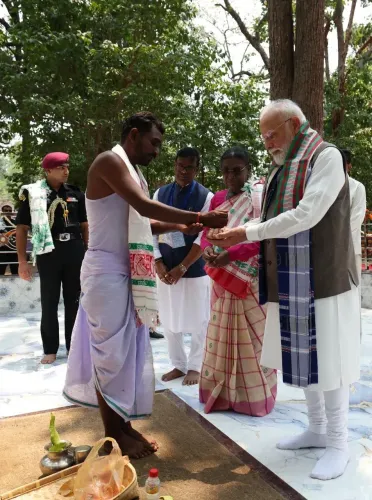
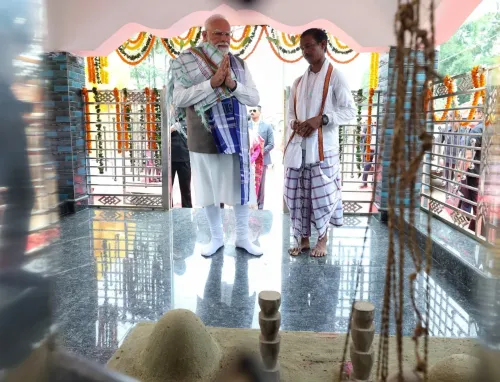
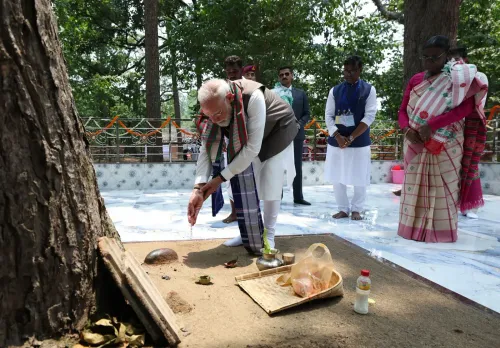
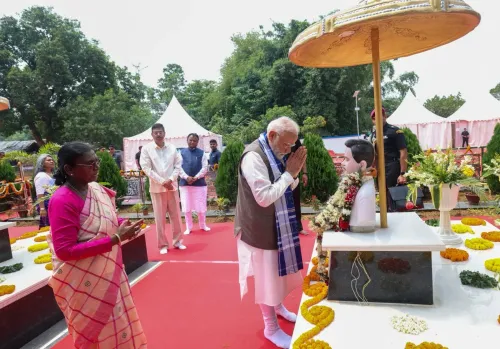
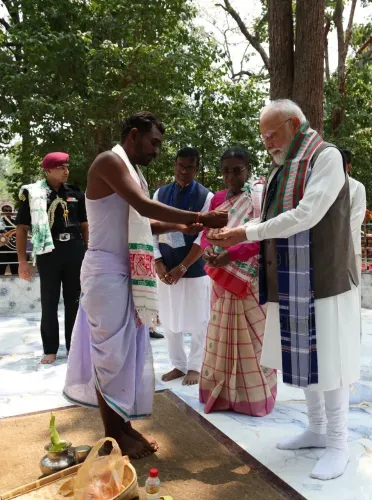
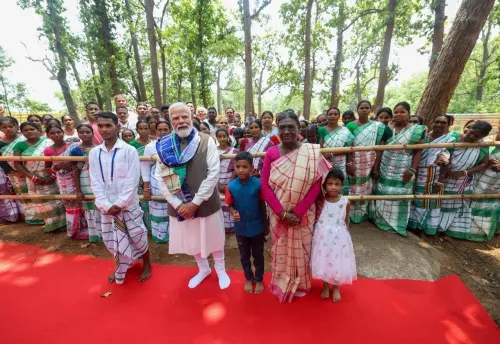
Prime Minister Narendra Modi and President Droupadi Murmu visited the Santali Jaher and Ho Jaher sacred groves at Pahadpur village in Odisha on 20 June 2026, paying tributes at sites central to Santal and Ho Adivasi spiritual traditions and framing indigenous customs as part of India's civilisational heritage.
Key Takeaways
Prime Minister Narendra Modi and President Droupadi Murmu jointly visited Santali Jaher and Ho Jaher sacred groves at Pahadpur village, Odisha on 20 June 2026 .
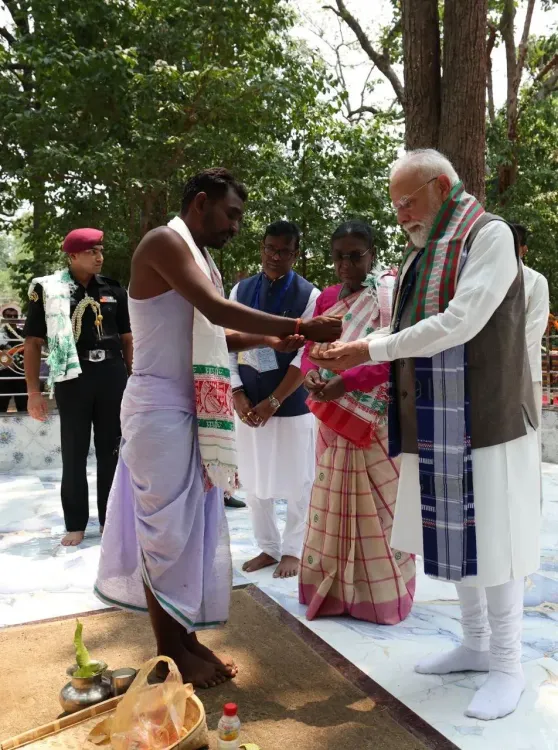
Modi offered floral tributes at the sacred groves and described the visit in Odia on social media, emphasising the spiritual and nature-connected traditions of tribal communities.
President Murmu , the first person from a tribal community to hold the office, is herself of Santhal heritage, lending additional significance to the joint visit.
A Jaher is a sacred grove central to the worship practices of Santal and Ho Adivasi communities concentrated in Odisha , Jharkhand , and West Bengal .
The visit aligns with the government's Janjatiya Gaurav Diwas framework, instituted in 2021 , which seeks to honour tribal cultural and historical contributions.
Tribal rights groups and community leaders will watch for follow-up policy steps, including possible formal recognition of additional Jaher sites under the Forest Rights Act, 2006 .
Prime Minister Narendra Modi visited the Santali Jaher and Ho Jaher sacred groves at Pahadpur village in Odisha alongside President Droupadi Murmu on Saturday, 20 June 2026, paying floral tributes at the revered sites central to Adivasi spiritual life.
Context
In his post, written in Odia, Prime Minister Modi described the visit: 'ରାଷ୍ଟ୍ରପତିଙ୍କ ସହିତ ପାହାଡ଼ପୁର ଗାଁରେ ସାନ୍ତାଳୀ ଜାହେର ଏବଂ ହୋ ଜାହେର ପରିଦର୍ଶନ କଲି' — 'Visited the Santali Jaher and Ho Jaher in Pahadpur village along with the President.' He added that he offered his respects at these sacred groves and noted that such customs reflect the deep spiritual traditions of tribal communities and their harmonious relationship with nature.
A Jaher is a sacred grove — a forested site considered holy by Santal, Ho, and related Adivasi communities — where community prayers, rituals, and festivals are held. These groves are among the oldest living institutions of indigenous worship in eastern India.
Policy Backdrop
President Droupadi Murmu, who assumed office in July 2022, is herself from a Santhal family background and is the first person from a tribal community to hold the office of President of India. Her presence at the Jaher sites alongside the Prime Minister carried particular symbolic resonance.
The visit connects to a policy framework that has sought to formally acknowledge tribal heritage. The central government instituted Janjatiya Gaurav Diwas on 15 November in 2021 to honour tribal contributions to India's freedom movement and cultural identity. The Scheduled Tribes and Other Traditional Forest Dwellers (Recognition of Forest Rights) Act, 2006, had earlier provided a legal basis for recognising community rights over sacred groves and customary forest practices.
Stakeholders and Impact
The Santal community is one of India's largest Adivasi groups, concentrated in Odisha, Jharkhand, and West Bengal, with spiritual life centred on Jaher worship. The Ho community, primarily residing in Odisha and Jharkhand, maintains distinct customary rituals tied to sacred groves and ancestral traditions.
Pahadpur village in Mayurbhanj district of Odisha is home to Jaher sites used by both communities, making it a shared sacred landscape. A visit by the country's two highest constitutional offices to such a site is regarded within Adivasi communities as an act of institutional recognition of their living traditions.
Modi noted in his post that 'such customs and traditions reflect India's rich cultural heritage' — framing indigenous spiritual practices as part of the country's civilisational identity rather than as peripheral customs.
What's Next
The visit may presage state-level action, including possible notifications recognising additional Jaher sites under forest-rights rules or announcements at a national tribal welfare review. Odisha, with a substantial Scheduled Tribe population, remains a key focus of both welfare and cultural outreach programmes. Whether the engagement translates into specific policy steps for the protection and formal recognition of sacred groves will be closely watched by tribal rights groups and community leaders across eastern India.
Point of View
Not merely a ceremonial gesture. President Murmu's own Santhal heritage transforms the visit from symbolic outreach into a moment of institutional identification with tribal traditions. The framing of Jaher worship as part of India's 'rich cultural heritage' reflects a sustained BJP effort to incorporate indigenous spiritual practices into the broader civilisational narrative the party has championed. Whether this translates into concrete protections for sacred groves under existing forest-rights law will determine how the engagement is ultimately assessed by Adivasi communities.
NationPress
19 Sept 2026
Frequently Asked Questions
What is a Jaher and why is it significant to tribal communities?
A Jaher is a sacred grove — a forested site held holy by Santal, Ho, and related Adivasi communities in eastern India — where community prayers, rituals, and festivals are conducted. These groves represent one of the oldest forms of nature-based worship among indigenous communities and serve as a living centre of tribal spiritual and social life.
Where is Pahadpur village located?
Pahadpur is a village in Mayurbhanj district of Odisha, home to Santali Jaher and Ho Jaher sacred groves used by local Santal and Ho Adivasi communities.
Why did President Droupadi Murmu accompany PM Modi to the Jaher sites?
President Droupadi Murmu, who took office in July 2022, is herself from a Santhal tribal family background and is the first person from a tribal community to serve as President of India. Her participation in the visit carried deep personal and symbolic significance alongside its institutional dimension.
What is Janjatiya Gaurav Diwas?
Janjatiya Gaurav Diwas is observed on 15 November each year, instituted by the central government in 2021 to honour the contributions of tribal communities to India's freedom movement and to celebrate their cultural heritage.
What legal protections exist for tribal sacred groves in India?
The Scheduled Tribes and Other Traditional Forest Dwellers (Recognition of Forest Rights) Act, 2006, provides a legal basis for recognising community rights over sacred groves and customary forest practices, though implementation and formal notification of specific sites varies by state.