Modi Visits Manila's Khalsa Diwan, Launches Gurudwara Redevelopment

Synopsis
PM Narendra Modi visited Manila's historic Khalsa Diwan Gurudwara, founded in 1901, offered prayers for world peace, and inaugurated its redevelopment — a move Culture Minister Shekhawat framed as a symbol of centuries-old India-Philippines people-to-people bonds.
Key Takeaways
PM Narendra Modi visited the Khalsa Diwan Gurudwara in Manila, Philippines on 17 November 2026 .
He offered ardas and prayed for world peace and prosperity at the shrine.
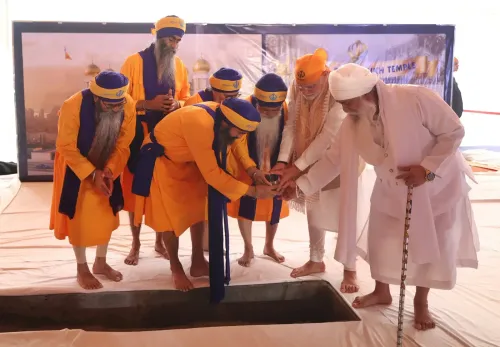
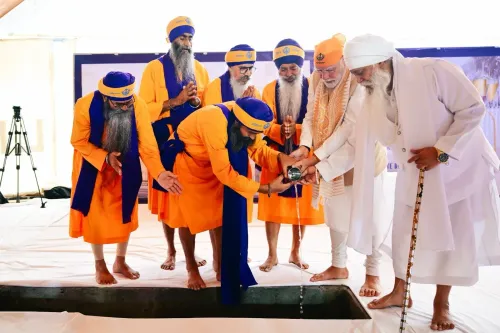
Modi formally launched the gurudwara's redevelopment works during the visit.
The Khalsa Diwan was established in 1901 and is the oldest Sikh place of worship in the Philippines.
Union Culture Minister Gajendra Singh Shekhawat described the visit as reflecting India's spiritual heritage and its people-to-people ties with the Philippines.
The visit aligns with India's Act East Policy and its broader cultural diplomacy through diaspora heritage sites.
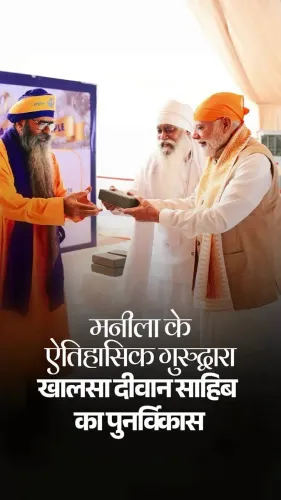
A 125-year-old Sikh shrine in the Philippine capital became the centrepiece of Indian cultural diplomacy on Tuesday, 17 November 2026, when Prime Minister Narendra Modi visited the historic Khalsa Diwan Gurudwara in Manila, offered prayers for world peace and prosperity, and formally launched its redevelopment. Union Culture and Tourism Minister Gajendra Singh Shekhawat hailed the visit as 'an inspiring glimpse of India's rich spiritual heritage and global cultural connect.'
A Shrine Founded in 1901 — and What It Represents Today
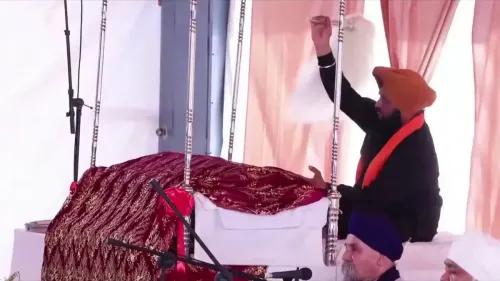
The Khalsa Diwan, established in 1901, is the oldest Sikh place of worship in the Philippines. For over a century it has anchored the Sikh diaspora in Manila — sustaining the community's tradition of seva (selfless service) and ardas (congregational prayer) far from the Indian subcontinent. Prime Minister Modi bowed before the Guru Granth Sahib, offered ardas, and prayed for global peace and prosperity — a moment Minister Shekhawat described as a 'living symbol of centuries-old cultural and people-to-people ties between India and the Philippines.'
Redevelopment Launch and the Soft-Power Signal
Beyond the spiritual observance, Modi formally inaugurated the gurudwara's redevelopment works — a tangible investment in heritage preservation that carries unmistakable diplomatic weight. India has long used visits to historic diaspora religious sites to project cultural soft power, and the Philippines — a key partner under New Delhi's Act East Policy — is no exception. The gesture reinforces the people-to-people connectivity pillar that sits at the heart of India's ASEAN engagement strategy.
India–Philippines Ties: From Maritime History to Modern Diplomacy
The two countries share centuries of maritime trade links, and high-level engagement has deepened in recent decades. Modi had previously visited Manila for the ASEAN-India Commemorative Summit in 2017, underlining sustained bilateral attention. The Sikh community in the Philippines — small but deeply rooted since the early twentieth century — has served as a consistent human bridge between the two nations. The gurudwara's redevelopment now gives that bridge a renewed, permanent form.
Minister Shekhawat's post on X framed the visit within a broader civilisational narrative: India's spiritual heritage as a living, travelling force — not confined to its borders but carried outward by its diaspora and reinforced by its leadership. That framing, delivered from New Delhi on the same day as the Manila visit, signals that the government intends this moment to resonate as cultural policy, not just a ceremonial stop on a bilateral itinerary.
The redevelopment of the Khalsa Diwan now stands as the most concrete deliverable from this diplomatic gesture — and the question is what joint cultural frameworks India and the Philippines will build around it next.
Point of View
Especially across the ASEAN arc where India competes for strategic and cultural influence. Launching the gurudwara's redevelopment transforms a symbolic gesture into a funded, visible commitment — harder to dismiss than a photo opportunity. For the Philippines, one of the more strategically contested maritime nations in Southeast Asia, the signal is clear: New Delhi wants to deepen the people-to-people layer of a relationship that has historically punched below its weight. Minister Shekhawat's amplification from the Culture Ministry frames it not as foreign policy alone, but as civilisational continuity — a soft-power narrative the government has refined into a consistent diplomatic instrument.
NationPress
17 Nov 2026
Frequently Asked Questions
Which gurudwara did PM Modi visit in Manila?
PM Modi visited the Khalsa Diwan Gurudwara in Manila, Philippines — a historic Sikh shrine founded in 1901 that is the oldest of its kind in the country.
What did PM Modi do at the Khalsa Diwan Gurudwara?
He bowed before the Guru Granth Sahib, offered ardas (congregational prayer) for world peace and prosperity , and formally launched the gurudwara's redevelopment works .
How old is the Khalsa Diwan Gurudwara in Manila?
The Khalsa Diwan Gurudwara was established in 1901 , making it over 125 years old and a cornerstone of the Sikh community in the Philippines.
Why did Gajendra Singh Shekhawat post about PM Modi's Manila gurudwara visit?
Union Culture and Tourism Minister Gajendra Singh Shekhawat shared the moment on X to highlight India's spiritual heritage and its centuries-old people-to-people cultural ties with the Philippines.
What is India's Act East Policy and how does this visit relate to it?
India's Act East Policy focuses on strengthening political, economic, and people-to-people links with ASEAN nations. Modi's gurudwara visit and redevelopment launch reinforce the people-to-people connectivity pillar of this policy with the Philippines .