PM Modi recalls Pokhran 1998 tests: 'No power can make India bow down'
Synopsis
On the 27th anniversary of Pokhran-II, PM Modi used the Somnath Temple's 75-year reconstruction celebrations to invoke India's nuclear defiance of 1998 — honouring Vajpayee's 'atal' resolve and signalling that strategic autonomy remains India's non-negotiable principle.
Key Takeaways
PM Modi recalled the 1998 Pokhran nuclear tests on their 27th anniversary, 11 May 2025 .
India conducted three tests on 11 May and two more on 13 May 1998 under Operation Shakti .
Modi credited former PM Atal Bihari Vajpayee with the political will to withstand global sanctions and pressure.
Remarks were made at the Somnath Amrut Mahotsav , marking 75 years of the Somnath Temple's reconstruction .
Modi asserted that no power in the world can force India or its citizens to bow to external forces.
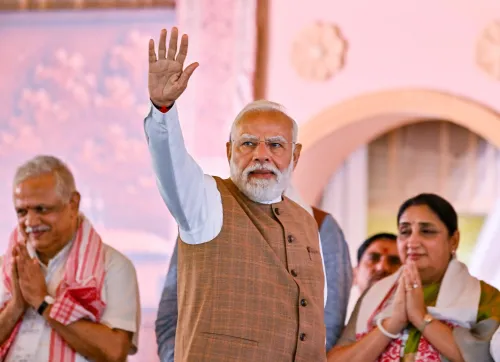
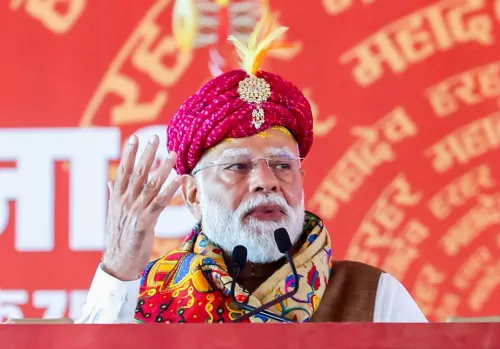
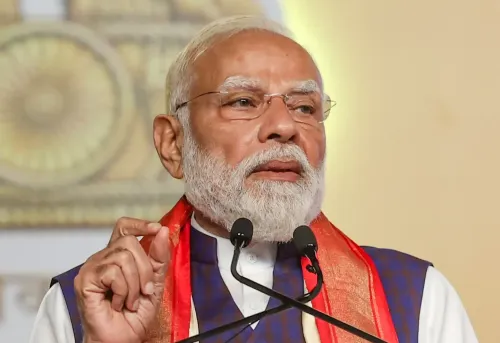
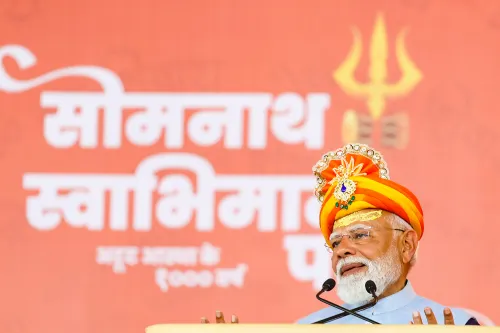
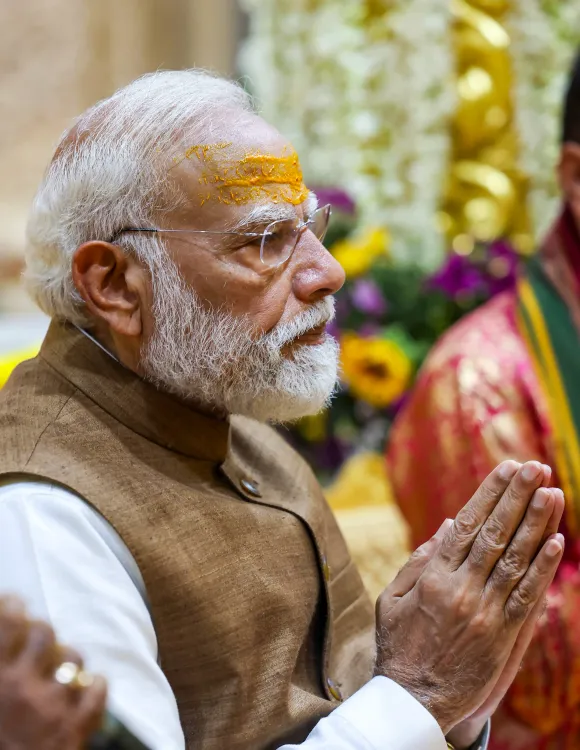
Prime Minister Narendra Modi on Monday, 11 May invoked India's landmark 1998 Pokhran nuclear tests, declaring that no force in the world could compel India or its citizens to submit to external pressure. Speaking at the Somnath Amrut Mahotsav celebrations in Ahmedabad, marking 75 years of reconstruction of the Somnath Temple, Modi drew a direct line between nuclear sovereignty and national self-belief.
What Modi Said
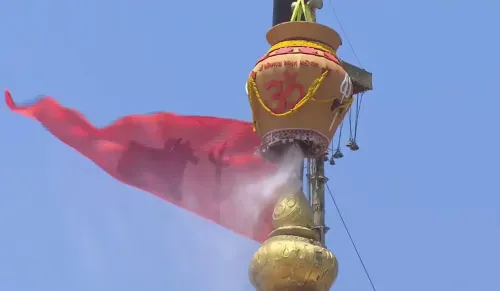
Addressing the gathering after the Kumbhabhishek ceremony at the Somnath Temple, Modi described how India conducted three nuclear tests on 11 May 1998 and two more on 13 May 1998 under Operation Shakti. "On May 11, India conducted three nuclear tests in Pokhran. Our scientists showcased the country's might and prowess before the world, this sent shockwaves across the world," he said.
He acknowledged the severity of the international response, noting that global powers imposed sweeping economic sanctions following the tests. "Anybody would have been shaken by this, when global powers gang up against you. But, we are made of different soil," Modi said, adding that the political leadership under the late Atal Bihari Vajpayee demonstrated that national interests were non-negotiable.
Tribute to Vajpayee's Leadership
Modi credited former Prime Minister Atal Bihari Vajpayee with providing the political will to carry through the tests despite enormous international pressure. He drew a wordplay on Vajpayee's first name — "atal" meaning resolute in Hindi — stating that the second round of tests on 13 May revealed the "atal will" of India's leadership to the world.
He underscored that the Bharatiya Janata Party (BJP) government of that era had firmly placed national interest above diplomatic convenience, a message he appeared to frame as a continuing principle of Indian statecraft.
Significance of Operation Shakti
Modi elaborated on the naming of the nuclear mission as Operation Shakti, describing it as a symbol of India's growing self-belief and strategic confidence. The tests, he noted, marked a defining shift in India's geopolitical positioning — transforming the country into a recognised nuclear-armed state capable of withstanding coordinated international pressure.
Historically, the Pokhran-I test on 18 May 1974 — code-named Smiling Buddha — was India's first nuclear detonation. The Pokhran-II series in May 1998 was more comprehensive, involving five tests and triggering a sharp global reaction including sanctions from the United States, Japan, and other major powers.
Context: Why Somnath and Why Now
The choice of the Somnath Amrut Mahotsav as the platform for these remarks carries symbolic weight. The Somnath Temple's reconstruction — championed by Sardar Vallabhbhai Patel and completed in 1951 — is itself a narrative of national resilience. By invoking Pokhran at this venue, Modi layered two distinct moments of Indian assertion — cultural and strategic — into a single address.
As India navigates a complex geopolitical environment, Modi's remarks signal a continued emphasis on strategic autonomy as a cornerstone of Indian foreign and defence policy.
Point of View
At a venue synonymous with civilisational resilience, frames nuclear deterrence as a cultural as much as a military doctrine. The subtext is pointed: in a period of heightened regional tensions, the reminder that India absorbed crippling sanctions in 1998 and did not flinch is a signal to both adversaries and allies. What mainstream coverage often misses is how consistently Modi uses historical inflection points — Pokhran, Balakot, Galwan — to reinforce a single narrative of sovereign defiance, one that serves domestic consolidation as much as external signalling.
NationPress
24 Sept 2026
Frequently Asked Questions
Why did PM Modi recall the 1998 Pokhran nuclear tests on 11 May 2025?
PM Modi spoke on the 27th anniversary of the Pokhran-II tests at the Somnath Amrut Mahotsav to honour the legacy of former PM Atal Bihari Vajpayee and reaffirm India's commitment to strategic autonomy. He used the occasion to assert that no global power can compel India to abandon its national interests.
What was Operation Shakti?
Operation Shakti was the code name for India's series of five nuclear tests conducted at Pokhran in May 1998 — three on 11 May and two on 13 May — under the government of PM Atal Bihari Vajpayee. The tests established India as a nuclear-armed state and triggered widespread international sanctions.
What sanctions did India face after the 1998 Pokhran tests?
Following the Pokhran-II tests, major powers including the United States and Japan imposed economic sanctions and diplomatic restrictions on India. Despite this pressure, the Vajpayee government maintained its nuclear posture and did not roll back the tests.
What is the Somnath Amrut Mahotsav where Modi spoke?
The Somnath Amrut Mahotsav marks 75 years of the reconstruction of the Somnath Temple in Gujarat, which was rebuilt after independence under the stewardship of Sardar Vallabhbhai Patel and inaugurated in 1951. PM Modi addressed the gathering after the Kumbhabhishek ceremony at the temple.
What was India's first nuclear test and how does it relate to Pokhran-II?
India's first nuclear test, Pokhran-I, was conducted on 18 May 1974 and code-named Smiling Buddha. Pokhran-II in 1998 was a far more comprehensive programme involving five tests, marking India's full entry into the league of declared nuclear-armed states.