PM Modi at UPSC centenary: 'Nagrik Devo Bhava' now guides India's governance model
Synopsis
At the UPSC's 100th anniversary, Modi didn't just celebrate an institution — he reframed the entire philosophy of Indian governance. The shift from 'government as provider' to 'Nagrik Devo Bhava' is a deliberate repositioning, and his call to align civil service recruitment with AI-era expectations and 2047 aspirations signals the next phase of administrative reform.
Key Takeaways
PM Narendra Modi addressed the UPSC centenary celebrations in New Delhi on 1 October 2026 .
He declared India has moved from a 'government as sole provider' model to 'Nagrik Devo Bhava' — treating every citizen as the highest priority.
Modi outlined two selection criteria for civil servants: 'nation first' and 'citizen first' .
He called for civil services to adapt to AI-era delivery speeds and align recruitment with the needs of India in 2047 .
The Prime Minister urged efforts to reduce the UPSC examination cycle and attract youth motivated by public service , not public office.
The UPSC and State Public Service Commissions were described as central to delivering governance for a Viksit Bharat .
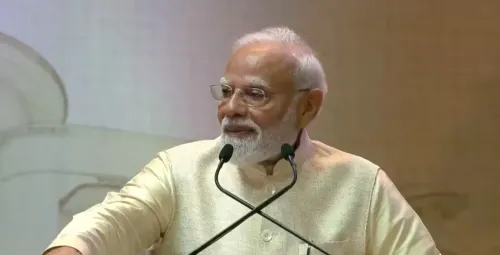
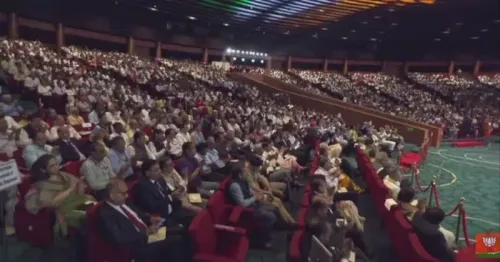
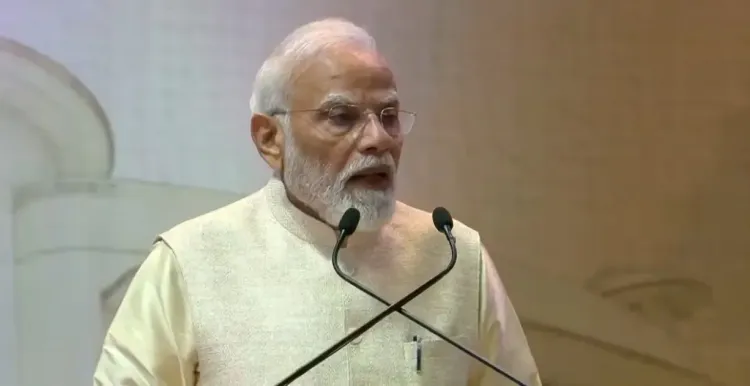
Prime Minister Narendra Modi on 1 October 2026 declared that India has decisively moved away from the era of 'government as sole provider' to a new governance philosophy anchored in 'Nagrik Devo Bhava' — a principle that treats every citizen as a priority. Modi was speaking at the centenary celebrations of the Union Public Service Commission (UPSC) in New Delhi, marking 100 years of the institution that selects India's top civil servants.
Key Remarks at the UPSC Centenary
Acknowledging the UPSC's decades of institutional service, Modi urged the audience to look forward rather than dwell on history. 'We have already discussed this extensively on the stage. Therefore, I neither want to repeat it nor go into its details. Moving beyond history, the future of India now awaits us,' he said.
The Prime Minister stressed that the next 20–25 years would be defining ones for India, its people, and its institutions. He framed the UPSC and State Public Service Commissions as central to delivering the governance that a 'Viksit Bharat' (Developed India) demands by 2047.
Two Guiding Principles for Civil Service Selection
Modi laid out two non-negotiable criteria for selecting candidates into public services: 'nation first' and 'citizen first'. 'These are the two principles on which all selections will be made. When candidates are selected on this basis, it will be very easy to achieve our goals,' he said.
He also called for recruitment processes at both the national and state levels to be redesigned around pro-people, proactive, and good governance parameters — with specific sensitivity to the difficulties faced by the poor.
Civil Services Must Keep Pace with Technology and Aspirations
Modi noted that India in 2047 would be far more urban, with a narrowing rural-urban divide and significantly higher aspirations among the youth. Against this backdrop, he argued that civil services must adapt to the pace of modern delivery expectations.
'When AI can process thousands of documents within moments, and when the government has access to real-time data, citizens want quick solutions. This changing mindset also demands new changes from our civil services,' he said. He called for aligning selection parameters and recruitment processes with the needs of the future.
The 'Nagrik Devo Bhava' Shift
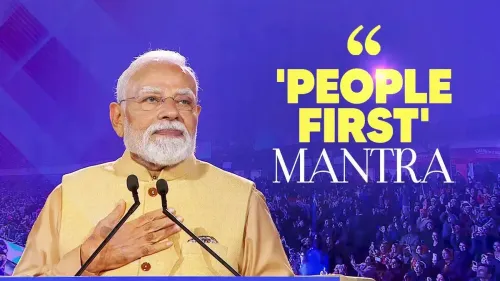
Perhaps the sharpest rhetorical pivot in Modi's address was his articulation of the philosophical change in how the state views citizens. 'We have seen an era in the past when it was believed that the government was the sole provider and guardian of the people. But today, we are in an era where our mantra is Nagrik Devo Bhava — every citizen of the country is no less than a deity for us. Serving citizens is our highest priority,' he said.
This comes amid a broader government push to position citizen-centric delivery — through digital platforms, direct benefit transfers, and single-window services — as the defining feature of India's administrative evolution. Notably, the invocation of Nagrik Devo Bhava mirrors the hospitality-sector maxim Atithi Devo Bhava, signalling an intentional rebranding of state-citizen relations.
On Motivation, Examination Cycles, and Officer Mindset
Modi revisited his practice of advising trainee officers to write down — at the very start of their careers — their reasons for joining the civil services. 'As time passes, responsibilities increase, and new challenges arise. At such times, that small note reminds them of their original purpose. It also becomes a self-appraisal tool for them,' he said.
He also called for reducing the UPSC examination cycle, acknowledging steps already taken in that direction, and emphasised the need to attract youth drawn to public service rather than the prestige of public office. As the UPSC enters its second century, the challenge will be whether selection reforms can keep pace with the governance ambitions Modi outlined.
Point of View
But the harder question is whether UPSC's selection architecture will actually change. The examination cycle remains one of the longest in the world, and successive governments have promised to reform it with limited results. The call to attract youth interested in 'service over office' is laudable, but the incentive structures — seniority-based promotion, IAS-IPS prestige hierarchies — have not been touched. Without structural reform to match the philosophical repositioning, this risks being a centenary speech that ages poorly.
NationPress
1 Oct 2026
Frequently Asked Questions
What is 'Nagrik Devo Bhava' as mentioned by PM Modi?
'Nagrik Devo Bhava' is a governance principle articulated by PM Modi, meaning every citizen is to be treated as a deity — the highest priority. Modi used it at the UPSC centenary on 1 October 2026 to mark a shift from the older model of government as the sole provider and guardian of citizens.
What did PM Modi say at the UPSC centenary celebrations?
PM Modi called for civil services to adopt 'nation first' and 'citizen first' as core selection criteria, urged alignment of recruitment processes with AI-era expectations, and emphasised the role of the UPSC and State Public Service Commissions in building a Viksit Bharat by 2047. He also called for reducing the UPSC examination cycle.
Why did PM Modi stress on the next 20–25 years at the UPSC event?
Modi argued that the next 20–25 years are critical for India's transformation into a developed nation by 2047. He pointed to increasing urbanisation, a narrowing rural-urban divide, and rising youth aspirations as forces that will demand a more responsive and technologically agile civil service.
What changes did PM Modi propose for UPSC recruitment?
Modi proposed that selection processes be redesigned around pro-people, proactive, and good governance parameters, with sensitivity to the challenges of the poor. He also called for reducing the examination cycle and attracting candidates motivated by public service rather than the prestige of public office.
What is Viksit Bharat and how does UPSC factor into it?
Viksit Bharat — or Developed India — is the government's vision for India by 2047, the centenary of Independence. PM Modi stated that the UPSC and State Public Service Commissions will play a crucial role by recruiting young professionals who will both build and benefit from that developed India.