PM Modi marks 100 years of UPSC, calls it a proud milestone
Synopsis
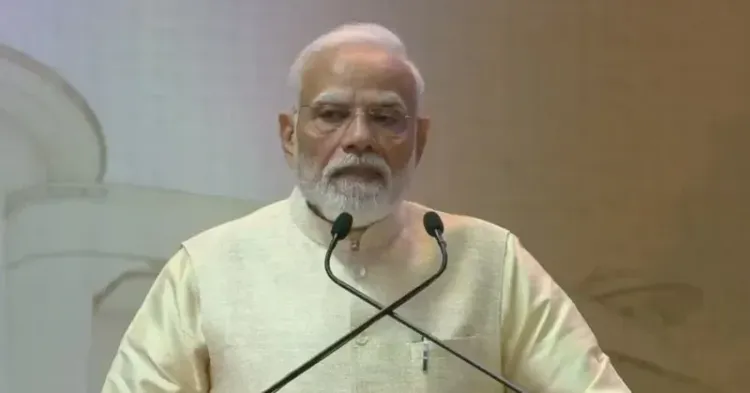
Prime Minister Narendra Modi on October 1, 2026 marked the Union Public Service Commission's centenary, calling 100 years of India's premier civil-services recruitment body 'a proud milestone' in administration and public service.
Key Takeaways
PM Narendra Modi marked the UPSC's 100th anniversary on October 1, 2026 , calling it 'a proud milestone.' The Union Public Service Commission was established under the Government of India Act, 1926 .
The UPSC recruits officers for the IAS, IPS, IFS and dozens of other central services through competitive examination.
Its constitutional status is guaranteed under Article 315 of the Indian Constitution, insulating recruitment from political patronage.
The centenary arrives amid ongoing debates about civil-services reforms, including lateral entry and exam-pattern changes.
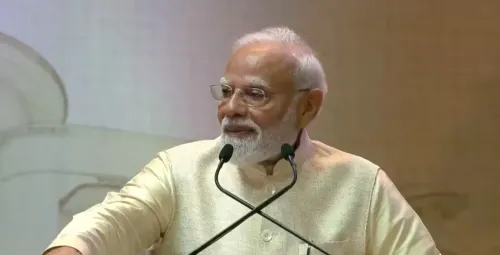
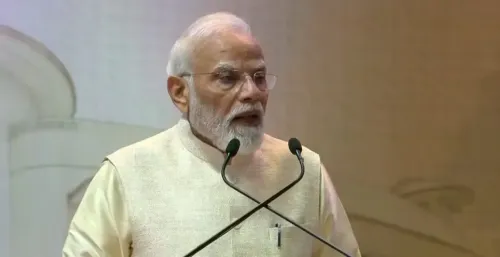
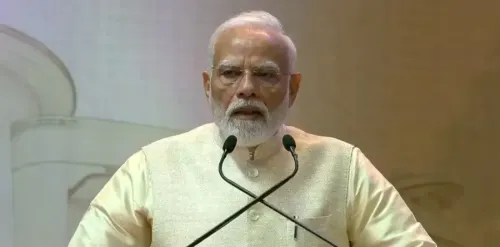
A century of selecting India's finest public servants — and Prime Minister Narendra Modi marked the occasion on Thursday, October 1, 2026, calling the Union Public Service Commission's 100th anniversary 'a proud milestone' in the country's administrative history.
Modi wrote: 'A century of selecting India's finest public servants — and Prime Minister Narendra Modi marked the occasion on Thursday, October 1, 2026, calling the Union Public Service Commission's 100th anniversary a proud milestone in the country's administrative history. For a century, it has played an important role in administration and serving people.'
A century at the heart of Indian governance
The Union Public Service Commission was established under the Government of India Act, 1926, making 2026 its centenary year. As the constitutional body responsible for recruiting officers to the Indian Administrative Service, Indian Police Service, Indian Foreign Service, and dozens of other central services, the UPSC sits at the very architecture of how India is governed — from district collectorates to the highest ministries in New Delhi.
Every year, millions of aspirants prepare for the Civil Services Examination, widely regarded as one of the most competitive and rigorous selection processes in the world. The UPSC's mandate spans not just recruitment but also advising the government on promotion, transfer, and disciplinary matters across the All India Services.
Why the centenary carries weight beyond ceremony
Marking a hundred years of any institution is more than calendar arithmetic. The UPSC has overseen the selection of officers who administered Partition, the Green Revolution, economic liberalisation in 1991, and every national emergency in between. Its constitutional status — guaranteed under Article 315 of the Indian Constitution — was designed specifically to insulate civil service recruitment from political patronage, a principle that underpins the legitimacy of India's bureaucratic apparatus.
The Prime Minister's acknowledgement of its 'important role in administration and serving people' lands as an institutional endorsement of that independence — a reminder, at the centenary mark, that meritocratic recruitment remains central to how democratic governance functions at scale.
One hundred years in, with reform debates perpetually swirling around the Civil Services — from lateral entry proposals to exam-pattern overhauls — the institution enters its second century under both celebration and scrutiny. That combination is precisely how durable institutions earn the next hundred years.
Point of View
The government counters criticism that recent lateral-entry proposals or administrative reforms risk politicising the bureaucracy. At a moment when the civil services are under pressure to modernise, invoking a hundred-year legacy frames continuity and reform as complementary rather than contradictory. It also places the BJP squarely on the side of institutional longevity — useful optics ahead of any further recruitment-reform announcements in the commission's centenary year.
NationPress
1 Oct 2026
Frequently Asked Questions
When was UPSC established and why is 2026 its centenary?
The Union Public Service Commission traces its origins to the Public Service Commission set up under the Government of India Act, 1926, making 2026 its 100th anniversary.
What did PM Modi say about UPSC's 100 years?
PM Modi called the UPSC's centenary 'a proud milestone,' saying the body has played 'an important role in administration and serving people' for a century.
What is the constitutional basis of the UPSC?
The UPSC is a constitutional body established under Article 315 of the Indian Constitution, which guarantees its independence in recruiting and advising on All India Services appointments.
Which exams does UPSC conduct?
The UPSC conducts the Civil Services Examination for the IAS, IPS, and IFS, along with exams for engineering, medical, defence, and numerous other central government services.
What reforms have been debated for the UPSC and civil services?
Recent debates have focused on lateral entry of domain experts into joint-secretary and director-level posts, changes to the Civil Services Exam pattern, and measures to increase diversity in the officer cadre.