PM Modi Pledges to Develop Pahadpur as Odisha's Solar Village
Synopsis
Prime Minister Narendra Modi has pledged to develop Pahadpur in Odisha as a solar village — Surya Gram — drawing a cultural parallel with the Konark Sun Temple. The announcement signals a push to blend India's renewable energy ambitions with its heritage identity in eastern India.
Key Takeaways
PM Modi announced on June 20, 2026 that Pahadpur in Odisha will be developed as a Surya Gram (Solar Village).
Modi drew a direct cultural parallel between Pahadpur's solar identity and the Konark Sun Temple , a 13th-century UNESCO World Heritage Site .
The announcement aligns with India's long-running solar expansion policy, rooted in the Jawaharlal Nehru National Solar Mission launched in 2010 .
Key stakeholders include Odisha villagers, renewable energy developers, and state government agencies responsible for implementation.
Official project sanctions, funding details, and rollout timelines are yet to be formally declared by central or state authorities.
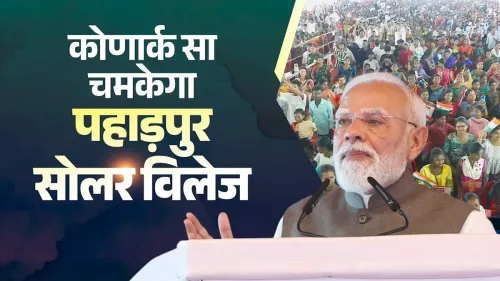
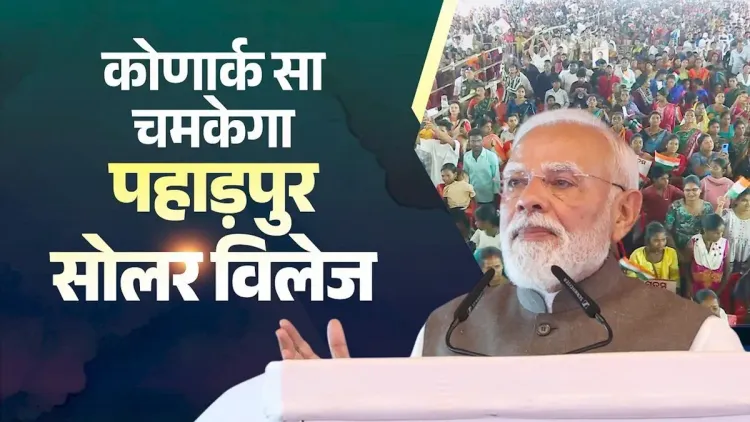
Prime Minister Narendra Modi on Saturday, June 20, 2026, reaffirmed the government's commitment to developing Pahadpur in Odisha as a dedicated solar village — Surya Gram — drawing a cultural parallel with the state's iconic Konark Sun Temple.
Posting in Odia, Modi stated: 'We are committed to developing Pahadpur as a Surya Gram, that is, a Solar Village. Just as the Konark Sun Temple is synonymous with Odisha's identity, Pahadpur too will be known as a Solar Village.' The post was accompanied by a video, underscoring the government's intent to give the initiative a visible public platform.
Context
The Konark Sun Temple, a 13th-century UNESCO World Heritage Site in Odisha dedicated to the Sun God Surya, has long been the cultural anchor of the state's solar identity. Modi's invocation of Konark is a deliberate symbolic gesture — positioning Pahadpur as a modern, living expression of that same solar heritage through clean energy infrastructure.
Odisha has been increasingly integrated into national renewable energy narratives, with heritage tourism sites near Konark already associated with solar branding efforts at the state level.
Policy Backdrop
India's solar ambitions trace back to the Jawaharlal Nehru National Solar Mission, launched in 2010, which laid the groundwork for large-scale solar adoption and rural electrification. Under the current administration, India has pursued rapid solar capacity addition as part of its broader renewable energy targets.
The concept of solar villages — settlements powered entirely or predominantly by solar energy — has emerged as a key instrument for combining rural development with clean energy goals. Integrating such projects with culturally significant regions amplifies both their visibility and public acceptance.
Stakeholders and Impact
Residents of Pahadpur and surrounding Odisha villages stand to be the most direct beneficiaries, potentially gaining reliable solar-powered electricity, reduced energy costs, and improved livelihoods. Renewable energy developers and state government agencies would be central to executing the project.
The initiative also carries significance for the broader Odisha economy, linking clean energy development with the state's cultural tourism ecosystem around Konark. A successfully branded solar village could attract investment and serve as a replicable model for other heritage-adjacent communities across India.
What's Next
Attention will now turn to official project sanctions, solar infrastructure rollout timelines, and any formal declarations by the Odisha state government on Pahadpur's solar village status. The announcement sets a clear political direction, but concrete implementation milestones — funding allocations, installation schedules, and grid integration plans — remain to be detailed by both central and state authorities.
If realised, Pahadpur could become a flagship demonstration of India's ability to weave renewable energy policy into its cultural identity, with implications for how future solar projects are conceived and communicated to the public.
Point of View
A state of growing electoral significance for the BJP. The Odia-language post signals a deliberate outreach to regional audiences, not just a policy statement. By tying renewable energy to heritage identity, the government is attempting to make solar infrastructure feel organic to local communities rather than externally imposed. Whether the symbolic commitment translates into funded, time-bound implementation will determine how durable this narrative proves to be.
NationPress
19 Sept 2026
Frequently Asked Questions
What is the Pahadpur solar village project announced by PM Modi?
PM Modi announced on June 20, 2026 that Pahadpur in Odisha will be developed as a Surya Gram, or Solar Village, powered by solar energy and positioned as a clean energy landmark comparable in cultural identity to the Konark Sun Temple.
Where is Pahadpur located?
Pahadpur is a village in Odisha, the eastern Indian state also home to the UNESCO-listed Konark Sun Temple. Exact district-level location details have not been officially confirmed in public records.
What is a Surya Gram or Solar Village in India?
A Surya Gram, or Solar Village, is a settlement developed to run predominantly on solar energy, combining rural electrification with clean energy goals under India's national renewable energy mission.
What is the connection between Pahadpur and the Konark Sun Temple?
PM Modi invoked the Konark Sun Temple — a 13th-century UNESCO World Heritage Site dedicated to the Sun God Surya — as a cultural symbol to frame Pahadpur's future solar identity, suggesting the village should be as synonymous with solar energy as Konark is with Odisha's heritage.
What is India's history with solar village development?
India's solar push dates to the Jawaharlal Nehru National Solar Mission launched in 2010, which promoted large-scale solar adoption and rural electrification. Solar villages have since emerged as a key policy tool combining clean energy with rural development.