PM Modi Vows to Develop Pahadpur as Solar Village
Synopsis
PM Modi on 20 June 2026 pledged to develop Pahadpur in Odisha as a Surya Gram (Solar Village), invoking the legacy of the Konark Sun Temple to frame solar energy as a marker of local identity and cultural pride, aligned with India's 500 GW clean energy target for 2030.
Key Takeaways
PM Modi announced on 20 June 2026 the government's commitment to developing Pahadpur as a Surya Gram (Solar Village).
He drew a direct parallel between Pahadpur's proposed solar identity and the Konark Sun Temple , a 13th-century UNESCO World Heritage Site in Odisha .
India is targeting 500 GW of non-fossil fuel capacity by 2030 under its Panchamrit climate commitments.
The Jawaharlal Nehru National Solar Mission , launched in 2010 , and the International Solar Alliance , founded in 2015 , underpin India's long-running solar push.
Rural households in Pahadpur and renewable energy developers in Odisha are the primary stakeholders of the proposed initiative.
Concrete project timelines, tenders, and budget allocations for the Konark-Puri solar corridor are awaited as next steps.
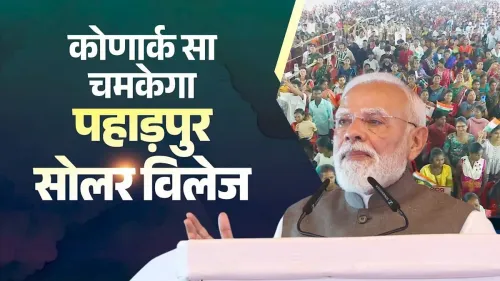
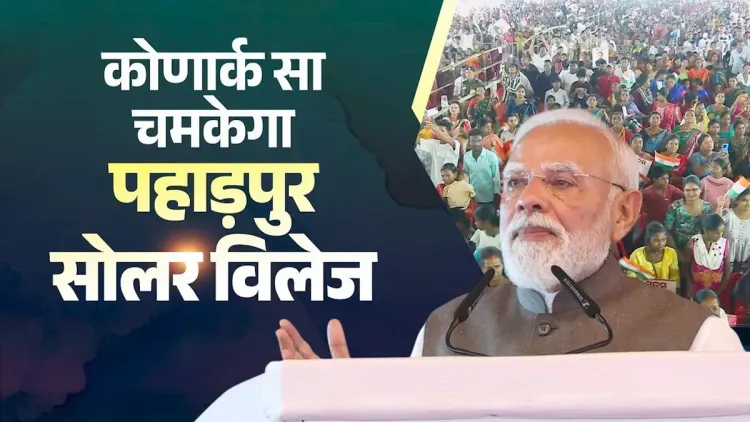
Prime Minister Narendra Modi on Saturday, 20 June 2026 declared the government's commitment to developing Pahadpur as a Surya Gram (Solar Village), drawing a cultural parallel between the proposed solar settlement and the iconic Konark Sun Temple of Odisha. The announcement, made via a post on X, signals a renewed push to blend India's renewable energy ambitions with its heritage identity.
In his post, PM Modi stated: 'We are committed to developing Pahadpur as a Surya Gram, that is, a Solar Village. Just as the identity of the Konark Sun Temple is linked to Odisha, Pahadpur will similarly be recognised as a Surya Gram.' The statement frames solar energy not merely as an infrastructure goal but as a marker of local and regional identity.
Context
The Konark Sun Temple, a 13th-century UNESCO World Heritage Site in Odisha dedicated to the Sun God Surya, is one of India's most recognised architectural landmarks. By invoking Konark, PM Modi is deliberately anchoring the solar-village concept in cultural symbolism, positioning Pahadpur as a modern counterpart to an ancient solar heritage. Odisha has been a site of multiple state-central renewable energy initiatives in recent years, making it a fitting backdrop for such a declaration.
Policy Backdrop
India's solar ambitions trace back to the Jawaharlal Nehru National Solar Mission, launched in 2010 under the National Action Plan on Climate Change, which initially targeted 20 GW of grid-connected solar power by 2022. The country has since scaled those targets dramatically, committing to 500 GW of non-fossil fuel capacity by 2030 as part of its Panchamrit climate pledges. The International Solar Alliance, co-founded by India in 2015, further cemented New Delhi's role as a global champion of solar deployment across 121 sunshine countries.
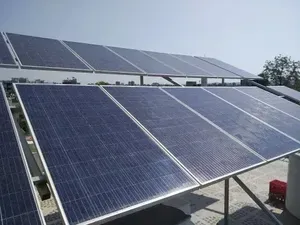
Domestically, schemes such as the PM Surya Ghar Muft Bijli Yojana have aimed to bring rooftop solar to rural and peri-urban households. The concept of a dedicated solar village fits within this broader pattern of pairing large-scale renewable infrastructure rollout with community-level branding in heritage and rural districts.
Stakeholders and Impact
The primary beneficiaries of a Surya Gram model are rural households in and around Pahadpur, who stand to gain reliable, clean electricity and potentially reduced energy costs. Renewable energy developers and state agencies in Odisha would also be key actors in translating the political commitment into ground-level solar installations, rooftop panels, and grid connectivity. Odisha has already seen parallel efforts to develop solar parks alongside its tourism assets, suggesting administrative groundwork may already be in place.
For the broader renewable sector, a high-profile solar village linked to the Konark heritage corridor could serve as a replicable model for other heritage districts across India seeking to combine cultural tourism with clean energy infrastructure.
What's Next
Observers will watch for concrete follow-through: Odisha state budget allocations, tender announcements for solar projects in the Konark-Puri region, and any specific project timelines or central funding earmarked for Pahadpur under existing solar schemes. Whether the Surya Gram vision translates into a time-bound government project with measurable targets will determine whether this declaration marks a policy milestone or remains an aspirational statement. The framing of solar energy as cultural identity, however, signals a deliberate strategy to build public and political support for India's clean energy transition at the grassroots level.
Frequently Asked Questions
What is Surya Gram and where is Pahadpur?
Surya Gram means 'Solar Village' in Hindi. PM Modi announced on 20 June 2026 that Pahadpur, a location in Odisha, will be developed as a model solar village under this concept.
Why did PM Modi compare Pahadpur to the Konark Sun Temple?
PM Modi used the Konark Sun Temple — a 13th-century UNESCO World Heritage Site dedicated to the Sun God — as a cultural reference to give Pahadpur's solar identity historical and symbolic resonance, framing clean energy as part of India's heritage.
What is India's solar energy target for 2030?
India has committed to achieving 500 GW of non-fossil fuel-based power capacity by 2030 as part of its Panchamrit climate pledges announced at COP26.
What is PM Surya Ghar Muft Bijli Yojana?
PM Surya Ghar Muft Bijli Yojana is a central government scheme aimed at providing free rooftop solar electricity to households, particularly in rural and peri-urban areas across India.
What is the International Solar Alliance?
The International Solar Alliance is an India-led intergovernmental organisation founded in 2015 to promote solar energy deployment among 121 sunshine countries and mobilise over one trillion dollars in solar investments by 2030.