Veerappa Moily defends UPA-era remarks: 'Not a hypocrite who misinterprets own words'
Synopsis
A veteran Congress leader has publicly alleged, from a platform honouring Sonia Gandhi, that unnamed UPA-era party figures blocked criminal investigations that could have jailed both Amit Shah and Narendra Modi. Moily is now doubling down — refusing to change 'even a full stop or comma' — while still declining to name the leaders responsible. The claim puts the Congress in a rare position of self-indictment.
Key Takeaways
Veerappa Moily alleged at a Sonia Gandhi book launch that UPA leaders — not Manmohan Singh — stalled investigations against then Gujarat CM Narendra Modi .
Moily linked the stalled probe to the Sohrabuddin Sheikh fake encounter case , in which Amit Shah was arrested in 2010 and later discharged in 2014 .
On 19 November , Moily refused to retract, saying: 'I don't want to change even a full stop or comma from that statement.' Moily declined to name the specific UPA leaders he holds responsible, saying 'I don't want to name the leaders.' He claimed: 'If those changes were implemented, there was no question of Modi coming (to power) today.'
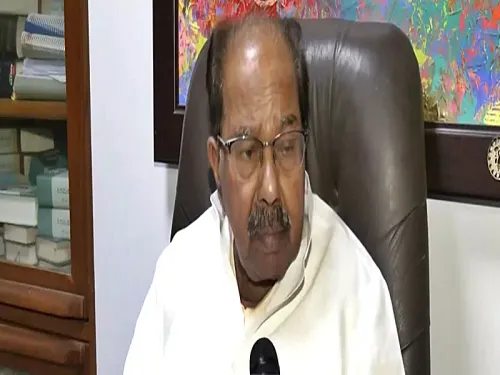
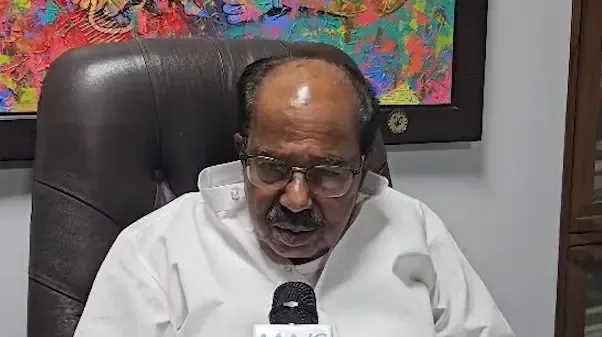
Veteran Congress leader and former Karnataka Chief Minister Veerappa Moily on Thursday, 19 November stood firmly behind his explosive claim that certain leaders within the Manmohan Singh-led United Progressive Alliance (UPA) government had deliberately stalled investigations against the then Gujarat Chief Minister Narendra Modi, insisting he is 'not a hypocrite' who would walk back or distort his own statements.
What Moily Originally Said
The controversy traces back to the book launch of Congress Parliamentary Party (CPP) Chairperson Sonia Gandhi on Tuesday, where Moily — recalling his tenure as Union Law Minister between 2009 and 2011 — made striking disclosures about the probe into the Sohrabuddin Sheikh fake encounter case, which allegedly implicated the then Gujarat Home Minister Amit Shah.
'I was the Law Minister then. Amit Shah wouldn't have been the Union Home Minister today. He was externed from Gujarat by the court. His case had to run in some other state. He was the first powerful leader to go to jail. Next would have been Modi to go inside (the jail) and he, too, would have been externed,' Moily said at the event, without elaborating further.
He went further: 'These were the tragedies within the party. The inquiry and investigation against Modi were stalled by our own government. It wasn't because of Manmohan Singh. It was because of some other leaders. We are suffering because of that today.'
Moily Doubles Down on Thursday
Speaking to reporters on Thursday, Moily refused to soften his remarks. 'There is no scope for controversy. I told the truth,' he said.
He pointed to documented facts to buttress his claims: 'Amit Shah was inside jail, and he was externed from Gujarat at that time; a number of cases had been filed. This is a fact. Then, the number of ministers of the then Gujarat government under Narendra Modi — they were inside jail; I think one of them was convicted also. This is a fact. So, I told only that much, nothing more.'
He added emphatically: 'Whatever statement I have given is true. I don't want to change even a full stop or comma from that statement. I am a truthful person. I will not be a hypocrite to interpret or misinterpret my own statement.'
The Leaders Moily Refused to Name
Even as Moily defended his remarks, he stopped short of identifying who within the UPA government had reportedly pressed the brakes on the investigations. During his original address, he had said: 'You know some of our leaders. They won't take even one step beyond the status quo. I don't want to name the leaders. They said the changes that were suggested were difficult to implement.'
He also claimed: 'If those changes were implemented, there was no question of Modi coming (to power) today.' The refusal to name names has drawn its own share of scrutiny, with political observers noting that the charge — levelled publicly but without attribution — leaves the Congress with an uncomfortable internal question it cannot easily deflect.
Context and Political Significance
The Sohrabuddin Sheikh fake encounter case was one of the most consequential criminal investigations of the UPA era. Amit Shah, who was then a minister in the Modi-led Gujarat government, was arrested in connection with the case in 2010 and subsequently granted bail by the Supreme Court. He was eventually discharged by a CBI court in 2014. The case's trajectory — from arrest to discharge — had long been a subject of political debate, but it is rare for a senior Congress veteran to allege, from a public platform, that his own party's government had a hand in derailing it. Notably, Moily made these disclosures not in an interview or press conference, but at a function honouring Sonia Gandhi — lending the remarks an unusual institutional weight.
How the Congress high command responds to Moily's refusal to retract, and whether he eventually names the unnamed leaders, will be closely watched in the days ahead.
Point of View
He has handed the BJP a ready-made counter-narrative while simultaneously embarrassing his own party. The refusal to name names is strategically ambiguous: it allows him to retain the moral high ground of 'truth-teller' while insulating specific individuals. What is missing from the mainstream coverage is the institutional irony — these disclosures were made at a function in honour of Sonia Gandhi, the person who arguably had the most authority over coalition management during those years. The Congress will find it difficult to distance itself from these remarks without appearing to validate them.
NationPress
19 Nov 2026
Frequently Asked Questions
What did Veerappa Moily allege about UPA-era investigations against Narendra Modi?
Moily alleged that unnamed leaders within the Manmohan Singh-led UPA government deliberately stalled criminal investigations that, he claimed, could have led to the arrest and externing of then Gujarat CM Narendra Modi. He made the remarks at a book launch for Congress Parliamentary Party Chairperson Sonia Gandhi and reiterated them on 19 November 2026.
What is the Sohrabuddin Sheikh fake encounter case?
The Sohrabuddin Sheikh fake encounter case involved the alleged extrajudicial killing of gangster Sohrabuddin Sheikh in 2005 in Gujarat. Then Gujarat Home Minister Amit Shah was arrested in connection with the case in 2010 and was later discharged by a CBI court in 2014. The case was one of the most high-profile criminal proceedings of the UPA era.
Why is Moily refusing to name the UPA leaders he has accused?
Moily has not given an explicit reason for withholding the names. At the original event, he said 'I don't want to name the leaders,' and on Thursday he maintained that his statement as given was entirely truthful and required no modification. Critics and political observers have noted that the refusal to name names makes the charge difficult to verify or rebut.
How has Moily responded to calls to clarify or walk back his remarks?
Moily has firmly refused to retract. On 19 November he said: 'I don't want to change even a full stop or comma from that statement. I am a truthful person. I will not be a hypocrite to interpret or misinterpret my own statement.' He has described the claims as factual, citing Amit Shah's documented arrest and the conviction of at least one Gujarat minister from that period.
What are the political implications of Moily's statements for the Congress?
The statements are potentially damaging for the Congress because they amount to a senior party figure publicly alleging that the Congress-led government shielded its then-political opponent from prosecution. This provides the BJP with a counter-narrative while raising uncomfortable questions within the Congress about who exactly was responsible. The party has not yet issued an official response to Moily's remarks.