CM Mohan Yadav: DBT Fixed What Rajiv Gandhi Admitted But Never Solved
Synopsis
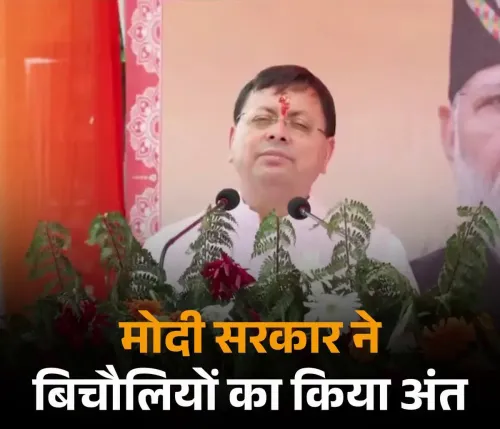
MP CM Dr. Mohan Yadav cites Rajiv Gandhi's famous '15-paisa' admission to argue that DBT under PM Modi has finally eliminated decades of welfare fund leakage that Congress governments identified but never fixed.
Key Takeaways
Rajiv Gandhi publicly stated in 1985 that only 15 paise of every ₹1 sent from Delhi reached welfare beneficiaries.
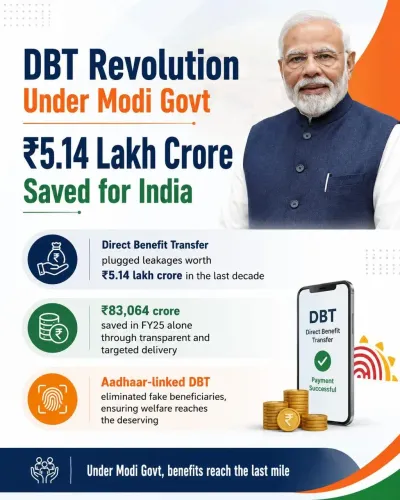
Direct Benefit Transfer (DBT) routes subsidies and benefits directly into Aadhaar-linked bank accounts, eliminating intermediaries.
DBT was scaled nationally after 2014 under PM Narendra Modi , integrated across food, fuel, fertiliser, scholarship, and cash schemes.
Mohan Yadav frames the contrast as 12 years of BJP governance solving a problem Congress admitted but never addressed.
Annual DBT savings figures and new scheme integrations in the next Union Budget will serve as the next benchmark for the system's performance.
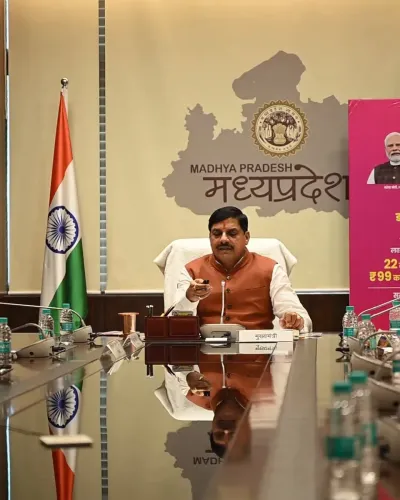
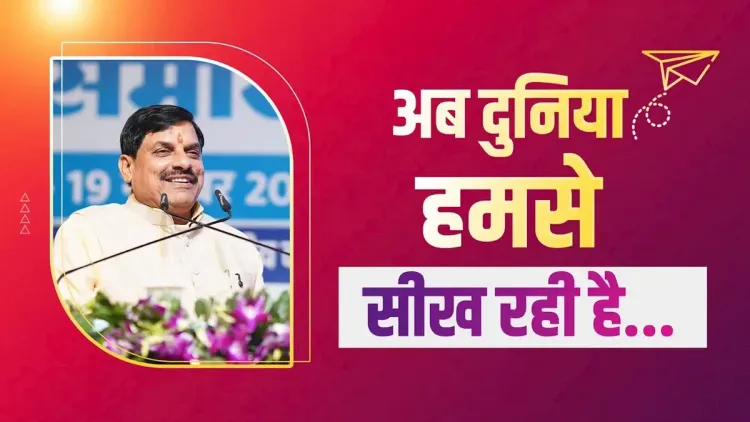
Forty years after a former Prime Minister confessed that welfare rupees bled away before reaching the poor, Madhya Pradesh Chief Minister Dr. Mohan Yadav argues the leak has finally been plugged — and the fix has a name: Direct Benefit Transfer (DBT). Speaking on Thursday, 19 November 2026, Dr. Yadav invoked one of Indian politics' most self-damning admissions to make his case.
The 15-Paisa Admission That Haunted a Generation
In 1985, Prime Minister Rajiv Gandhi made a candid, startling declaration: for every ₹1 dispatched from New Delhi, only 15 paise reached the intended beneficiary at the grassroots. It was an extraordinary moment of institutional honesty — a ruling Prime Minister publicly indicting his own government's delivery machinery. The intermediary chains, the contractor networks, the opaque public distribution channels: all of it, he acknowledged, consumed 85 paise of every welfare rupee.
Dr. Yadav's point is surgical: 'Samasya to bata di unhone, lekin samadhan nahin khoja' — 'He stated the problem but never found the solution.' The diagnosis existed. The political will to rewire the system did not, for decades.
DBT: Rewiring Welfare One Bank Account at a Time
The architecture that changed this is Direct Benefit Transfer, scaled up nationally after 2014 under Prime Minister Narendra Modi's government. The mechanism is deceptively simple: strip out every intermediary and credit subsidies, cash transfers, and scheme benefits directly into the beneficiary's Aadhaar-linked bank account. No contractor, no local functionary, no leakage point.
DBT has since been integrated across food, fuel, fertiliser, scholarship, and cash-assistance programmes. The backbone is the Jan Dhan–Aadhaar–Mobile (JAM) trinity — hundreds of millions of previously unbanked Indians now hold accounts that the state can reach directly. What Rajiv Gandhi called structurally impossible in 1985 became operationally routine by the mid-2010s.
Twelve Years On: The Political Argument Dr. Yadav Is Making
Dr. Yadav's post is pointedly framed around 'beet 12 varshon mein' — the past 12 years — a deliberate timestamp anchoring transformation to the BJP's tenure from 2014. It is a governance-versus-corruption argument dressed in historical comparison: Congress governments, the framing implies, knew the system was broken and chose to live with it; the Modi government built a new one.
The comparison lands because Rajiv Gandhi's 15-paisa quote is not disputed — it is on the record, widely cited, and politically resonant across party lines. Using an opponent's own admission as the benchmark for improvement is a rhetorically efficient move, and Dr. Yadav deploys it cleanly.
The next stress test for this narrative will come in the next Union Budget, where annual DBT savings figures and new scheme integrations are expected to be highlighted as proof points of the system's reach and efficiency.
Point of View
Historically grounded version of the BJP's core governance-versus-corruption pitch — using Congress's own archival admissions as the opposition's most credible witness. The 15-paisa quote is politically durable precisely because it is self-incriminating and undeniable. By anchoring DBT's success to that benchmark, the BJP sidesteps the need to attack; it lets the record speak. The broader arc here is a decade-long effort to convert digital infrastructure — Jan Dhan accounts, Aadhaar biometrics, mobile penetration — into a welfare delivery system that is auditable, direct, and harder to skim. Whether DBT has fully closed the leakage gap remains a subject of ongoing policy research, but the political narrative is tight and the evidence base is substantive enough to hold.
NationPress
19 Nov 2026
Frequently Asked Questions
What did Rajiv Gandhi say about welfare fund leakage?
In 1985 , Prime Minister Rajiv Gandhi publicly stated that for every ₹1 sent from New Delhi for welfare, only 15 paise actually reached the intended beneficiary at the grassroots level, acknowledging massive systemic leakage.
What is Direct Benefit Transfer (DBT) in India?
Direct Benefit Transfer (DBT) is a government mechanism that routes subsidies, cash assistance, and scheme benefits directly into beneficiaries' Aadhaar-linked bank accounts, cutting out intermediaries and reducing fund leakage.
When was DBT launched and expanded in India?
DBT was scaled up nationally after 2014 under Prime Minister Narendra Modi 's government, using the Jan Dhan–Aadhaar–Mobile (JAM) framework to reach previously unbanked citizens across multiple welfare schemes.
Why did CM Mohan Yadav mention Rajiv Gandhi in his post?
CM Dr. Mohan Yadav cited Rajiv Gandhi's '15-paisa' admission to argue that Congress governments identified the problem of welfare leakage but never solved it, while the BJP government introduced DBT to fix it after 2014.
What schemes use DBT in India?
DBT is integrated across a wide range of central government programmes including food subsidies, LPG fuel transfers, fertiliser subsidies, scholarships, and direct cash assistance schemes.