Mahua Moitra Questions Why PM Modi Announced Exam Task Force

Synopsis
TMC MP Mahua Moitra on 26 July 2026 questioned why PM Modi personally announced a new Examination Task Force, asking why Education Minister Pralhad Joshi was not making the announcement — reviving opposition criticism of PMO centralisation over cabinet portfolios.
Key Takeaways
TMC MP Mahua Moitra posted on X on 26 July 2026 questioning PM Modi's direct announcement of an Examination Task Force .
Pralhad Joshi , BJP MP from Karnataka, is reported as the Union Education Minister, making the bypass politically significant.
The post revives a recurring opposition argument that the PMO has centralised announcements that should originate from concerned ministries.
The National Education Policy 2020 provides the broader policy context, having mandated examination and regulatory reforms still under implementation.
Key stakeholders — students, parents, and institutions — face uncertainty when ministerial accountability over exam reform is publicly questioned.
The formal mandate and reporting structure of the Examination Task Force will be closely watched to determine real lines of authority.
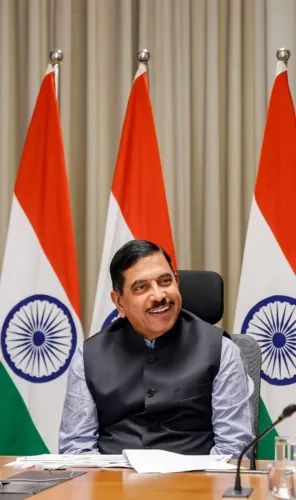
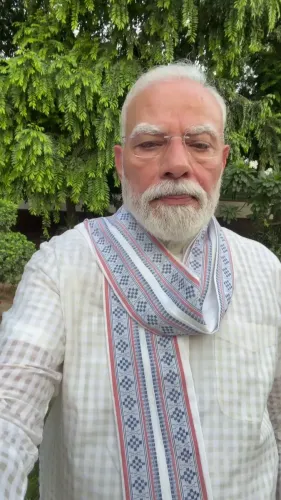
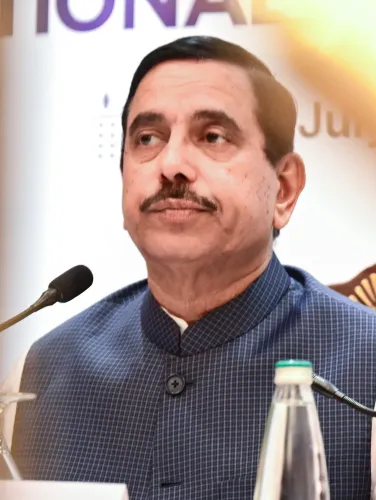
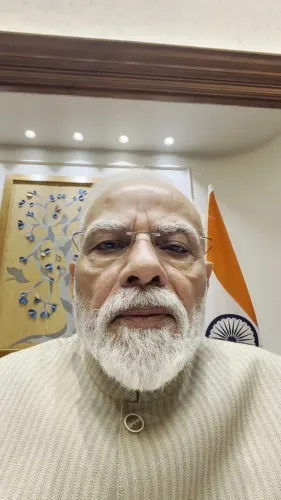
Trinamool Congress MP Mahua Moitra on Sunday, 26 July 2026, publicly questioned why Prime Minister Narendra Modi was personally announcing a new Examination Task Force when Pralhad Joshi is the Union Education Minister, raising questions about the division of authority between the Prime Minister's Office and the education portfolio.
Context
Moitra posted on X, asking: 'If Joshi Pralhad is new Education Minister then why is Modiji announcing new Examination Task Force himself?' The pointed question zeroes in on what she frames as an anomaly — a senior cabinet minister being bypassed on a matter squarely within his ministry's mandate.
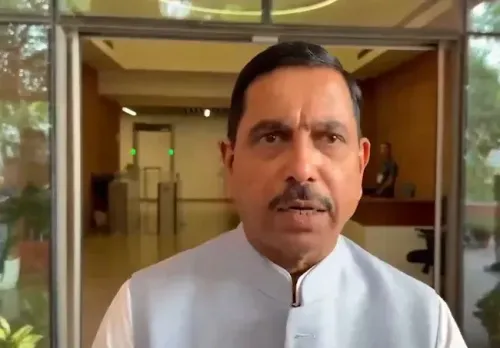
Pralhad Joshi, a BJP Lok Sabha MP from Karnataka, has previously served as Union Minister for Parliamentary Affairs, Coal and Mines. His reported elevation to the Education portfolio makes Moitra's question specifically about whether the new minister holds real operational authority over his own brief.
Policy Backdrop
The announcement of an Examination Task Force falls against the long shadow of the National Education Policy 2020, which mandated sweeping changes to assessment patterns, examination structures, and regulatory bodies across school and higher education. Implementation has been uneven, and exam-related controversies have kept the ministry under sustained scrutiny.
Opposition parties have repeatedly argued that since 2014, the Prime Minister's Office has developed a pattern of directly announcing initiatives in sectors that have dedicated cabinet ministers — a practice critics describe as centralisation of executive authority. The government has consistently framed such announcements as a signal of high-level political priority.
Stakeholders and Impact
The primary stakeholders in any examination reform are students, parents, and educational institutions across India's vast and diverse schooling system. When the chain of command over such reforms is publicly contested, it can create uncertainty about implementation timelines and accountability.
Moitra's post also carries a broader political dimension: it puts pressure on Joshi to clarify his mandate and on the government to explain the institutional logic behind the announcement. For opposition parties, it is a ready-made line of attack on what they call the erosion of cabinet governance.
What's Next
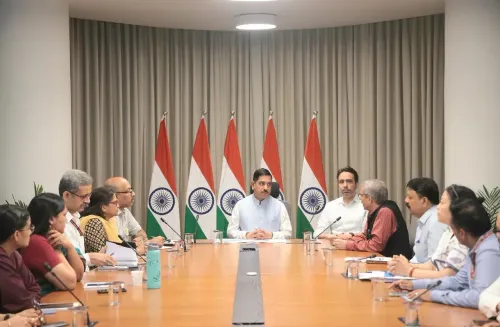
Attention will now turn to any formal notification or parliamentary statement detailing the composition, mandate, and reporting structure of the Examination Task Force. Whether the task force reports to the Ministry of Education or directly to the PMO will be a telling indicator of where real decision-making authority rests.
State education ministers and opposition parties are also likely to weigh in at the next parliamentary session, particularly if the task force's terms of reference impinge on state-level examination boards — a subject of long-standing centre-state tension in Indian education governance.
Point of View
She forces a public accounting of who actually runs education policy. This fits a durable pattern in Indian parliamentary politics where the opposition uses procedural anomalies — a minister sidelined at a press conference, a policy announced from the PMO rather than the ministry — to argue that cabinet governance has been hollowed out. The Examination Task Force announcement lands at a particularly sensitive moment, given unresolved controversies around competitive examinations and NEP implementation. Whether or not the government responds, the question itself shifts the burden of explanation onto the treasury benches.
NationPress
25 Oct 2026
Frequently Asked Questions
Why did Mahua Moitra question PM Modi about the Examination Task Force?
Moitra questioned why PM Modi personally announced the Examination Task Force when Pralhad Joshi, the reported Education Minister, should logically have made the announcement — framing it as evidence of PMO overreach into a dedicated cabinet portfolio.
Who is Pralhad Joshi and what is his role in education?
Pralhad Joshi is a BJP Lok Sabha MP from Karnataka who has previously held union ministerial portfolios including Parliamentary Affairs, Coal and Mines. He is reported to be the Union Education Minister in the current cabinet.
What is the Examination Task Force announced by PM Modi?
The specific composition and mandate of the Examination Task Force announced in July 2026 have not yet been formally notified. It is expected to address examination reforms in the context of the National Education Policy 2020.
What is the National Education Policy 2020 and how does it relate to exam reform?
The National Education Policy 2020 is a landmark policy framework that mandated structural changes to assessment patterns, examination systems, and regulatory bodies in both school and higher education across India.
Has PM Modi directly announced education initiatives before, bypassing the ministry?
Opposition parties have argued since 2014 that the PMO has a pattern of directly announcing major initiatives across sectors — including education, health, and infrastructure — rather than routing them through the concerned cabinet minister.