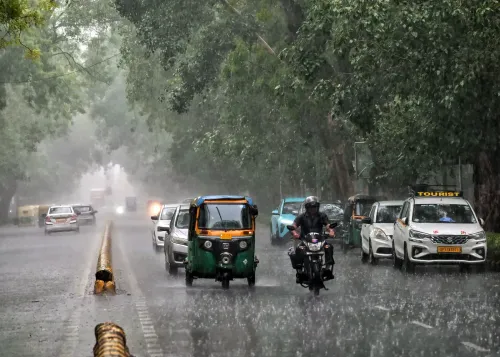
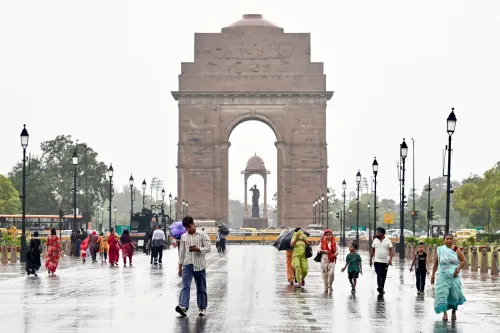
Southwest monsoon covers North India; IMD issues rain alerts for Delhi, Punjab till July 9

Synopsis
The southwest monsoon has swept across North India just days after June 2026 closed as the fifth-driest June since 1901 — nearly 39% below average. Delhi, which recorded barely 41.8 mm in June against a normal of 74.1 mm, now faces a week of intermittent showers. The contrast between a historically parched June and an active early-July monsoon sets up a critical period for agriculture and water reserves across the region.
Key Takeaways
The southwest monsoon has advanced across Delhi , Punjab , Haryana , and Rajasthan as of 4 July 2026 .
The IMD has issued rain alerts for Delhi , Punjab , Haryana , and Chandigarh from 6 to 8 July , with wet weather likely through 9 July .
June 2026 was the fifth-driest June in India since 1901 , with rainfall 39% below the long-term average.
Delhi's Safdarjung observatory recorded only 41.8 mm of rain in June, against a normal of 74.1 mm .
A low-pressure area over the northwest Bay of Bengal is driving the monsoon's continued advancement.
Thunderstorms and gusty winds up to 50 kmph are forecast across Central India , including Chhattisgarh , Madhya Pradesh , and Vidarbha .
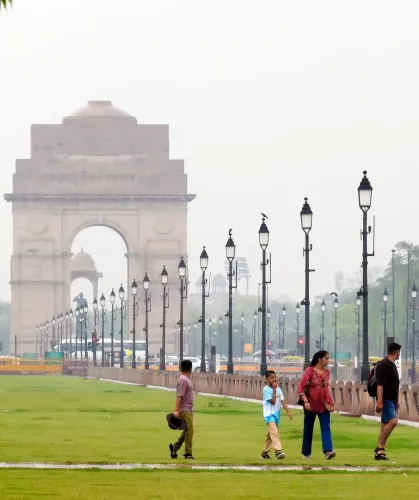
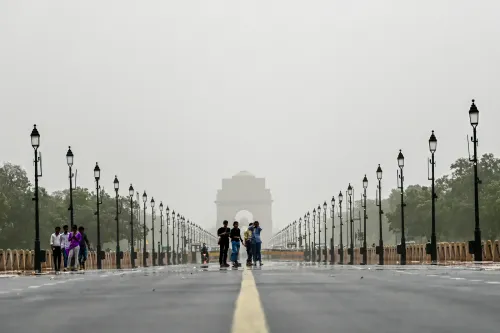
The southwest monsoon has advanced across Delhi, Punjab, Haryana, Rajasthan, and the rest of North India as of 4 July 2026, though the national capital is yet to receive widespread heavy showers. The India Meteorological Department (IMD) has forecast intermittent rainfall over Delhi-NCR through 9 July, with active monsoon conditions expected to persist across large parts of the country over the next four to five days.
IMD Alerts and Rainfall Timeline
The IMD has issued rain alerts for Delhi, Punjab, Haryana, and Chandigarh between 6 July and 8 July. In western Uttar Pradesh — including Noida and Ghaziabad — rainfall is expected on 8 and 9 July, while eastern districts are forecast to receive showers from 7 to 9 July. Heavy rainfall has also been forecast over Gujarat, Konkan, central Maharashtra, and Madhya Pradesh between 3 and 6 July.
In the Himalayan belt, Uttarakhand, Himachal Pradesh, and Jammu and Kashmir are expected to receive widespread rainfall through 9 July, with Himachal Pradesh likely to see particularly active monsoon conditions from 5 July onwards. Both Uttarakhand and Himachal Pradesh remain under multi-day rain alerts.
Monsoon Progress Across States
According to the IMD, the monsoon has advanced further into additional parts of Gujarat, the remaining areas of Madhya Pradesh, and more regions of Rajasthan and Haryana. Its continued advancement has been aided by the formation of a low-pressure area over the northwest Bay of Bengal, which has created favourable atmospheric conditions.
Eastern Rajasthan is likely to receive heavy rainfall through 9 July, while western Rajasthan may witness intense showers accompanied by thunderstorms during the same period. Across Uttar Pradesh, monsoon activity has intensified — continuous rainfall has been reported from parts of the Awadh belt, including Lucknow, Kanpur, and Unnao, while Barabanki, Etawah, and Bahraich have also received steady showers over the past two days.
In the Purvanchal region, districts such as Gorakhpur, Basti, Varanasi, Azamgarh, and Jaunpur remain under a rain alert until 7 July. Western districts including Baghpat, Muzaffarnagar, Bulandshahr, Hapur, Gautam Buddha Nagar, and Ghaziabad are also expected to experience monsoon showers through 9 July.
Central India Under Intense Rainfall Watch
Central India is likely to witness intense rainfall across Chhattisgarh, eastern and western Madhya Pradesh, and the Vidarbha region over the coming days. Thunderstorms, lightning, and gusty winds reaching speeds of up to 50 kmph are also forecast in several areas.
Context: June 2026 Among Driest on Record
The active monsoon advance comes in the wake of a historically dry pre-monsoon spell. Weather data show that June 2026 was the fifth-driest June in India since 1901, recording rainfall nearly 39% below the long-term average. Delhi's Safdarjung observatory registered only 41.8 mm of rainfall during the month — significantly below its normal June average of 74.1 mm. This makes the current monsoon advance all the more consequential for agricultural planning and reservoir levels across the north and centre of the country.
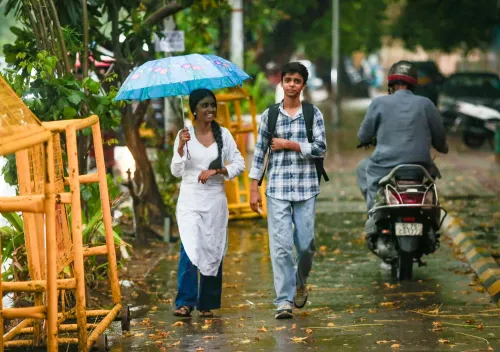
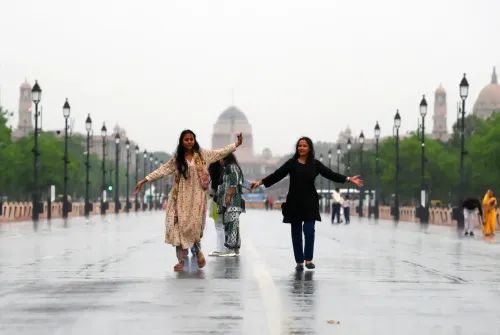
The expected showers are likely to bring relief from prevailing heat and cause a noticeable drop in daytime temperatures. Weather officials expect monsoon activity to remain vigorous across large parts of India over the next four to five days.
Point of View
But the backdrop is sobering: June 2026 was the fifth-driest June since 1901, and Delhi's Safdarjung station barely crossed half its normal monthly total. A week of intermittent showers is not the same as a deficit-erasing deluge. The real question is whether July can compensate for a June that failed farmers, reservoirs, and groundwater tables across the north. IMD's district-level alerts are a step forward in communication, but the structural vulnerability of rain-fed agriculture to a delayed or deficient onset remains unaddressed by any forecast.
NationPress
3 Oct 2026
Frequently Asked Questions
Has the southwest monsoon reached Delhi in 2026?
Yes, the southwest monsoon has advanced across Delhi as of 4 July 2026, according to the IMD. However, the capital is yet to receive widespread heavy showers, with intermittent rainfall expected through 9 July.
What rain alerts has the IMD issued for North India?
The IMD has issued rain alerts for Delhi, Punjab, Haryana, and Chandigarh between 6 and 8 July 2026. Western Uttar Pradesh, including Noida and Ghaziabad, is expected to receive rain on 8 and 9 July, while eastern UP districts face alerts from 7 to 9 July.
Why was June 2026 unusually dry in India?
June 2026 was the fifth-driest June in India since 1901, recording rainfall nearly 39% below the long-term average, according to weather data. Delhi's Safdarjung observatory recorded only 41.8 mm against a normal of 74.1 mm for the month.
What is driving the monsoon's advance across North India?
The IMD attributes the monsoon's continued advancement to the formation of a low-pressure area over the northwest Bay of Bengal, which has created favourable atmospheric conditions for the monsoon's progression into Gujarat, Madhya Pradesh, Rajasthan, and Haryana.
Which other regions are under active monsoon alerts?
Beyond North India, heavy rainfall is forecast over Gujarat, Konkan, central Maharashtra, and Madhya Pradesh through 6 July. Uttarakhand, Himachal Pradesh, and Jammu and Kashmir face widespread rainfall through 9 July, while Chhattisgarh and Vidarbha are also under intense rainfall watches.