Southwest Monsoon hits Delhi on July 3, IMD issues yellow alert for Friday
Synopsis
Delhi's monsoon arrived on 3 July — five days late — but made its presence felt immediately, dragging maximum temperatures 4.4 degrees below normal and prompting an IMD yellow alert for the weekend. With rain forecast through Sunday and the monsoon simultaneously advancing over Haryana, Punjab, and parts of Rajasthan, the heat cycle that gripped north India for weeks is decisively breaking.
Key Takeaways
The IMD declared the Southwest Monsoon onset over New Delhi on 3 July , five days after the normal date of 27 June .
Maximum temperature fell to 33°C — 4.4 degrees below seasonal average; minimum at 22.8°C , 5.1 degrees below normal .
IMD issued a yellow alert for Delhi on 4 July , forecasting moderate rain, thunderstorms, and gusty winds through the weekend.
Humidity levels remained high, ranging between 61 and 95 per cent despite the rainfall.
The monsoon has also advanced over most of Haryana , Punjab , remaining Uttar Pradesh , and parts of Rajasthan , Madhya Pradesh , and Gujarat .
Delhi's earliest monsoon onset since 2001 was 15 June 2008 ; the latest was 19 July 2002 .
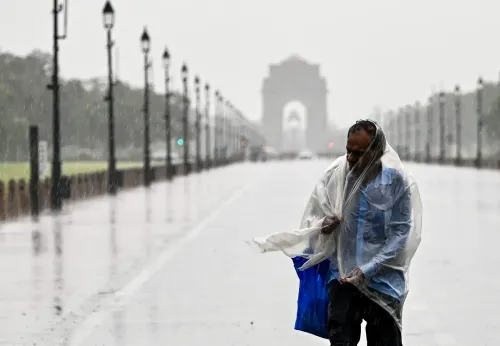
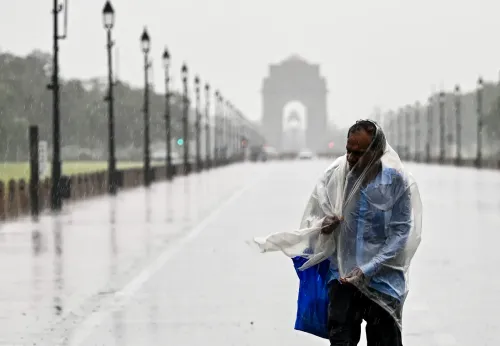
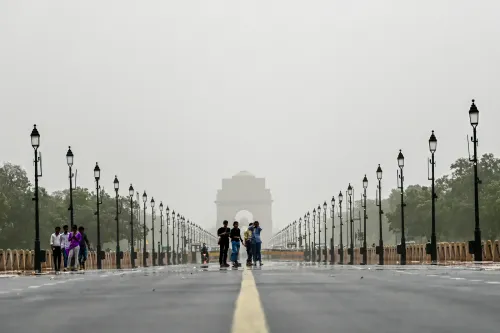
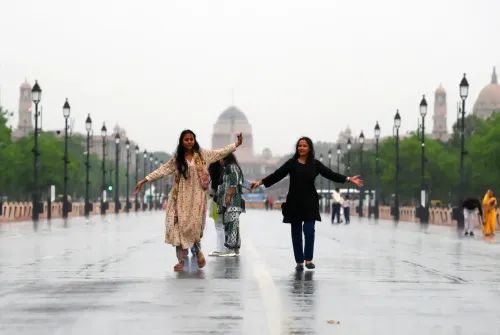
The India Meteorological Department (IMD) officially declared the onset of the Southwest Monsoon over New Delhi on Thursday, 3 July, as favourable atmospheric conditions triggered widespread rainfall across the national capital and its adjoining regions. The arrival, though five days later than the climatological normal date of 27 June, brought substantial relief from a prolonged stretch of oppressive heat — even as humidity levels remained elevated, ranging between 61 and 95 per cent.
Rainfall and Temperature Impact
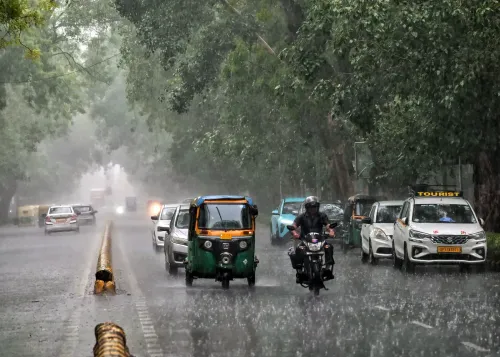
Rain lashed several parts of Delhi-NCR through the day, pulling the maximum temperature down to 33 degrees Celsius — a notable 4.4 degrees below the seasonal average. The minimum temperature settled at 22.8 degrees Celsius, 5.1 degrees below normal. The dip offered a marked contrast to the two consecutive heatwave days Delhi endured in late June before pre-monsoon thunderstorms began to provide initial relief.
IMD Yellow Alert and Forecast Ahead
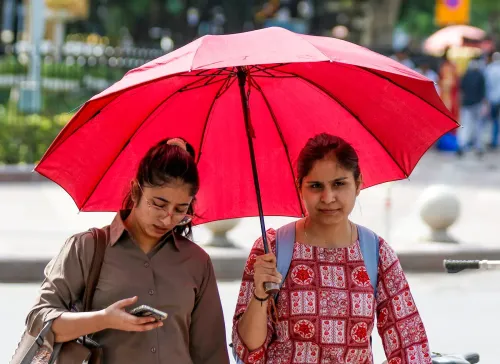
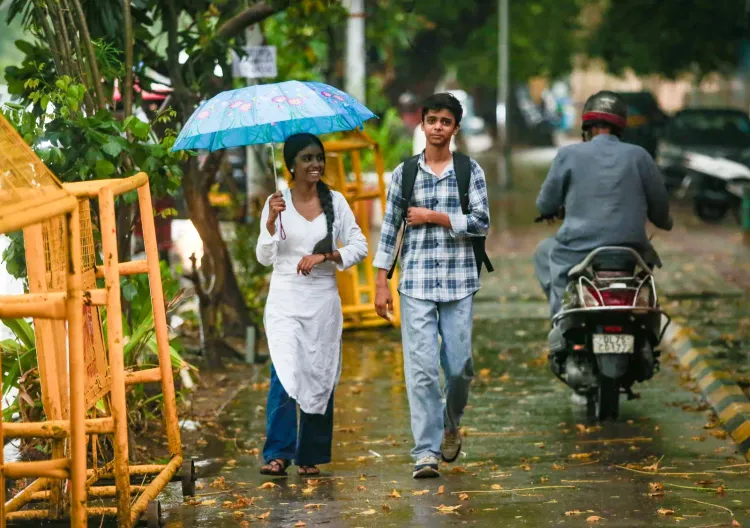
Following the monsoon's arrival, the IMD issued a yellow alert for Delhi and surrounding areas for Friday, 4 July, forecasting generally cloudy skies with moderate rainfall, thunderstorms, and gusty winds. Rain and thunderstorms are expected to continue through Saturday and Sunday as well, with daytime temperatures projected to remain between 33 and 38 degrees Celsius until 8 July. Meteorologists predict temperatures could dip by a further 2 to 3 degrees Celsius over the extended wet spell. Residents have been advised to keep umbrellas handy over the coming days.
Monsoon Advance Across North India
The IMD confirmed that the Southwest Monsoon has simultaneously advanced over Delhi, most parts of Haryana and Punjab, the remaining areas of Uttar Pradesh, and additional parts of Rajasthan, Madhya Pradesh, and Gujarat. The broad advance signals a significant northward push of the monsoon system across the Indo-Gangetic plain.
Historical Context of Delhi's Monsoon Arrival
This year's onset is slightly later than last year's arrival on 28 June, but considerably earlier than in 2021, when the monsoon reached Delhi on 13 July, and in 2002, when it was delayed until 19 July — the latest recorded onset since 2001. At the other end of the spectrum, the earliest monsoon arrival in Delhi since 2001 was on 15 June 2008. Over the past 25 years, the monsoon has typically reached the capital between the last week of June and the first week of July, making this year's arrival broadly within the historical range despite the brief delay.
With the monsoon now established over the capital and a wet weekend forecast, conditions are set to shift decisively from the pre-monsoon heat cycle that had gripped Delhi for weeks.
Point of View
Yet the optics matter: the capital endured back-to-back heatwave days just before the onset, underscoring how thin the margin between relief and distress has become in an era of intensifying pre-monsoon heat. The simultaneous advance across Haryana, Punjab, and Uttar Pradesh is the more significant meteorological story — it suggests the monsoon system is robust enough to cover the breadth of north India quickly, which has direct implications for the kharif sowing season. What deserves closer scrutiny is whether Delhi's urban heat island is systematically pushing the effective relief threshold higher even when the monsoon does arrive on time.
NationPress
1 Oct 2026
Frequently Asked Questions
When did the Southwest Monsoon arrive in Delhi in 2025?
The Southwest Monsoon officially arrived in Delhi on Thursday, 3 July 2025, according to the IMD. This was five days later than the climatological normal onset date of 27 June.
What does the IMD yellow alert for Delhi mean?
The IMD yellow alert issued for Delhi on 4 July signals a forecast of generally cloudy skies with moderate rainfall, thunderstorms, and gusty winds. It advises residents to stay prepared and carry umbrellas, as wet conditions are expected through the weekend.
How much did temperatures drop after the monsoon arrived in Delhi?
The maximum temperature fell to 33 degrees Celsius — 4.4 degrees below the seasonal average — following the monsoon's arrival. The minimum temperature was recorded at 22.8 degrees Celsius, which is 5.1 degrees below normal.
Which other states has the monsoon advanced into alongside Delhi?
Along with Delhi, the IMD confirmed the monsoon has advanced over most of Haryana and Punjab, the remaining parts of Uttar Pradesh, and additional areas of Rajasthan, Madhya Pradesh, and Gujarat.
How does this year's Delhi monsoon onset compare historically?
The 3 July onset is five days later than the normal date of 27 June and slightly later than last year's arrival on 28 June. However, it is well ahead of the latest recorded onset since 2001, which was 19 July 2002, and the 13 July 2021 arrival.