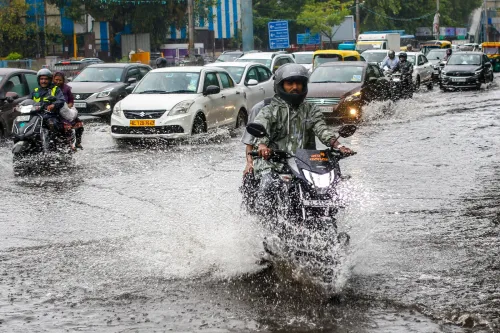
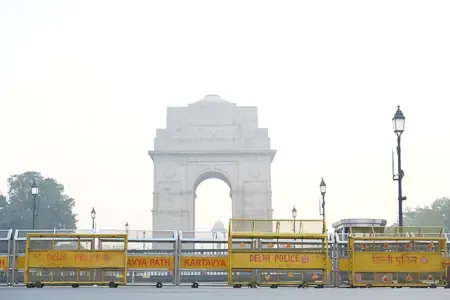
Delhi-NCR monsoon withdraws: mild chill grips mornings, AQI moderate
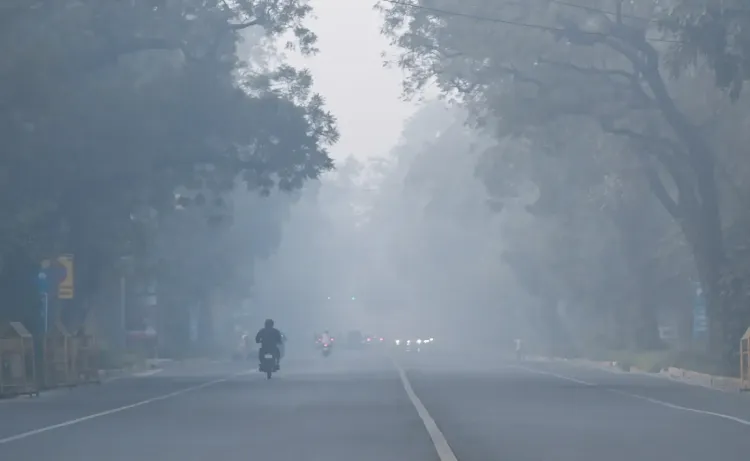
Synopsis
Delhi's monsoon has officially exited, and the capital's familiar autumn transition is under way — mild morning chill, bright afternoons near 36°C, and an AQI sitting in the moderate zone. The real story is what comes next: with rain gone and dry continental air moving in, Delhi's notorious winter pollution season is now just weeks away.
Key Takeaways
The IMD confirmed the monsoon has fully withdrawn from Delhi-NCR as of 3 October 2026 .
Delhi is forecast to stay dry and sunny with a maximum temperature of 36°C and minimum of 24°C through 5 October .
Winds of 20–22 kmph during the day will ease to around 15 kmph in the evening.
Delhi-NCR is in the green zone for weather alerts — no storms or rainfall expected in this period.
City-wide AQI remains in the 'moderate' category ; highest readings at Alipur (198) , Mundka (193) , and CRRI Mathura Road (191) .
Post-monsoon dry conditions typically signal the onset of Delhi's winter pollution season in November–December.
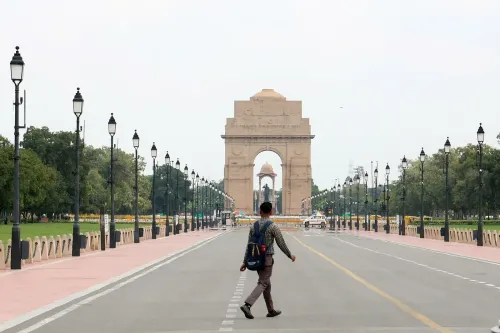
The India Meteorological Department (IMD) confirmed on 3 October 2026 that the monsoon has completely withdrawn from Delhi-NCR, ushering in a shift toward dry, sunny autumn weather. While daytime skies remain bright, residents are reporting a noticeable mild chill during mornings and evenings — a classic sign of the post-monsoon transition across North India.
Current Weather Conditions
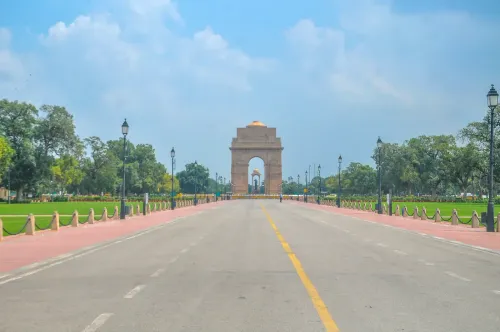
Delhi is forecast to stay dry and sunny through the weekend, with no possibility of rain or drizzle in any part of the city. Winds are expected to blow at around 20–22 kmph through the day, preventing temperatures from climbing excessively, before slowing to roughly 15 kmph with westerly winds in the evening.
The maximum temperature is likely to settle near 36 degrees Celsius, while the minimum is expected to hover around 24 degrees Celsius. According to the IMD, these conditions are set to persist from 3 to 5 October, with no storms or significant rainfall forecast during this window.
Why the Chill Has Arrived
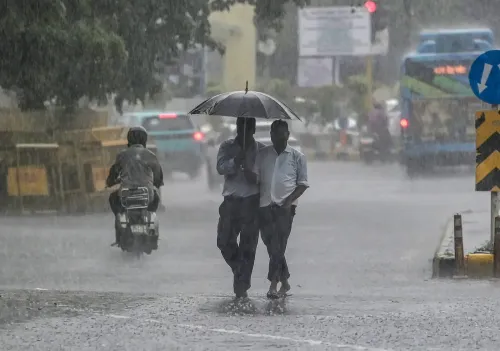
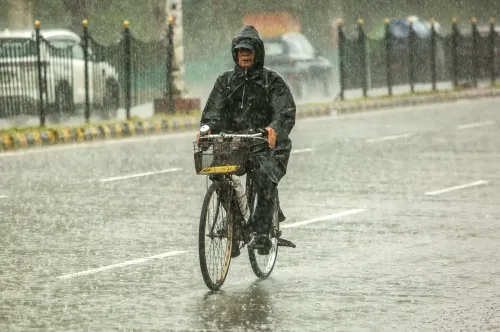
Recent rainfall across Delhi-NCR and neighbouring states has triggered a measurable dip in both maximum and minimum temperatures. This post-monsoon cooling is a well-established weather pattern for the region: once the moisture-laden monsoon circulation retreats, drier continental air moves in from the northwest, bringing clearer skies and cooler nights. For residents, this typically means comfortable mornings and evenings even as afternoon temperatures remain warm.
Notably, the IMD has placed the entire Delhi-NCR region in the green zone for weather alerts — meaning no immediate threat of extreme weather events.
Air Quality Remains Moderate
While the weather outlook is relatively benign, Delhi's Air Quality Index (AQI) has remained in the 'moderate' category as of 3 October. Station-wise readings paint a consistent picture across the city: Alipur recorded 198, CRRI Mathura Road logged 191, Pusa stood at 190, Mundka at 193, and R.K. Puram at 189.
Other monitored stations recorded: Punjabi Bagh at 186, Rohini at 188, Sirifort and Burari Crossing both at 173, IGI Airport (T3) at 167, NSIT Dwarka at 163, Mandir Marg at 154, Aya Nagar at 149, Anand Vihar at 143, and Patparganj at 133.
This is consistent with the seasonal pattern: as the monsoon withdraws and humidity drops, dust and vehicular pollutants begin to accumulate without rain to wash them away. Historically, October marks the beginning of Delhi's slide toward its worst air quality months of November and December, when AQI routinely enters the 'poor' and 'very poor' categories.
What Residents Can Expect Next
With the monsoon's exit now confirmed, Delhiites can anticipate a gradual and steady cooling over the coming weeks. Mornings and evenings will grow progressively cooler through October, while daytime temperatures may ease below 33–34 degrees Celsius by late October. However, air quality is likely to be a growing concern — authorities and health experts typically advise residents with respiratory conditions to monitor AQI readings closely as winter approaches.
Point of View
But this year it arrives with a familiar and ominous footnote: AQI readings already nudging the upper end of 'moderate' at stations like Alipur and Mundka signal that Delhi's pollution clock has started ticking. The window between the monsoon's exit and the onset of stubble-burning season in Punjab and Haryana is shrinking every year, and city authorities have consistently failed to use it for meaningful pre-emptive action. A 36°C afternoon and a 198 AQI reading on the same October day is not a contradiction — it is a preview of the public health challenge that arrives every winter, reliably and largely unmitigated.
NationPress
3 Oct 2026
Frequently Asked Questions
Has the monsoon completely withdrawn from Delhi-NCR?
Yes. The India Meteorological Department (IMD) confirmed that the monsoon has completely withdrawn from Delhi-NCR as of 3 October 2026. No rain or drizzle is expected in the city through at least 5 October, with the entire region placed in the green weather-alert zone.
What will Delhi's temperature be this week?
Delhi's maximum temperature is expected to hover around 36 degrees Celsius and the minimum around 24 degrees Celsius from 3 to 5 October 2026. Conditions are forecast to remain dry and sunny with no significant changes during this period.
What is Delhi's AQI today, and is it safe?
Delhi's AQI is in the 'moderate' category as of 3 October 2026, with readings ranging from 133 at Patparganj to 198 at Alipur. Moderate AQI (101–200) can cause breathing discomfort for sensitive groups such as those with asthma or heart conditions, who are advised to limit prolonged outdoor activity.
Why does Delhi feel chilly in the mornings even as daytime stays warm?
Once the monsoon withdraws, drier continental air from the northwest replaces the moist monsoon circulation, leading to faster heat loss overnight and cooler mornings. Daytime temperatures remain elevated because the sun still heats the surface significantly in early October, creating the classic day-night temperature contrast of Delhi's autumn season.
Should Delhi residents be worried about air quality worsening in October?
Historically, October marks the start of Delhi's deteriorating air quality cycle. As monsoon rains stop washing pollutants away and stubble burning begins in neighbouring Punjab and Haryana, AQI levels typically rise sharply through November and December. Residents with respiratory conditions are advised to monitor daily AQI readings and limit outdoor exposure on high-pollution days.