Piyush Goyal: India's FTA network to cover 75-80% of world economies
Synopsis
Commerce Minister Piyush Goyal told Indian-American business leaders in Chicago that India is on course to build FTA relationships covering 75-80% of the world's economies — jumping from a $10 trillion GDP base before 2014 to a combined $70 trillion-plus today, with another $15 trillion in ongoing talks. It is the most ambitious framing yet of India's pivot from trade caution to global supply-chain centrality.
Key Takeaways
Commerce Minister Piyush Goyal said India's FTA network will cover 75-80% of the world's economies, speaking in Chicago on 3 October 2026 .
Before 2014 , India had FTAs covering economies worth $10 trillion in GDP; newer agreements cover approximately $60 trillion , with totals approaching $70 trillion .
A further 6-8 negotiations are underway with economies representing an additional $15 trillion in GDP.
Goyal pitched India's growth path from a $4 trillion economy today to $30 trillion by 2047 under the Viksit Bharat vision.
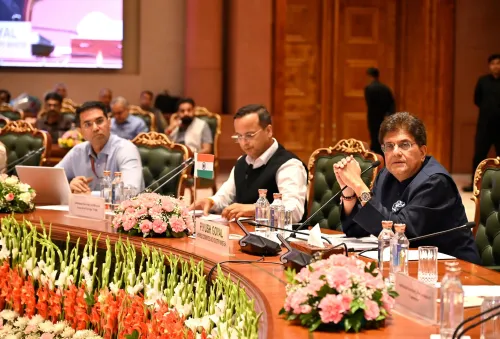
The minister attended the G20 Trade Ministers' Meeting in Milwaukee before speaking in Chicago, and held multiple meetings with American investors.
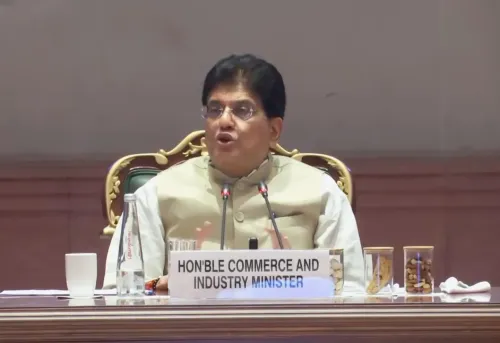
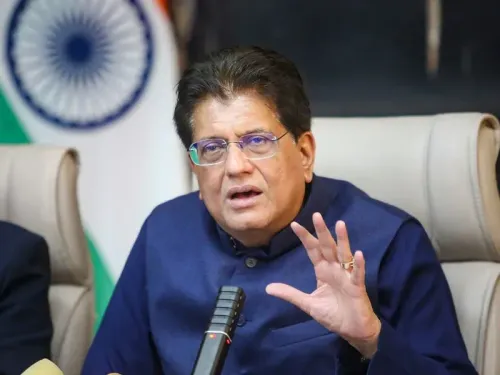
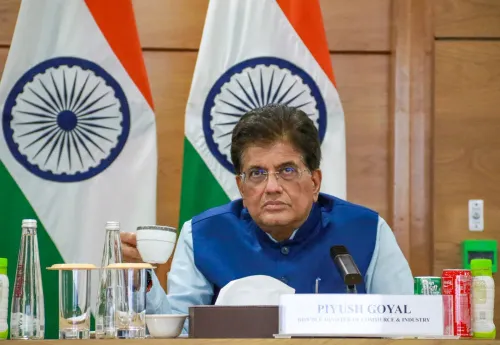
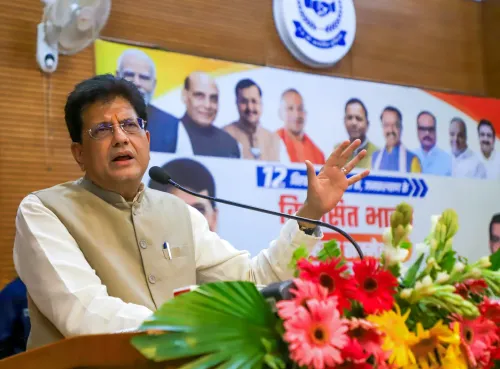
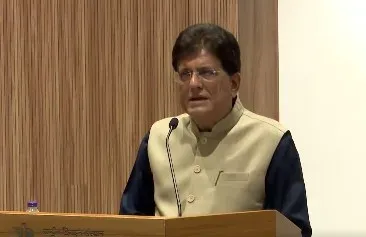
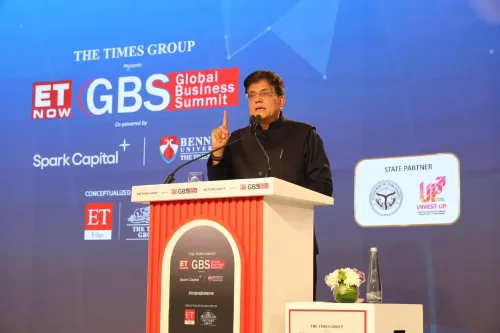
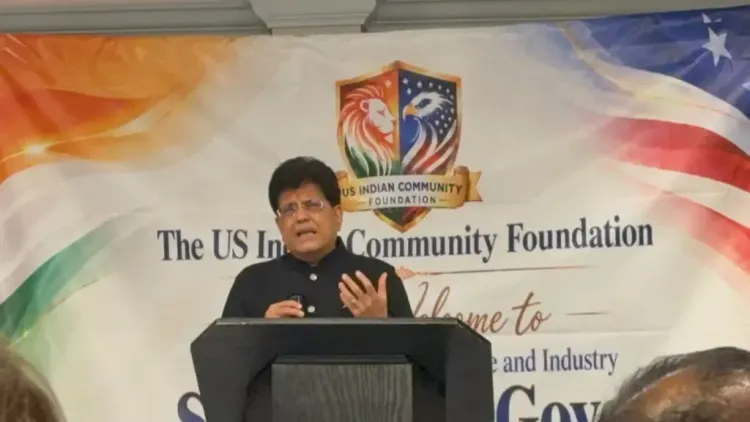
Commerce and Industry Minister Piyush Goyal on 3 October 2026 said India is building a web of free trade agreements (FTAs) that could eventually encompass 75 to 80 per cent of the world's economies, pitching the country as an increasingly attractive hub for global trade and investment. Goyal made the remarks while addressing an event organised by the US Indian Community Foundation in Chicago, where he urged Indian-American entrepreneurs to participate in India's economic expansion.
Scale of India's FTA Ambitions
Goyal said that before 2014, India had free trade agreements with economies representing roughly $10 trillion in gross domestic product. That figure has since changed dramatically. 'In the last 4-4.5 years, we have decided to make free trade agreements with 31 developed and developing countries,' he said, adding that the economies covered by these newer agreements represent approximately $60 trillion in GDP.
When accounting for agreements finalised and those in their final stages, Goyal said the total rises to around $70 trillion. A further six to eight negotiations are currently underway with economies representing an additional $15 trillion in GDP. 'So, India will become the centre of an international web of global trading relationships, covering nearly 75-80 per cent of the world's economies,' he said.
The $4 Trillion to $30 Trillion Vision
Goyal linked India's expanding trade network to its broader long-term ambitions. He described India as a $4 trillion economy today with a stated goal of reaching $30 trillion by 2047 — the centenary of India's independence and the target year for the government's Viksit Bharat development vision. 'The opportunity that a $4 trillion economy today, which is working towards becoming a $30 trillion economy by 2047, provides to you for your businesses, for your children and for the shared prosperity of the United States of America and India,' he told Indian-American business leaders.
The minister pointed to India's 1.4 billion people, an average age of 30 years, and a growing startup ecosystem as structural advantages for investors. 'India has the strength of a young country. India has the enthusiasm... We are a young nation of aspirational boys and girls,' he said.
India-US Partnership and the Investment Pitch
Goyal drew a direct complementarity between the two countries. 'The United States of America has capital strength, technology strength. India has ambition,' he said, calling on American and Indian-American investors to deepen their involvement in India. He specifically cited Invest India — the government's investment promotion agency — as a mechanism to guide companies through entry, trade facilitation, tourism, and technology transfers.
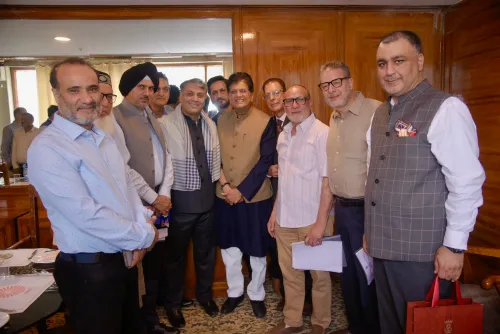
Goyal was speaking in Chicago after representing India at the G20 Trade Ministers' Meeting in Milwaukee. The visit also included meetings with American companies and investors, including several one-on-one sessions with large institutional investors.
Key Sectors Driving the Narrative
The minister cited the expansion of India's commercial airports, growth in defence exports, the spread of 5G connectivity, and the development of the startup ecosystem as evidence of the country's economic transformation. He also highlighted manufacturing, infrastructure upgrades, and digital connectivity as pillars of India's proposition to global investors. 'Today India is the growth engine of the world,' Goyal said.
Notably, India's push to scale its FTA network is part of a broader strategic shift from a historically protectionist trade posture toward active engagement in global value chains — a realignment that has gained speed since the disruptions to China-centric supply chains accelerated post-2020.
What This Means for Businesses
For companies operating out of India, the widening FTA network translates into preferential access to a significantly larger combined market for goods and services. The agreements typically lower or eliminate tariffs on specified goods and set binding rules on services, investment, and other economic activities. As more agreements move toward conclusion, businesses producing in India stand to gain preferential entry into economies that collectively account for the bulk of global trade flows. How quickly these agreements are ratified and implemented will determine whether the ambitious coverage target becomes commercially meaningful in the near term.
Point of View
But coverage on paper and commercially operational agreements are very different things — several of the '31 countries' likely include deals at varying stages of negotiation, ratification, and implementation. India's historical record on FTA utilisation by exporters has been patchy, with many businesses citing rules-of-origin compliance costs as a barrier to actually using preferential rates. The Viksit Bharat 2047 framing gives the trade push a compelling narrative, but the real test is whether Indian exporters — particularly in manufacturing — can build the supply-chain depth to extract value from these agreements before competitors do.
NationPress
3 Oct 2026
Frequently Asked Questions
What did Commerce Minister Piyush Goyal say about India's free trade agreements?
Goyal said India is building an FTA network that could cover 75 to 80 per cent of the world's economies, with newer agreements representing approximately $60 trillion in GDP — up from $10 trillion before 2014. He added that six to eight further negotiations are underway, covering an additional $15 trillion.
How many countries is India negotiating or has concluded FTAs with?
According to Goyal, India has decided to negotiate free trade agreements with 31 developed and developing countries in the last four to four-and-a-half years. Several have been concluded; others are expected to be finalised within six to eight months, with additional negotiations ongoing.
What is India's economic target by 2047?
India aims to grow from a $4 trillion economy today to a $30 trillion economy by 2047, the centenary of its independence, under the government's Viksit Bharat vision. Goyal cited this target repeatedly as a reason for Indian-American businesses to invest in India now.
Where was Piyush Goyal speaking and why was he in the US?
Goyal addressed the US Indian Community Foundation event in Chicago on 3 October 2026, after representing India at the G20 Trade Ministers' Meeting in Milwaukee. He also held one-on-one meetings with American companies and large investors during the visit.
Why does India's expanding FTA network matter for businesses?
A wider FTA network gives companies operating from India preferential tariff access to a larger combined international market, reducing the cost of exporting goods and services. It also signals deeper integration into global supply chains, which can attract foreign investment and technology transfers.